
"A costume is something someone wears that can turn them into something other than who they are."
Another excerpt from "Dressing The Story"

Ted’s Note: Today we (again!) bring you an excerpt from the book Dressing the Story — a rare, inside-the-room account of how films are truly made—not just written and directed, but seen. In these vivid, candid conversations, celebrated costume designer Debra McGuire.
By Debra MGuire (with Jim Stark asking the questions)
What is a costume?
A costume is something someone wears that can turn them into something other than who they are. It’s something that can disguise, enhance, or help create an illusion.
Why are costumes important?
In film, the job of a costume is to express who the character is visually. We have information in the script that tells us who the character is and their role in the story. But it’s a visual medium, so the costume is an important part of conveying the story. Like the dialogue and plot, it’s a storytelling mechanism.
Music, dialogue, and lighting help create the mood, but what do costumes contribute to the audience’s involvement in the story?
When I read a script, my goal isn’t to find a literal expression for what I am reading or even decide what the costumes should look like. I try to get inside the head of the person telling the story and understand what it is that they want to convey to the audience. My job is to design costumes that will support that storytelling. If a costume is wrong or if it doesn’t support the story, it can be extremely distracting. The biggest nightmare for a director is to include something in the film that distracts the audience and somehow severs them from the illusion.
When I watch a movie, TV show, or play, the costumes either help me believe what I’m seeing or pull me out of the story and movie experience entirely. Authenticity in clothing is crucial. If a rough, gritty character appears in an outfit that looks freshly purchased, for instance, the illusion breaks. If someone who’s been sleeping on the streets for three weeks shows up in a crisp, spotless shirt instead of one that’s been aged, dirtied, and sweat-stained, it undermines the reality of the story. It all sounds obvious, but costumes, when done truthfully, really do help audiences stay immersed in the world being created.
Can you give me some examples in your work where the wardrobe or a piece of costume really helped tell the story?
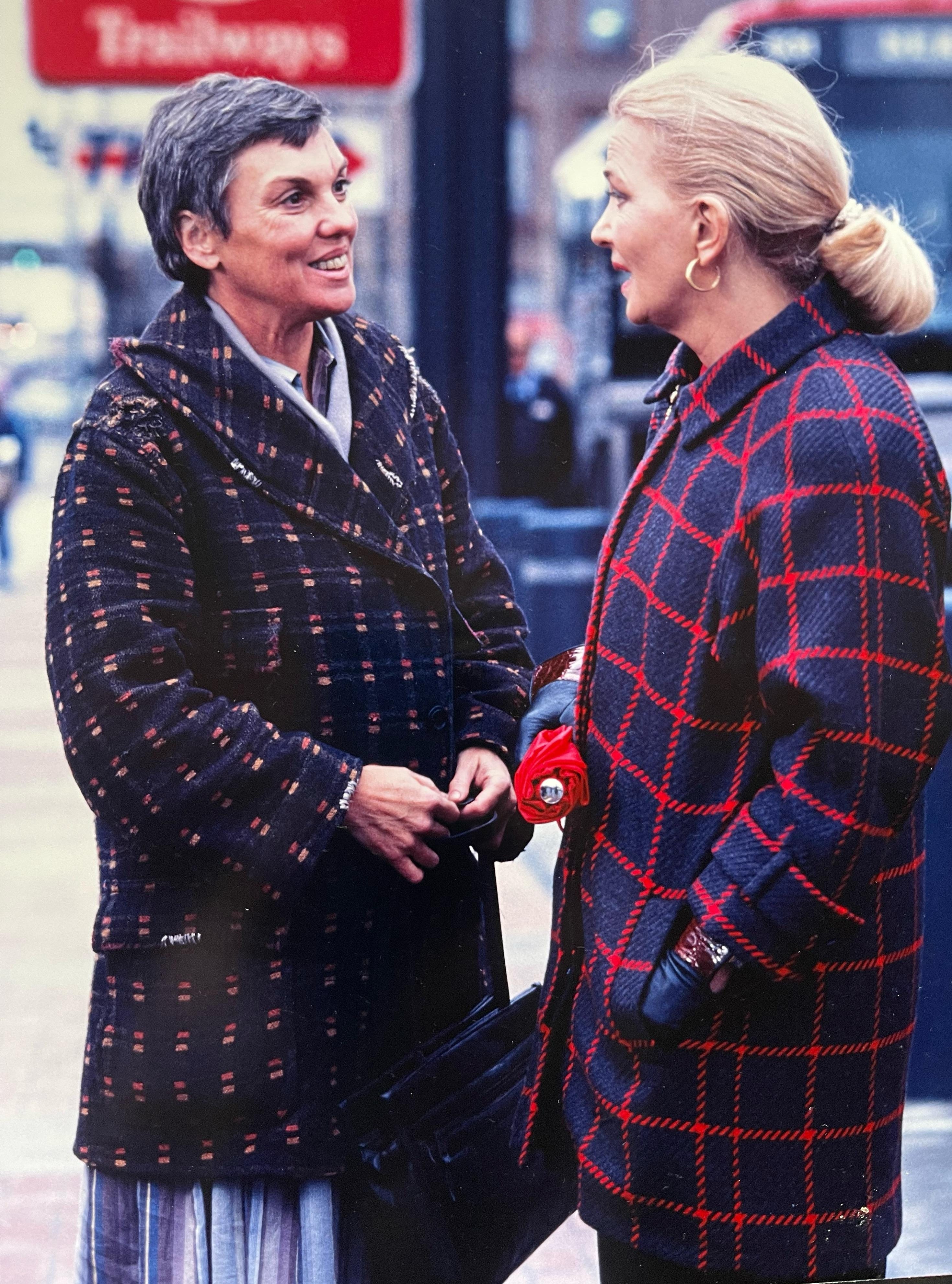
It was when I was working on Face of a Stranger that I began to understand how profoundly costume could shape character. Gena Rowlands and Tyne Daly played two extraordinary women whose lives in the story could not have appeared more different. Tyne was a homeless woman living on the streets; Gena was a refined widow whose world had recently come undone. At first glance, these two women shared nothing in common, but over the course of the film, as the two women’s relationship deepened, I gradually shifted their wardrobes to reflect that evolution. Gena’s refined look softened and became simpler, while Tyne’s rough, disheveled exterior grew more polished and composed. By the final scene—set in a graveyard, their silhouettes side by side—the contrast between them had all but disappeared. The vast social and economic gulf that once defined them was gone. That really was the heart of the story: transformation, connection, and the way clothing can express both. What began as mere fabric became a narrative of change, an artifice of costume that revealed something deeply human.
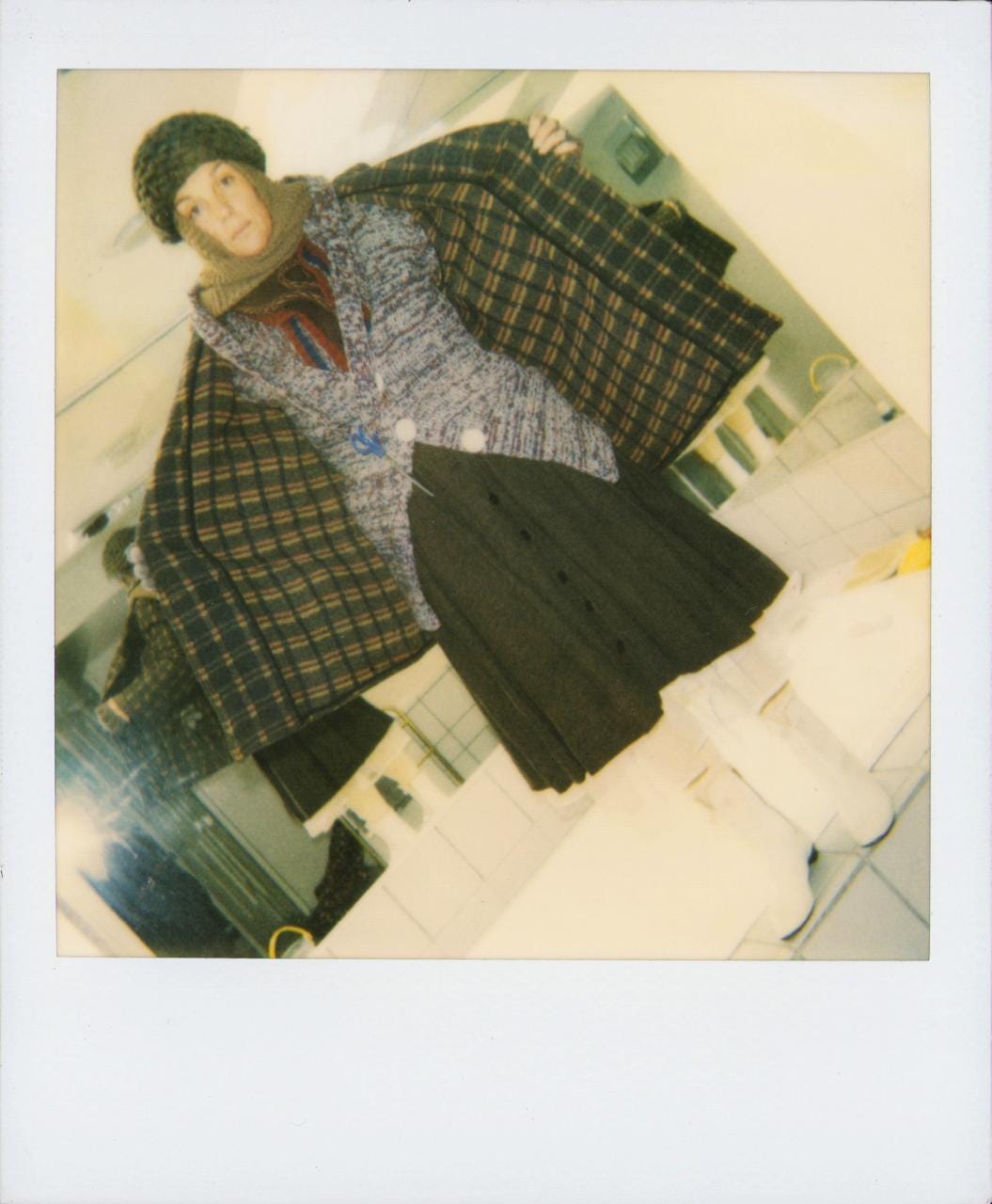
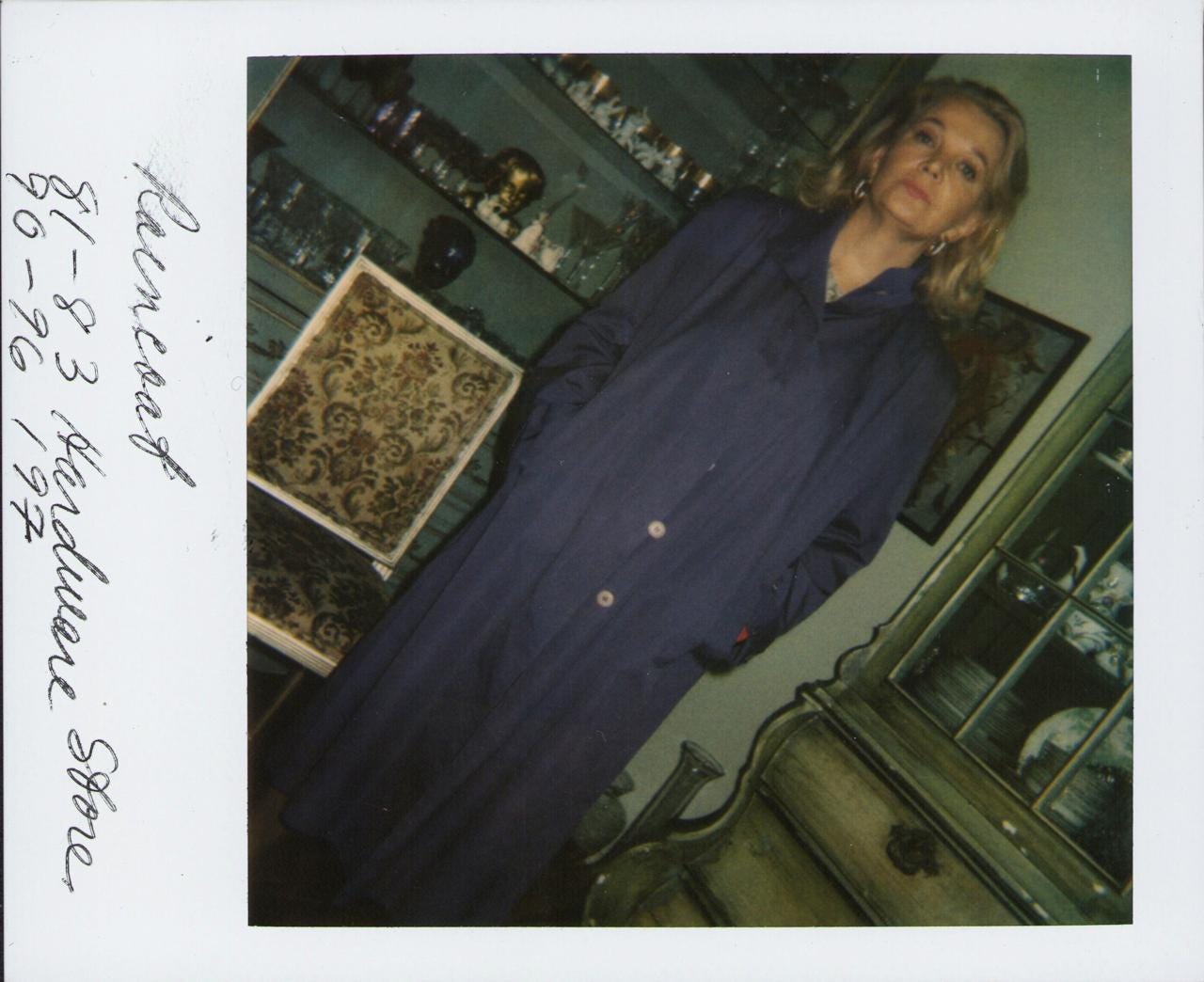
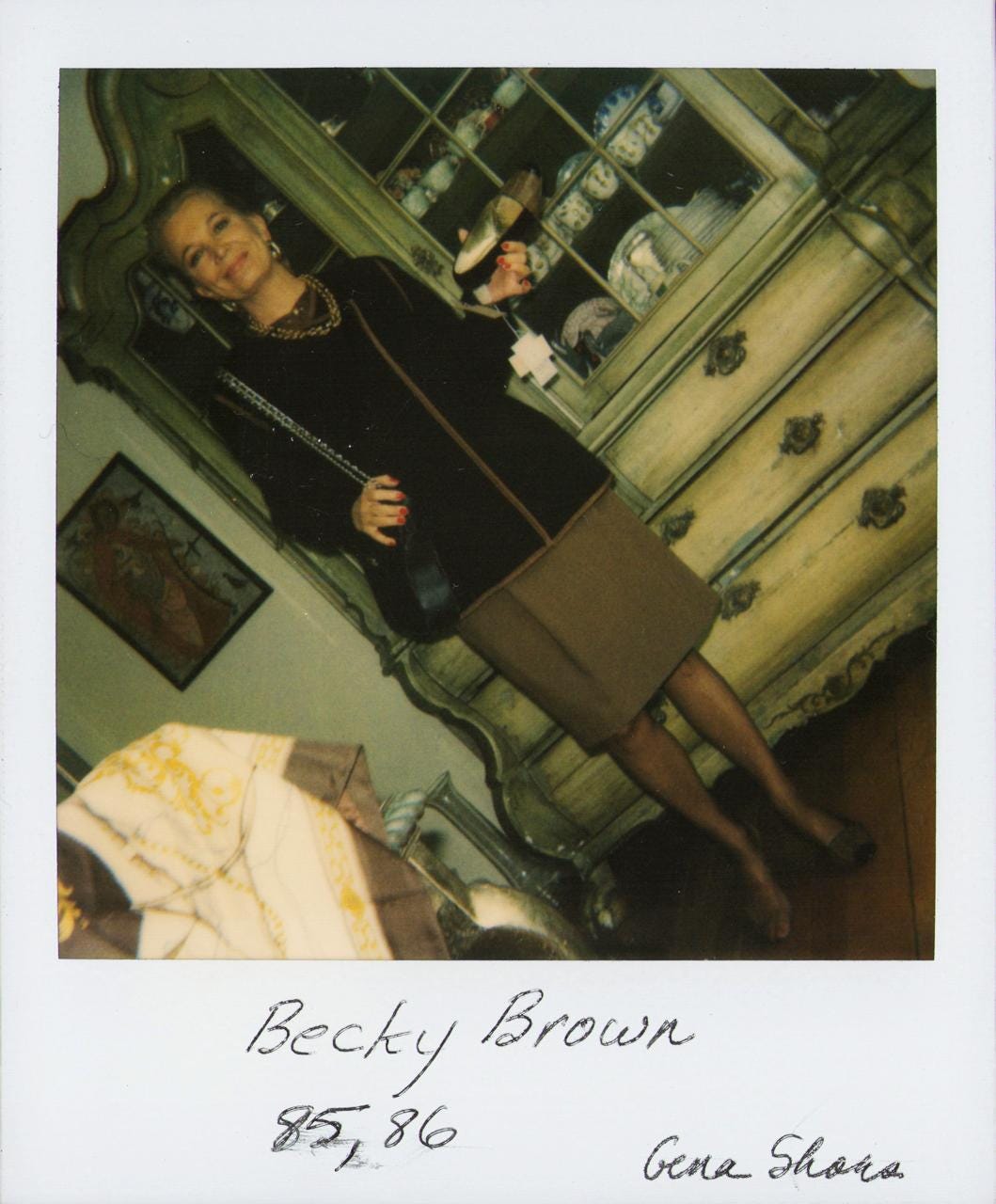
We did Tyne’s fitting at her home in Venice, California. I instinctively felt her wardrobe needed to be built from the inside out, starting with the most intimate layer. What would a woman sleeping on the streets put on first, closest to her body, before piling on layers of protection? I remember sitting cross-legged on the floor, surrounded by concentric circles of clothing, choosing what would be the first layer, the second, and the next. Through those choices, I was building her world from the inside—the unseen life beneath the surface. Each piece carried its own history: a shirt once bought new but long worn thin, a sweater salvaged from a thrift shop, everything aged and softened by time and circumstance. The layering became a visual backstory, a tactile record of her struggle and resilience. I did all of this with Tyne right there in the room. With her input as we layered her wardrobe piece by piece she was discovering the woman she was about to inhabit. For a costume designer, that’s the ultimate experience: not only helping to create a character through clothing, but witnessing the actor finding that character through what they wear. For Gena’s role, I designed eleven elegant, Chanel-inspired suits. She loved them so much that she bought them all once filming had ended. It was only years later that I realized how lucky I was to begin my career with actors of this caliber.
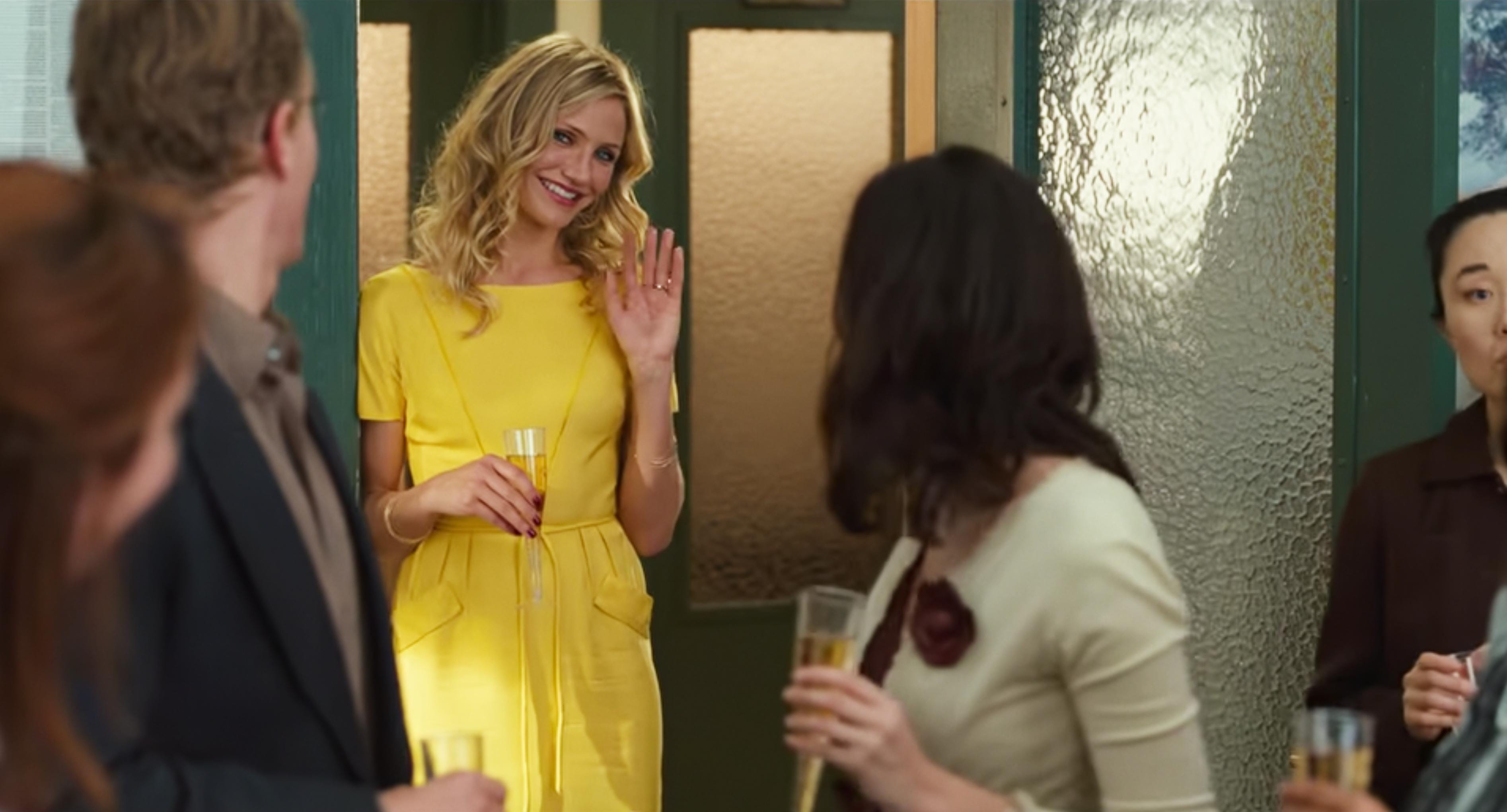
Another potent example is Bad Teacher. The first time we see Cameron Diaz, we immediately understand the essence of her character. She is standing in the doorway of a fairly drab teacher’s lounge in a high school, wearing a bright yellow vintage dress. That costume tells us exactly who this woman is and hints at how the story will unfold. The way the dress clings to her body and the bold yellow combine to communicate volumes—without a single line of dialogue. We feel it instinctively. That’s the power of costume: it makes us believe, it makes us feel, it defines character before the actor even speaks. What kind of schoolteacher dresses this way?
The main character of Anchorman is named Ron Burgundy. Director Adam McKay didn’t want him to wear the color burgundy, but I insisted. “He has to be in a burgundy suit—he’s Ron Burgundy!” There’s a scene where Ron bursts through a billboard with his own image on it. I told Adam, “He needs to be wearing burgundy in that shot.” Adam wasn’t convinced, but he respected me enough to film it both ways—once in a brown suit and another in burgundy. When he saw the two takes cut together, he immediately realized I was right. Production had to build two billboards, and with multiples for suit options, this became an expensive decision.
Certain costume choices don’t just support a story—they become the story. The burgundy suit did exactly that. Every fan of the movie remembers that moment. It captures who Ron Burgundy is: self-important, oblivious, and perfectly ridiculous. Over the years, that single image has come to symbolize the film itself. That’s the ultimate proof of what costume design can do.
What is the most common misconception about what costume designers do?”
The biggest misconception is that because everyone wears clothes, people think anyone can design costumes. Especially when a show is set in contemporary times—jeans, t-shirts, suits, dresses—people assume, “How hard can that be?” They think it’s just shopping. I can’t tell you how many times a producer has said something like, “I saw some blouses at Bloomingdale’s that might be perfect for our lead—I could pick them up after work.” That kind of comment leaves me speechless, because it reveals a total misunderstanding of what we actually do. Designing costumes—even for a so-called “simple” modern show—is about storytelling, continuity, psychology, and tone. Every choice, down to the texture of a t-shirt or the shade of a lipstick, has meaning.
I once worked with a very well-known director who said to me during a fitting, “Let me take these photos home so my wife can look at them. She has great taste.” Imagine the hours of work, research, and preparation that go into building a wardrobe for an entire cast, then being told it’ll be run by someone’s spouse for approval. It’s both funny and humiliating.
Another misconception is that costume design is a glamorous job. It’s not. It’s a wonderful job—it’s creative, collaborative, and endlessly interesting. But glamorous? Hardly. We spend our days managing huge teams, dealing with fittings, breakdowns, logistics, budgets, and endless problem-solving. There’s nothing glamorous about hauling racks of clothes through mud or sewing until three in the morning because an actor changed their mind about a costume the night before shooting.
And finally, there’s this idea that “real” costume design only happens in period films—the corsets, the crinolines, the big gowns. Those are stunning and historically important, but they’re also bound by strict rules of accuracy. You’re often designing within the parameters of the time, the fabrics, the silhouettes, the methods of construction. In a contemporary project, you have far more freedom—you can invent, juxtapose, and play, but always staying true to the character. You’re not necessarily confined by history, but by truth—the truth of the character and the world they inhabit. For me, that’s where the most exciting and nuanced design work often happens.
Read the prior excerpt here:

Bio:
Debra McGuire is an award-winning American costume designer best known for defining the look of the hit sitcom Friends over its ten-season run. Her work spans film, television, and theatre, with credits including Anchorman: The Legend of Ron Burgundy, Superbad, Freaks and Geeks, and The Morning Show. Known for blending character psychology with contemporary fashion, McGuire has collaborated with filmmakers including David Mamet, Judd Apatow, and Jake Kasdan, and has become one of Hollywood’s most influential contemporary costume designers. Her website is here.
In her book Dressing The Story, she reveals how clothing becomes character, how fabric carries emotion, and how the smallest visual detail can shape an audience’s experience without them ever realizing it. Drawing on decades of work across film and television, she takes us from first script reading to final fitting, from instinct to execution, showing how costume design is not decoration but storytelling in its most immediate, visual form.
Presented as a series of conversations with independent producer Jim Stark, and enriched by contributions from Gavin McGuire and longtime collaborator Joe Mastrolia, this book offers a uniquely intimate portrait of the collaborative spirit at the heart of costume design.
Whether you’re a filmmaker, designer, or simply someone who loves cinema, Dressing the Story opens your eyes to an essential, often invisible art—and leaves you watching every film differently.
 | A guest post by
|
I love working with costume designers for just this reason! How a character dresses, presents themselves, what they choose gives actors a window into who they are on a gut level and how they move through their world. I loved this piece!
Ted! Love the nonde movement you’re leading! I’m on board! I’m the creator behind the hit streaming series #BrooklynStart, ‘a show about a conversation that no one wants have’. It’s about a group of Brooklynite teachers/parents navigating gentrification and the ever changing socio-economics of Brooklyn and set against the backdrop of the most segregated public school system in the country NYC Schools, Being talking with Jennifer Esposito and Paul Walter Hauser about coming on board as producers—they love the concept and pitch. Would love to have you at the helm too. Think Ted Lasso meets The Wire, and fuhgeddaboudit, boom…#BrooklynStart