
American Doctor: "It’s really in the United States that I learned how to dissent & how to fight for what really matters...and the only way I know how to fight is as a filmmaker.”
a vHopeful Conversation with director, producer Poh Si Teng

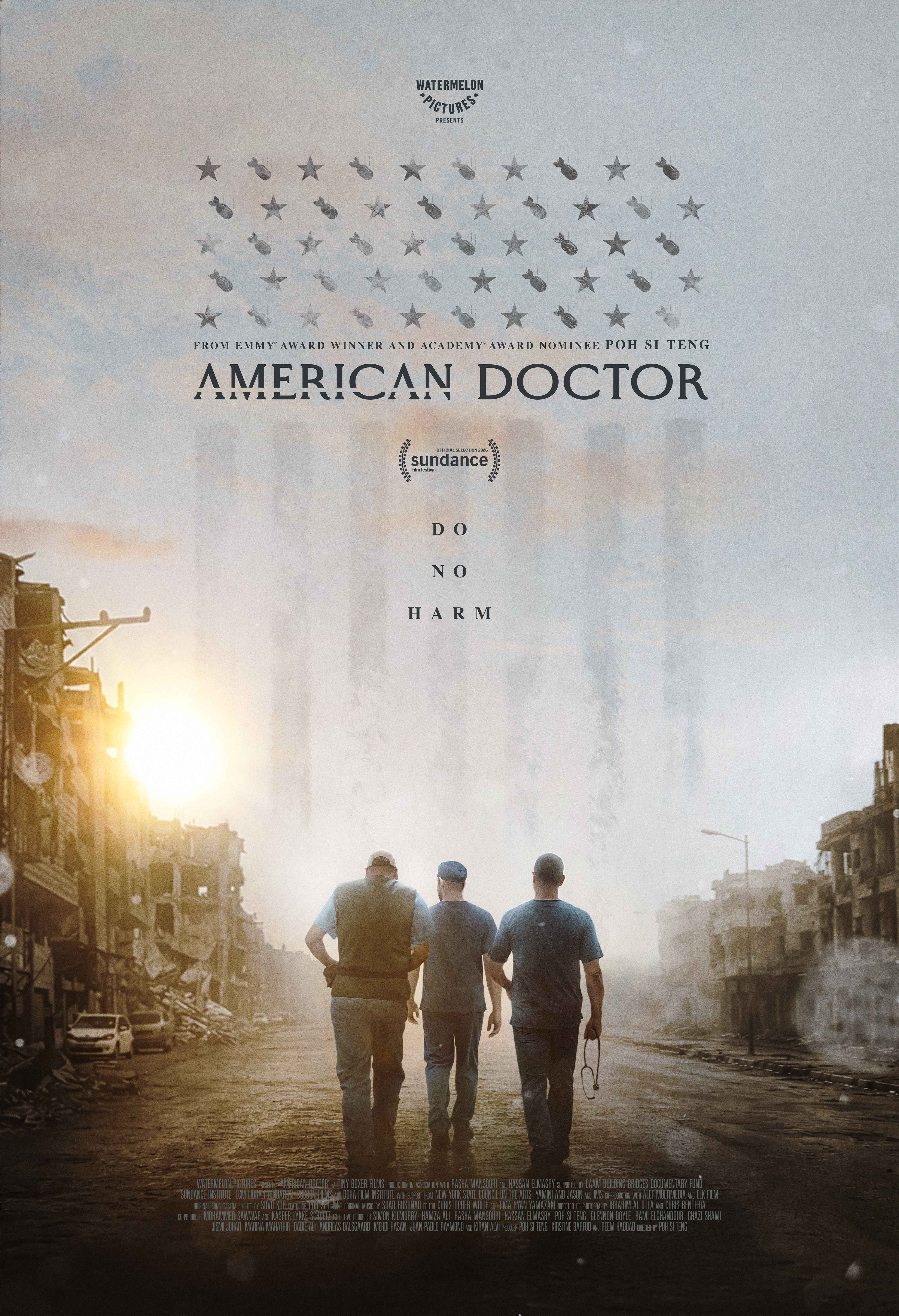
In this vHopeful Conversation, I sit down with filmmaker Poh Si Teng—Oscar‑nominated producer of St. Louis Superman, Emmy‑winning executive producer of Patrice: The Movie, and now first‑time feature director of American Doctor—to talk about why she stepped out from behind the scenes after two decades as a producer, commissioner, and executive to make an urgent, deeply personal film about three American physicians (Palestinian, Jewish, and Zoroastrian) who volunteer in besieged hospitals in Gaza and then carry their fight for patients to the halls of Congress. We discuss how she found these doctors and earned their trust; how her team worked with filmmakers inside Gaza at great risk; what she learned about courage, dissent, and speaking from the heart from Dr. Mark Perlmutter, Dr. Thaer Ahmad, and Dr. Feroze Sidhwa; and how her own journey—from Malaysia to American journalism, from Al Jazeera and IDA to Tiny Boxer Films—shaped her decision to stay in the United States and “fight as a filmmaker” in the face of war crimes, bipartisan complicity, and a media ecosystem that still treats Palestine as “too hot.”
Transcript lightly edited. Podcast available on Dream of a Better World, & Apple, Spotify or wherever you listen
Vanessa Hope: I’m very, very excited to be joined by filmmaker Poh Si Teng, an Oscar‑nominated producer of St. Louis Superman, Emmy‑winning executive producer of Patrice: The Movie. She’s a former Al Jazeera documentary commissioner, ABC/Disney creative executive, IDA grants director, and New York Times journalist.
She is now making her feature documentary directorial debut with American Doctor, the film we are here to discuss, which is truly phenomenal. It follows three American physicians—one Palestinian, one Jewish, one Zoroastrian—who volunteer in besieged hospitals in Gaza and return home determined to fight for the patients and colleagues they left behind, carrying their battle from the front lines of war to the halls of Congress and confronting the collision of medicine, politics, and American responsibility. Poh Si Teng, it is such an honor to have you. Thank you for joining.
Poh Si Teng: Thank you so much for having me, Vanessa.
Vanessa: So you’ve spent two decades building a career as a producer, a commissioner, an executive. What was the moment when you knew you had to step out from behind the camera and direct American Doctor yourself?
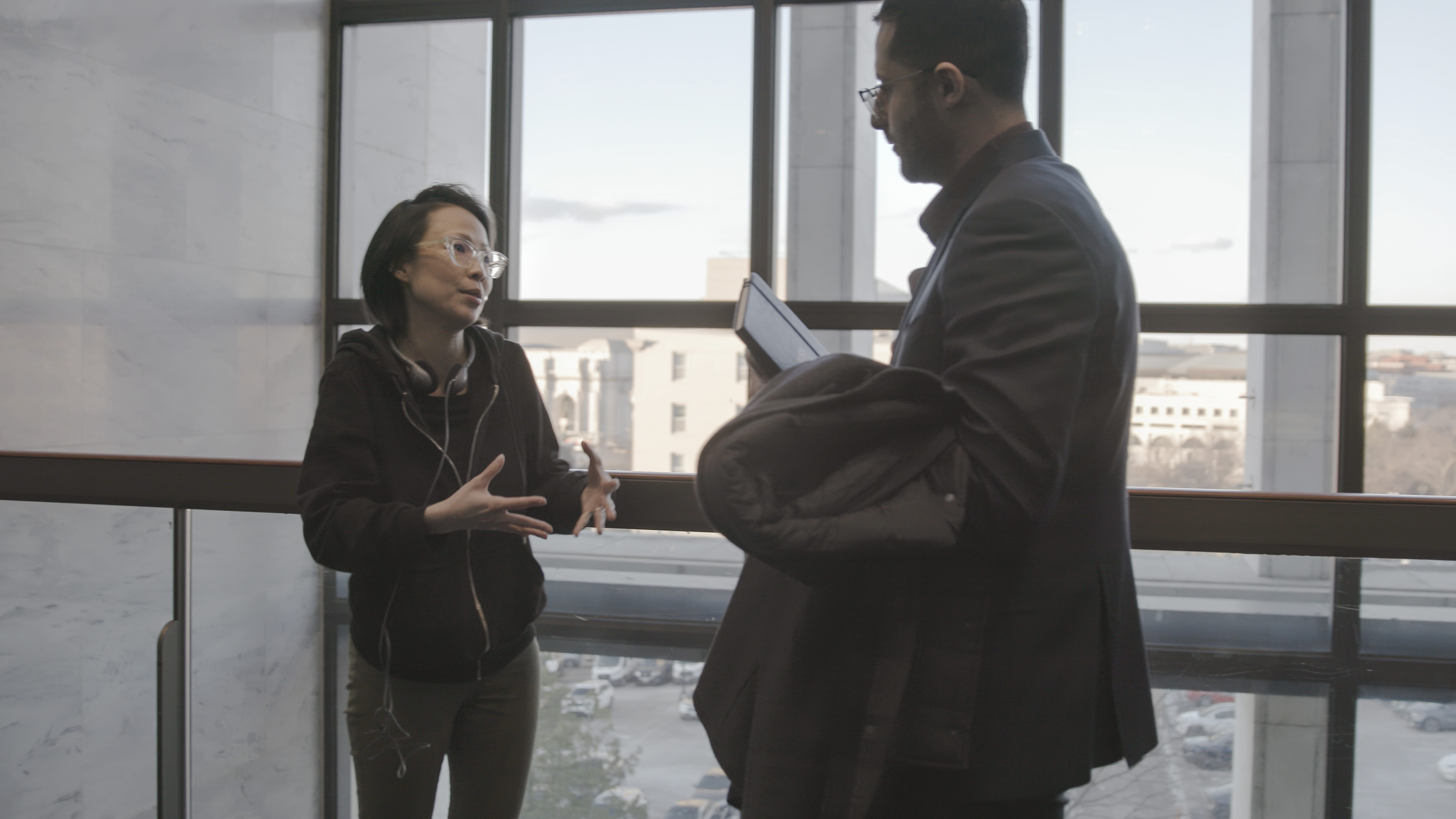
Poh: You know, Vanessa, I’ll be honest with you, for the longest time I didn’t think that my voice was needed. I always thought my role is to serve other directors, to uphold their vision, and to try to help them make the best film possible.
But when the genocide started, and a year in, it just felt like nothing was happening, nothing was changing fast enough. And as you mentioned earlier at the top, I was a documentary commissioner for Al Jazeera English. So seeing colleagues that I respected being targeted and executed in Gaza, and then just seeing that nothing was changing—it really did something to me.
That’s when I thought: maybe all the roles that I’ve held in the past two‑plus decades, maybe they can come to some use in terms of experience, the people I had known and worked with, and maybe this was the time when I should stop just producing and start directing.
Vanessa: It was a very, very, very good choice.
Poh: You know, I was nervous though, because I think I’m a decent producer—I’ve done this for two decades—but can I make something in my own vision? I was definitely very nervous going into it.
But at the same time it was like, okay, I’m just gonna choose, all chips in, and fast‑forward to today we have the film.
Vanessa: I think you bring so much understanding and experience and compassion and empathy as a director. I was immediately struck, in early scenes of your film, with how you enter the frame and are in a little bit of a conversation with the Jewish doctor.
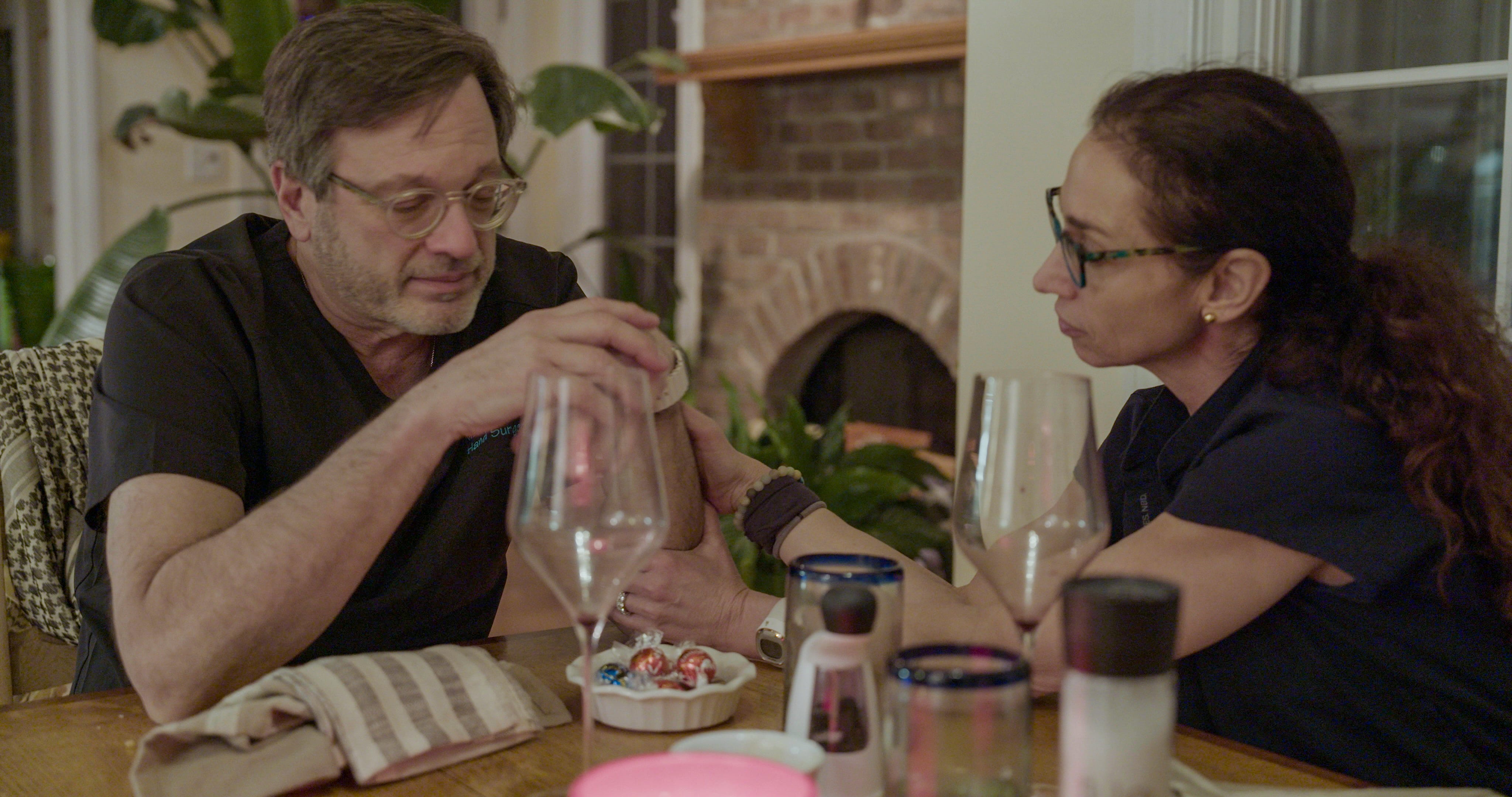
So I want to just set you up to share how you found these three doctors who are so moving to experience—both as physicians in Gaza and as human beings and family members in the United States. You find this balance between all of the roles that they play and how we see their lives intertwined and them interacting. It’s no easy feat.
So how did you do that—all of it? How did you find them? How did you convince them? How did you gain that personal, familial access and go into Gaza with them and film in the hospitals?
Poh: So, you know, I think when I wanted to make this film, I wanted to help myself, I guess, first and foremost. I live in New York, I’ve had all these different positions, I live and work and am a part of so many different communities. I have Jewish friends, Muslim friends, Palestinian friends, friends who are not from either community.
And it just felt like a year into the genocide, there was no more language to sort of speak truthfully to where I was and also wanting to be effective at the same time. And so I searched for people who could help me.
The first person I found was the Jewish doctor, Dr. Mark Perlmutter. This was sometime, I would say, October 2024, in the fall of 2024, and I remember seeing a news clip of a reporter interviewing him: “So Dr. Perlmutter, you just returned from Gaza. Why do you think there’s no ceasefire?” And Mark says, “There’s no ceasefire because politicians are [expletive] to lobby groups.”
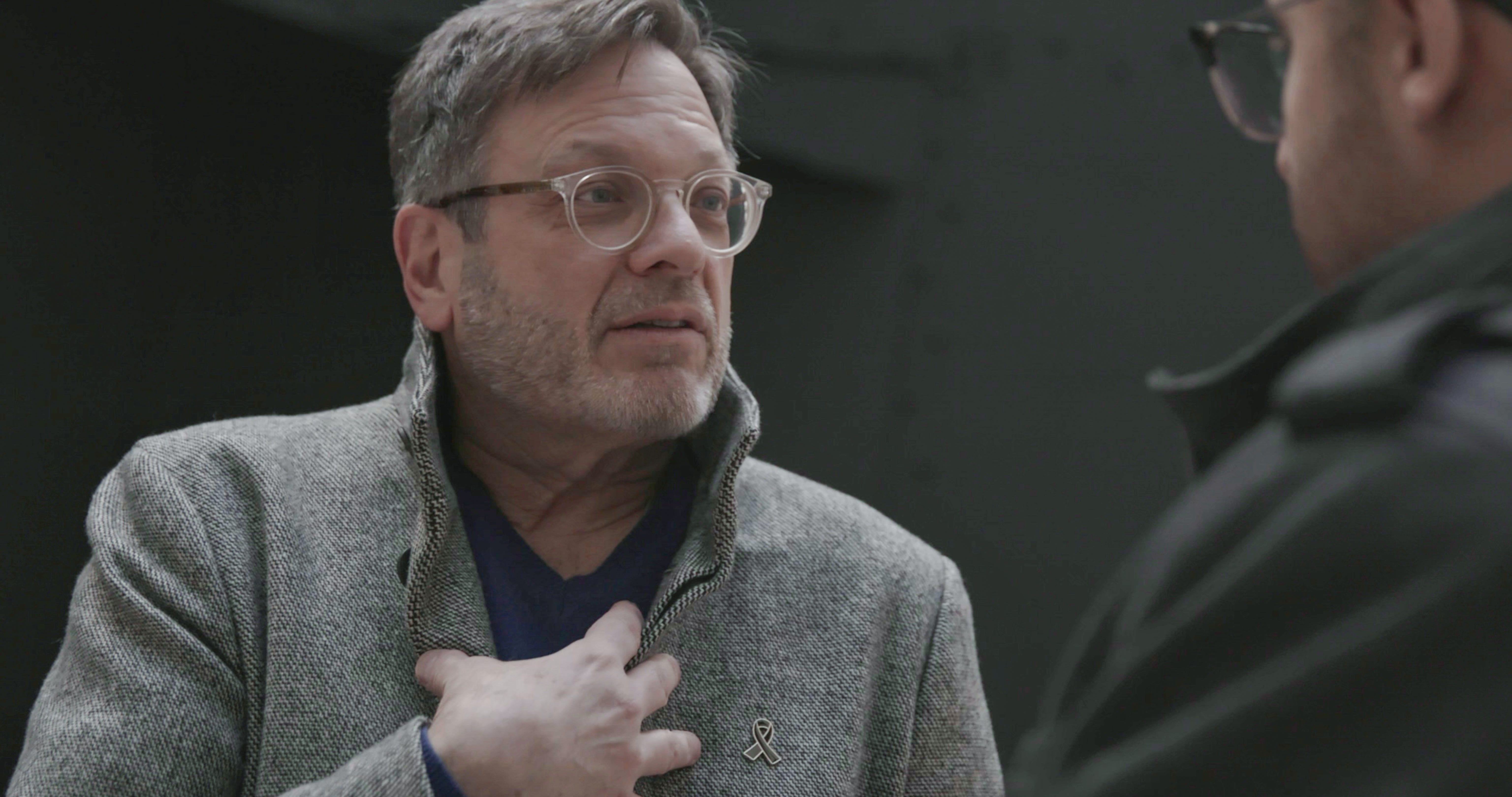
And I was like, who is this guy who just doesn’t mince words, speaks from the heart?
Surely a few days later he was set to be the keynote speaker at a fundraiser for an organization raising funds for Palestinian children in New York. So I went to meet him.
In a room of mostly Palestinians, Muslim Arabs trying to raise funds for children’s relief, you had this white Jewish doctor. And when he spoke, everybody was quiet, and people were sobbing, weeping quietly. I remember the host of the evening telling him, “My brother, we will not forget what you have done for us.”
I introduced myself: “Mark, I am so‑and‑so, I’m a filmmaker, and I’d love to make a film.” And soon after, he introduces me to Dr. Feroze Sidhwa and Dr. Thaer Ahmad—the Zoroastrian doctor and the Palestinian doctor.
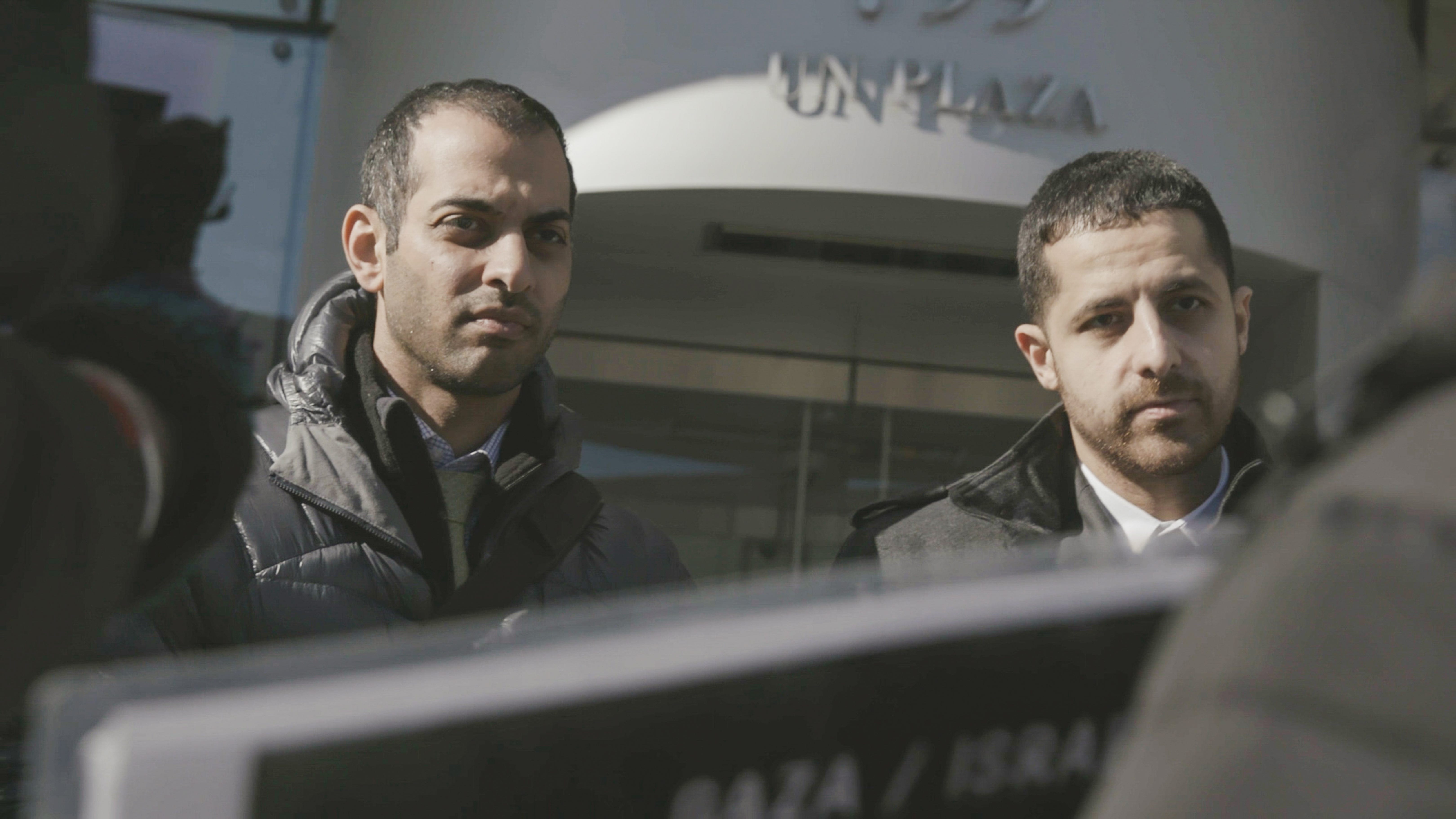
In the first weeks of speaking to them on the phone, I could just sense, wow, they are all so different. I also felt like, okay, I bet they don’t agree with each other a lot, but somehow they’ve come together. How are they able to navigate this moment together? That was sort of the beginning for me.
I made the film wanting to find the right language. From Thaer, the Palestinian doctor, I learned the importance of how to be strategic and political. From Mark—he’s much older than me, he’s 70 now—I learned, “Don’t waste time. Why waste time? Speak from your heart.” From Feroze, I learned that if you want to convince the most difficult of audiences, you have to do your homework.
Meeting the three of them and then having the privilege of being able to see their lives up close—all the challenges—was such a privilege, Vanessa, because they really opened up their doors to me. They didn’t hesitate. In fact, I think both Feroze and Thaer will say this—they’ve said this many times: they just didn’t think anyone would care.
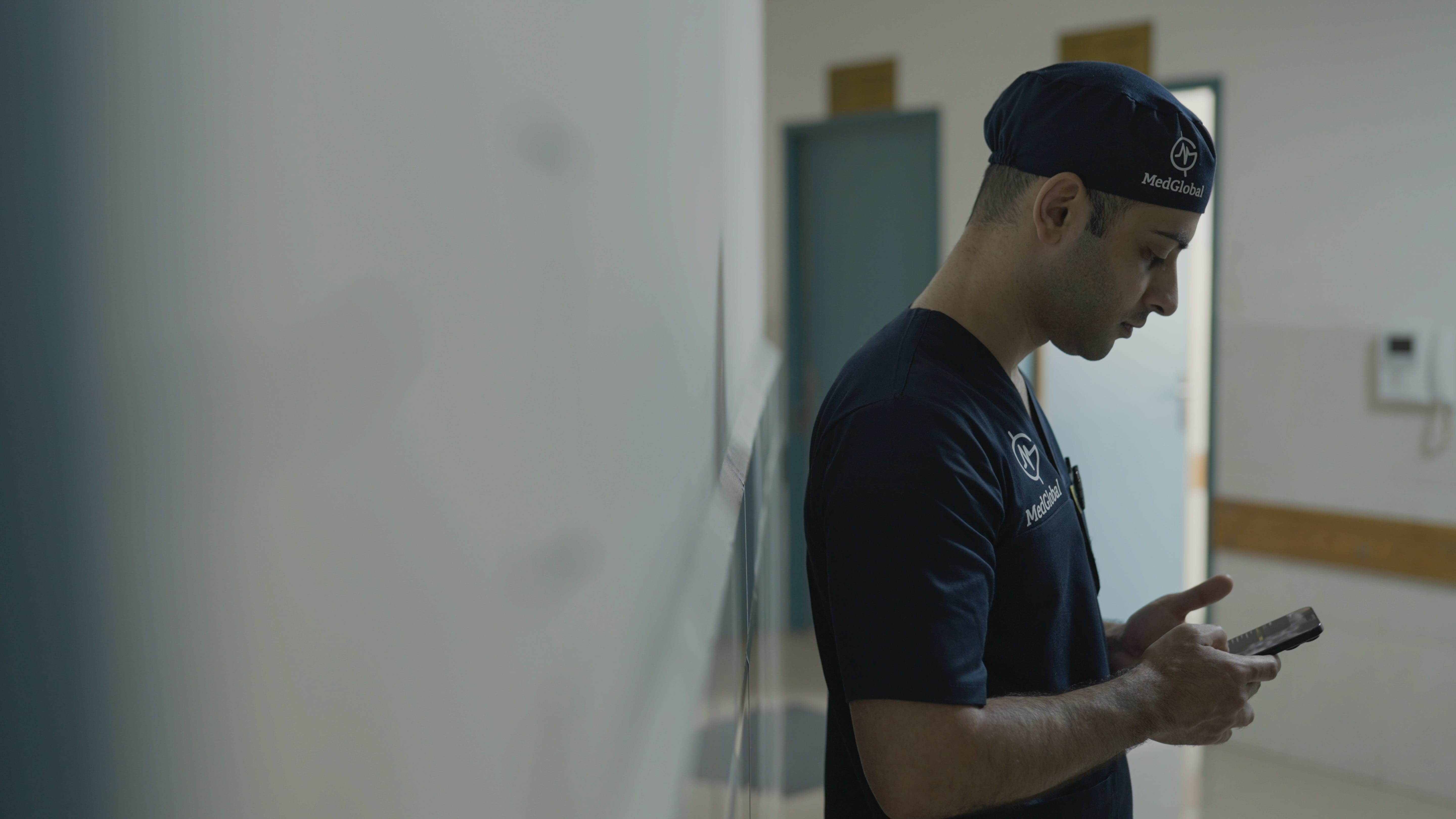
Feroze has said to me many times, “I thought, sure, you can make a film, but nobody’s gonna care about this.” And Thaer, recently when we were in a Q&A, said, “You know, I just didn’t want to waste your time. I knew how much you were putting into it financially and I didn’t want to waste your time. I was worried you were wasting your time.”
And fast‑forward to today, I think it was really worth it. That was the beginning. They never hesitated.
I remember a scene which didn’t go into the film. Thaer was talking to his mother—this is the early days of filming—and he and his mom were having a conversation. He says, “You know, nobody cares about this. Only our community cares about this.”
I remember thinking to myself: they will. Maybe not right now, but they will.
After that I spoke to Thaer and I said, “You know, even if nobody cares, we do it for us. We do it for our children. And that’s all that matters. The rest is not in our hands.”
Vanessa: They’re amazing people and doctors, and obviously so are you. I mean, you all risk your lives to go into a war zone during a genocide, as you’ve said, and to help people on the ground. That is literally all you are doing—you’re helping, you’re saving lives.
And these are people who, as you just said, never intended to be on camera. They’re being asked to speak up now because there are so few people who have been bearing witness to what is actually going on on the ground who can do that. But your film is such a gift and made for all the right reasons and so, so moving.
Poh: You know, Vanessa, there is one thing. I didn’t have to risk my life. I will say this, because—how did we film in Gaza? I really want to share this with the audience.
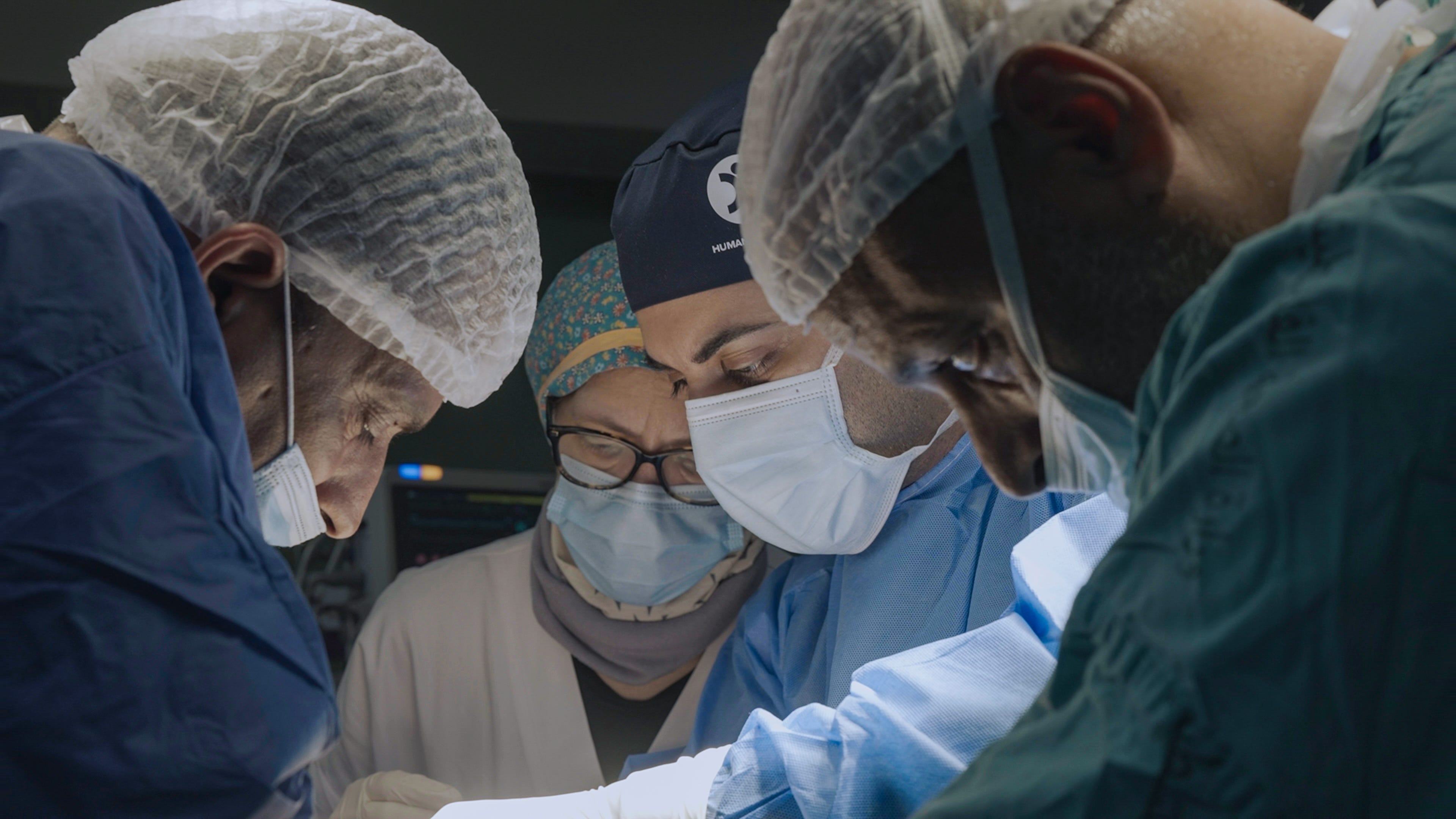
In the early days of filming, I was filming the three doctors in the States and they were getting ready to go into Gaza. Dr. Perlmutter—Mark—he’s the eternal optimist. He’s like, “I will train you as my scrub nurse and take you into Gaza.”
I’m like, first of all, we know who controls the borders. Anybody who does a cursory Google search of my name will know—your bio that you read—I am not a legitimate scrub nurse, Mark. This is never gonna happen.
It’s not just that they don’t let people in; they also turn away so many medical workers because we’ve been speaking out. I knew there was no way I was gonna get under the radar.
So that’s the question: how do we film this? Fortunately, I was a documentary commissioner at Al Jazeera English and I’d been dying to work with my very dear friend, producer Reem Haddad. We were both documentary commissioners for Al Jazeera, covering different regions. I heard that Reem was leaving Al Jazeera and I was like, here’s my chance to work with my buddy.
My buddy, my bestie, worked with this incredible team—two people: Mohammed Sawwaf, our co‑producer, and Ibrahim Al‑Otla, our director of photography in Gaza. Just these two men. I saw their work for another film, a short doc that was made at the end of 2023—amazing vérité—and I was like, “Reem, I want to work with them. Can we work with them?”
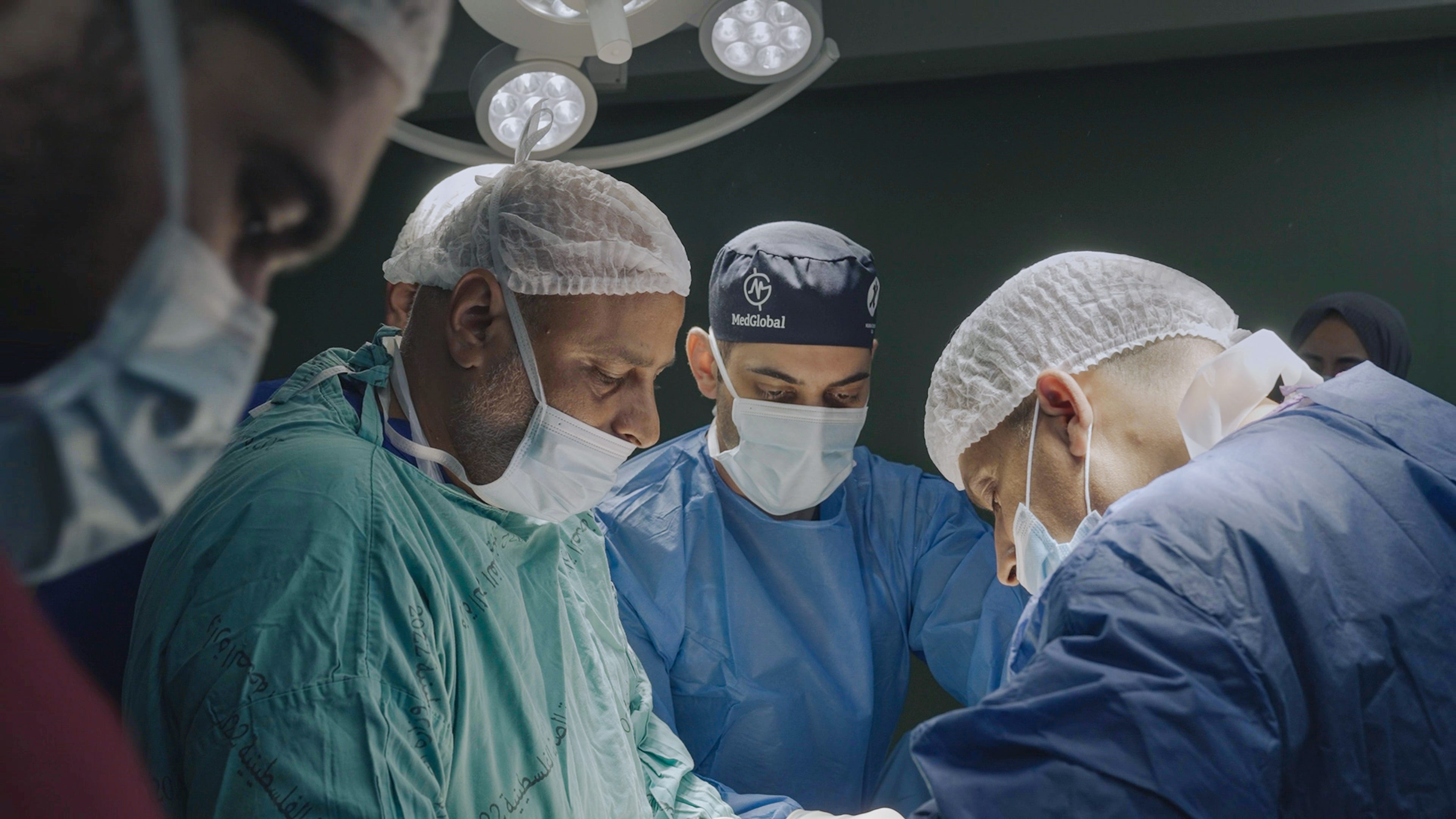
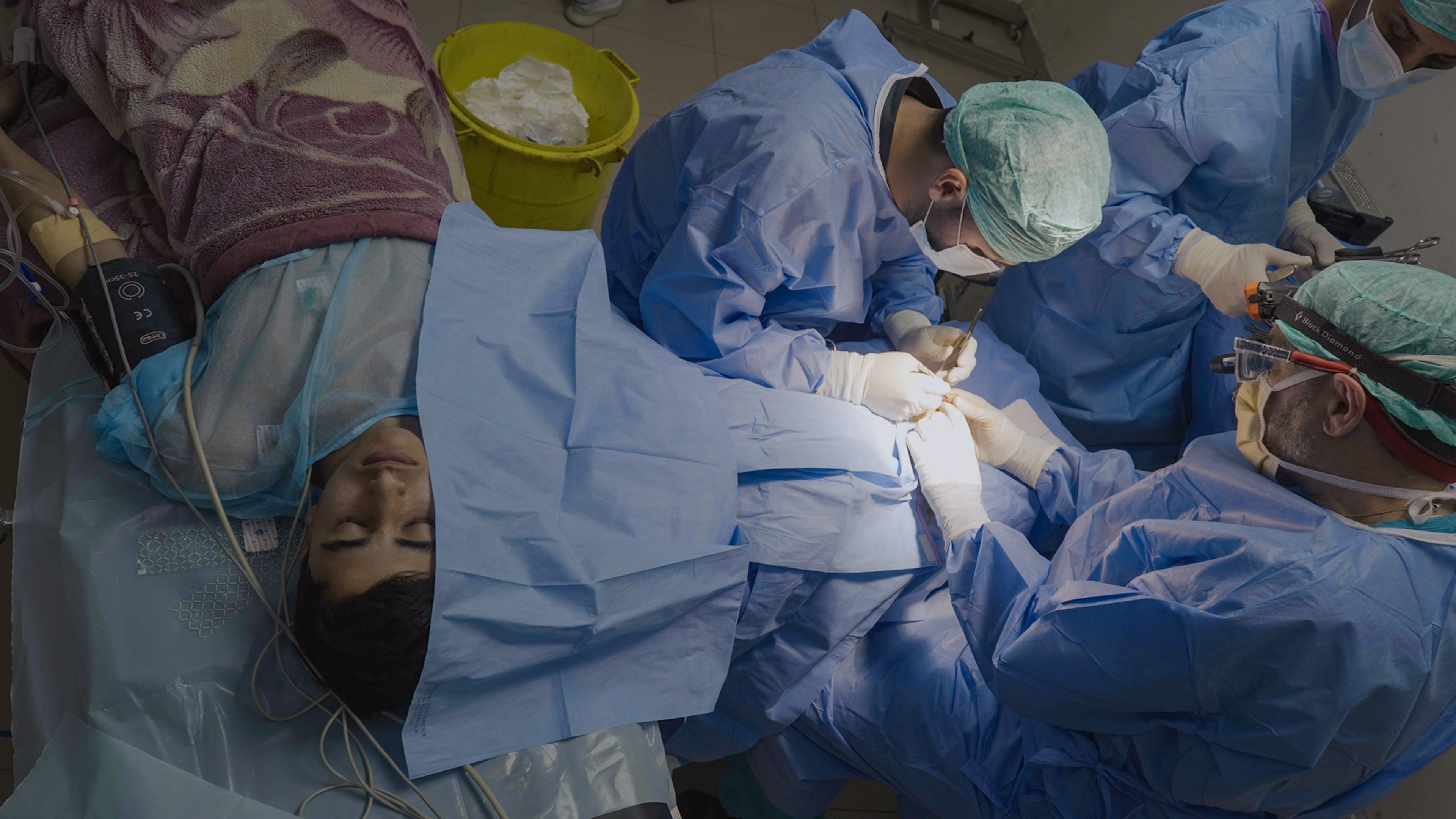
They were the ones who filmed inside Nasser Medical Complex at great risk to themselves, while there was a blockade, while they and their families were literally starving. So I just wanted to share that.
Vanessa: Wow. I mean, it’s so, so powerful. It’s such a moving inside view of all that you’ve described: the obstacles to get into Gaza, the obstacles when you’re there working in a hospital, the challenges for every family member when these three doctors go off and they’re doing their work in a war zone.
I’m glad that you were not in the war zone, actually. I mean, that’s a whole other level of training.
Poh: Yeah. You know, and I say this—I think I’m quite experienced. I was a journalist, I was a documentary commissioner, I did safety and security protocols for my teams that have filmed in different parts of the world, conflict regions. Even the fundraising aspect—I was a grants director, I know how to raise money.
But somehow, I guess maybe in hindsight, it was crazy for me to think that this was easy—that I could do it easily. It was a lot harder than I thought.
I did do it, with my friends, with all my colleagues from eight different countries. We pulled it together, our team. But it was definitely a lot harder than we thought and it still remains so hard for our team in Gaza.
Vanessa: Yeah. So you’ve spoken to how standing up for innocent lives should not be controversial, and yet this is a film that will be seen as “too hot” or controversial for many people because it’s about Palestine.
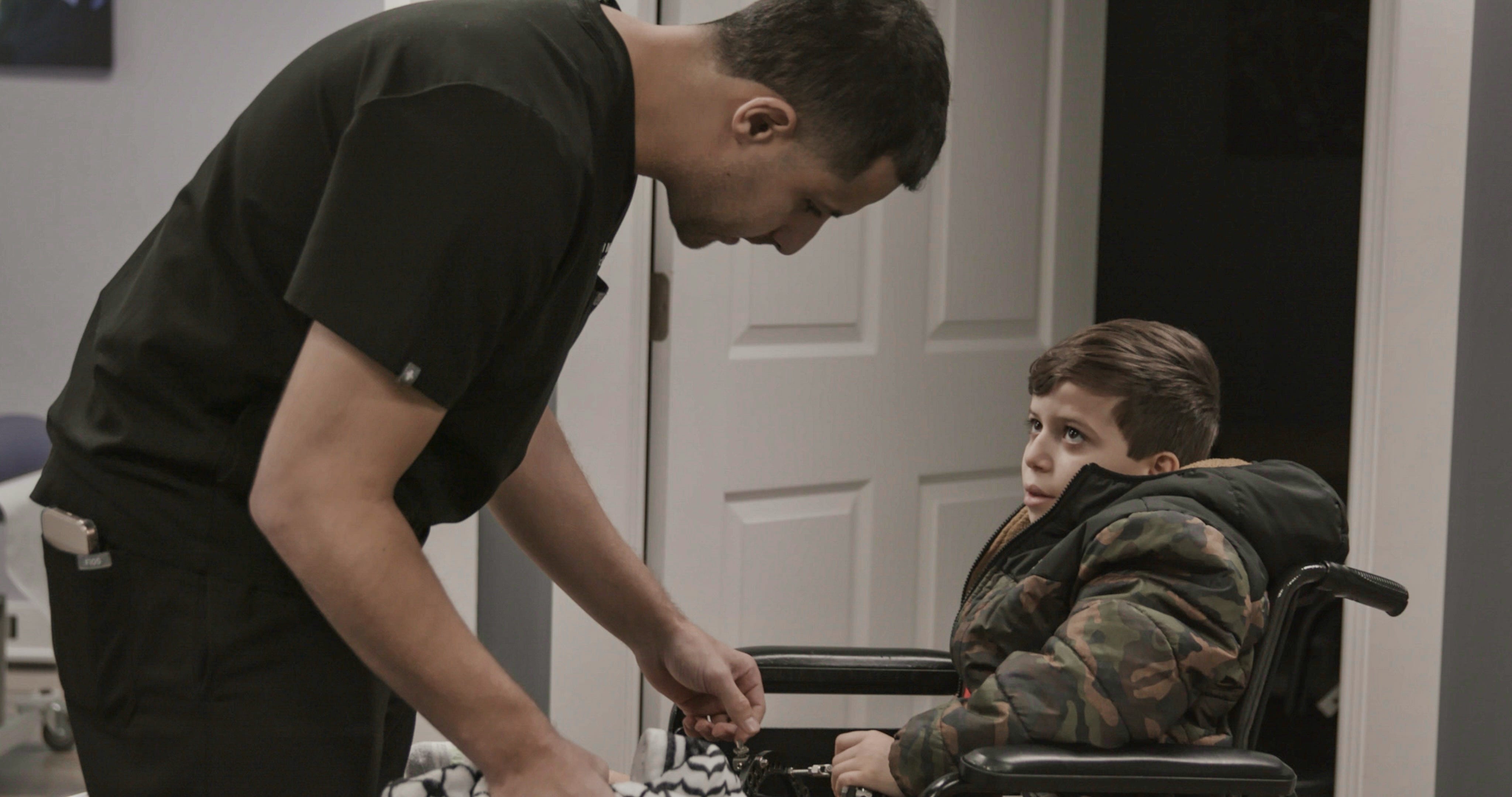
I’m impressed both that you were able to make it and now also in getting it distributed, getting it out. But in the creative process, I feel you have tremendous sensitivity and insight and awareness about the choices you make—how you’re allowing these doctors to speak to what’s going on and understanding what their families are going through.
Was that in your mind from the beginning, or did it develop as you got to know each doctor and learn from them and they were learning from each other?
Poh: I think I just wanted the tools to be able to navigate and to get this privilege of seeing doctors who were literally on the front lines, and to get to see what they and their families and their communities were going through.
It taught me a lot. It also taught me a lot about my own biases. I’ll share that, even after making the film, I can only imagine what it’s like for Thaer, who’s a Palestinian doctor, and for the community and my friends who are Palestinian.
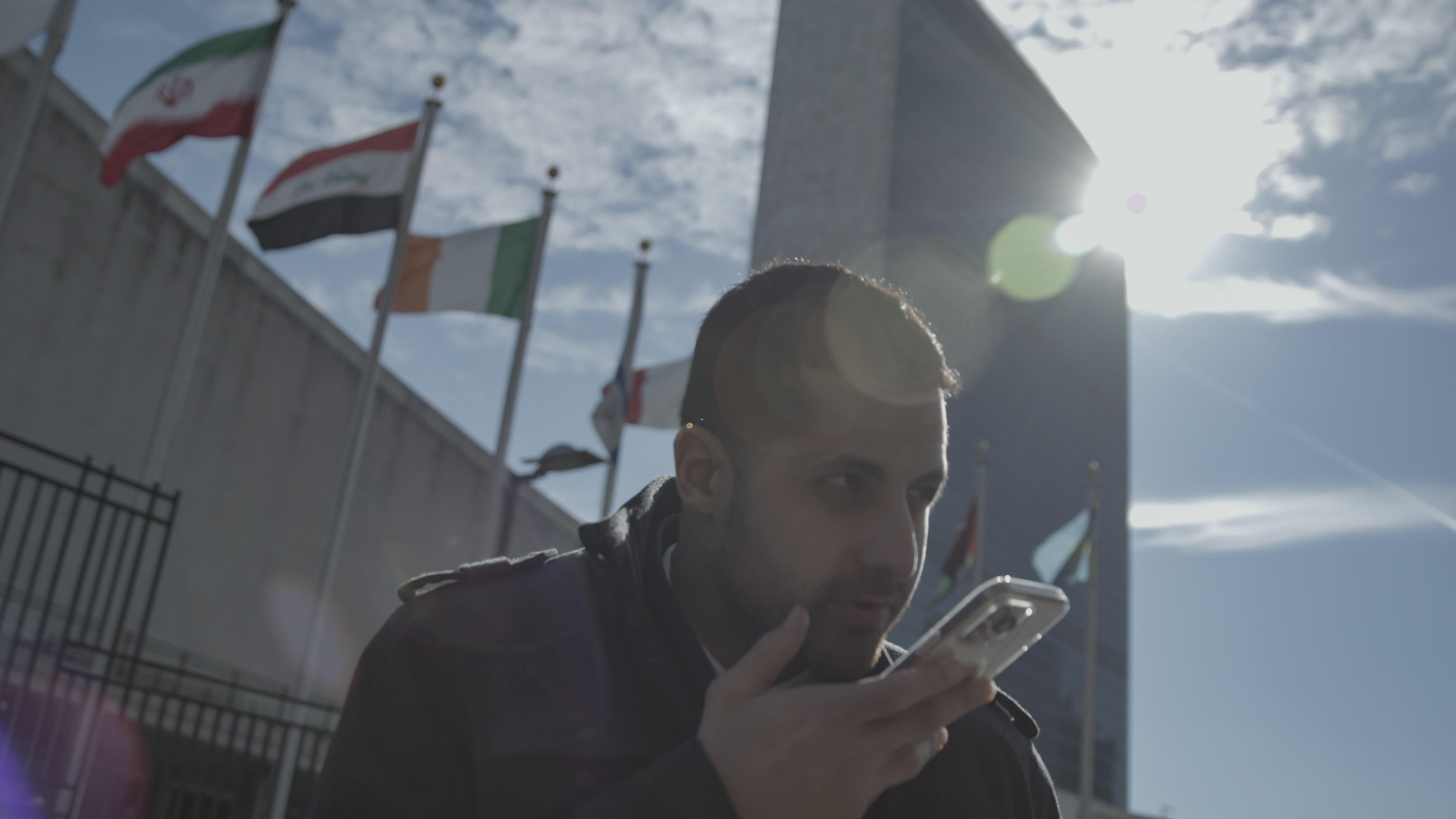
I guess it didn’t occur to me how hard it would also be for Mark. I knew it was gonna be hard for him, but I didn’t realize it until I made the film and saw just how pummeling it can be for him to stand up, and how lonely it is.
So I definitely thought, in my mind, it’d probably be easier for him—“his people aren’t the ones being genocided”—but in many ways I was wrong. From Mark I learned so much about what I thought, in terms of how to navigate.
Mark taught me a lot of surprising lessons because he’s obviously a lot older than me. I would tell Mark sometimes, “Hey man, have you ever thought maybe, you know, think longer‑term, or maybe phrase it this way?”
Mark, if you watch the film, says a lot of un-doctorly things. He doesn’t have any filters. That’s why we love him so much. When I would say, “Have you thought of phrasing things differently?” he would say, “I’m 69, I have no time. And you shouldn’t waste your time either.”
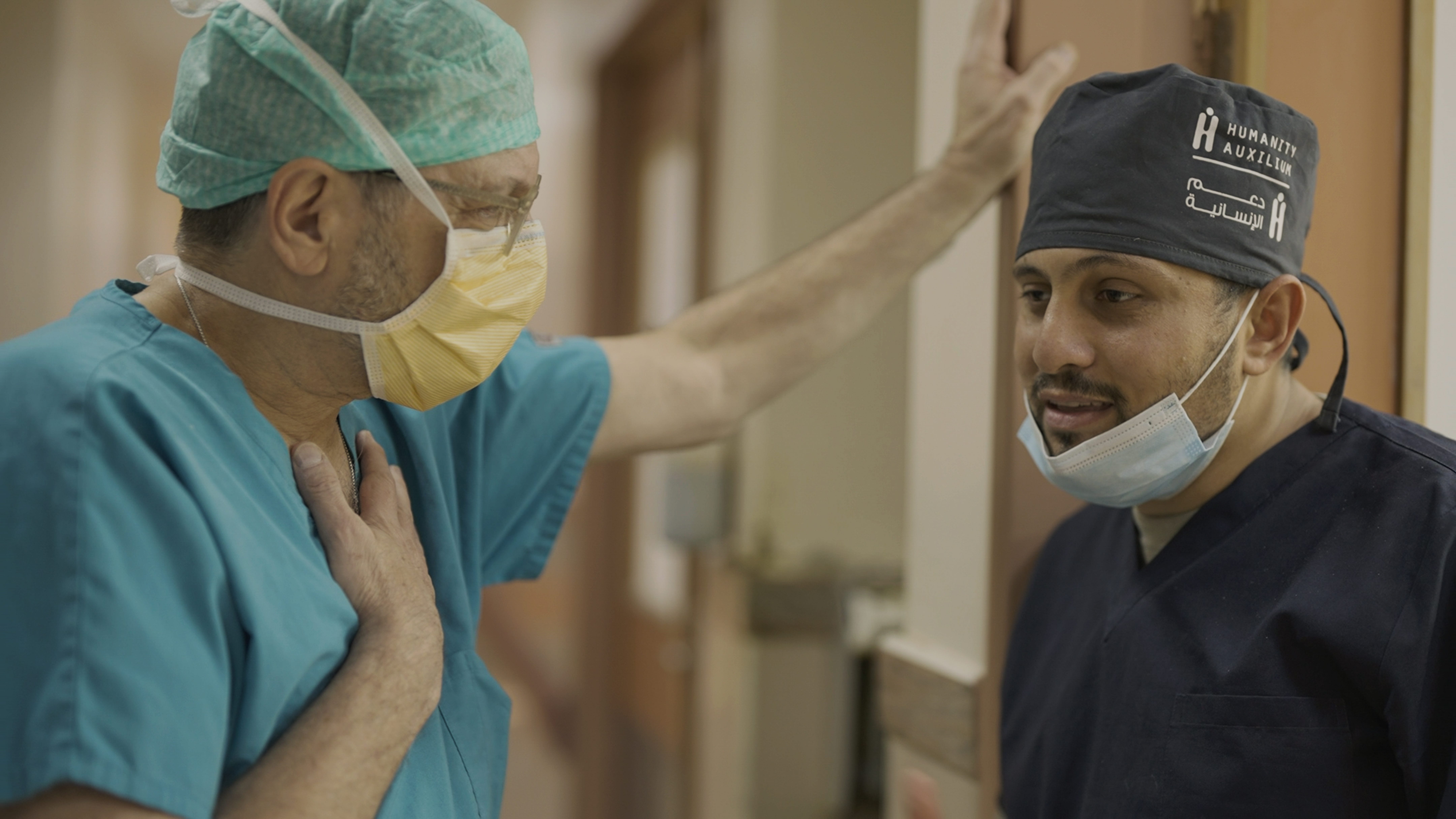
And I’m like, you know what, you’re right. Why can’t I speak from my heart? Why do I have so many challenges saying what needs to be said?
But I also realize—I’m from a minoritized community. I am barely five feet. So I have all these things. But sometimes you don’t have to be that scared and that worried. Mark taught me that.
Vanessa: That’s beautiful. You’re making me think of a few scenes with Mark—who’s the Jewish doctor, just to remind people—that again, I feel your choices were not only sensitive and thoughtful but welcoming to audiences.
You are an ideal director to help audiences feel comfortable wading into this minefield of a subject because you often choose—for example, there’s a good scene in Gaza when Mark, and I believe it’s the Zoroastrian doctor, Feroze, are finished with a CNN interview. Or maybe it’s just Mark who had to be on camera and Feroze is sitting next to him as his friend and support.
The interview’s over, but you’re still rolling, the camera’s on, and Mark is just like, “My God, did I just blow that interview because I’m so emotional and I lead with my heart?” And then he says to Feroze, “That’s why we’re a good team, ’cause you’re more intellectual or strategic about it.”
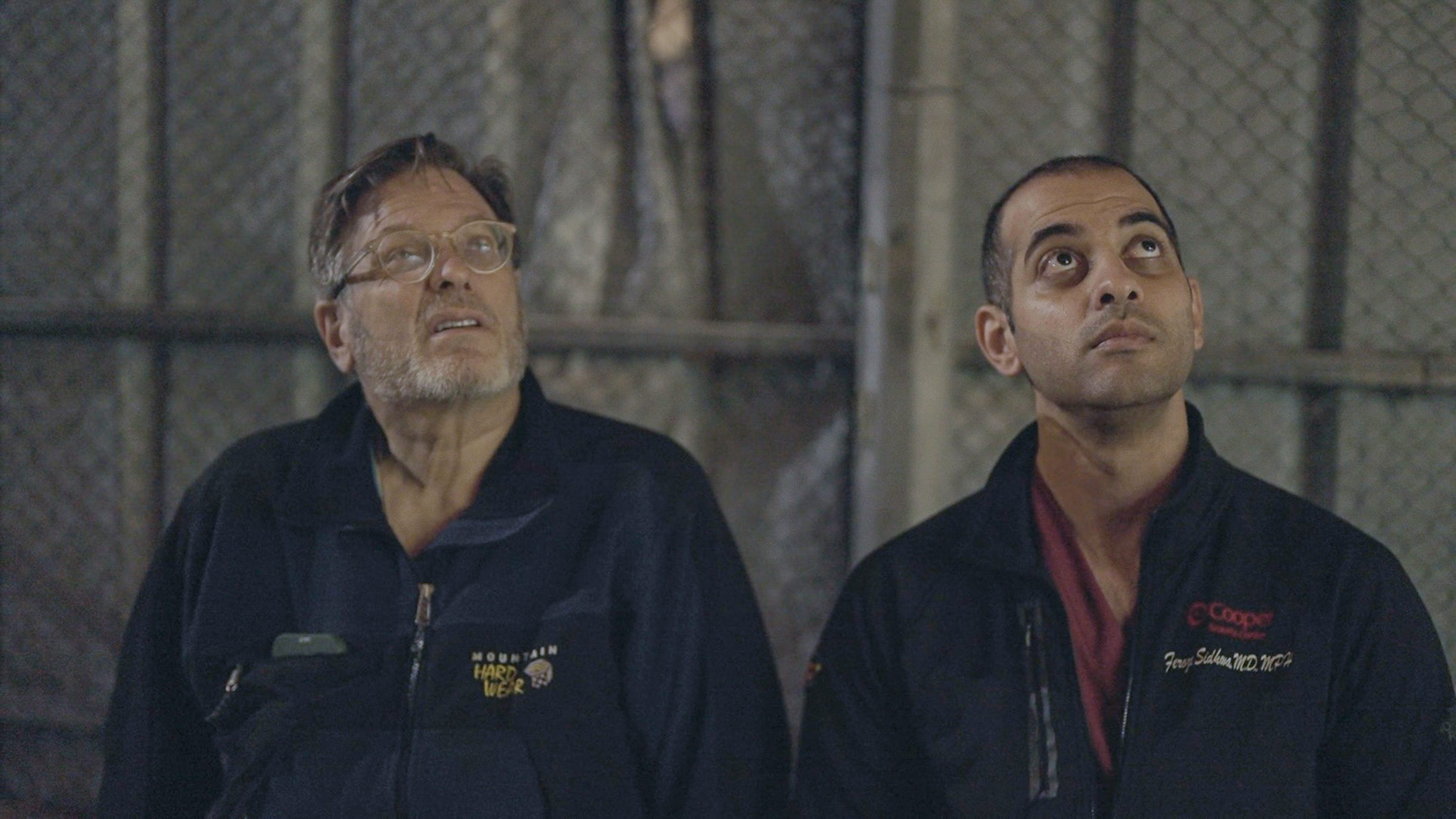
To show us that behind the scenes is comforting. It’s so human. And you do it at the very beginning with Mark too. I was thinking of that scene early on where he wants to show you photos on his laptop of dead children in Gaza, and you say, “No, no, I’m gonna protect their dignity, I don’t want to show that.” And he’s like, “What? You have to. One, I’ve cleared it all, and two, there’s no time.”
As you’ve just said again, there’s no time. There’s no time to stop now because… (I’m gonna get emotional, hold on).
Poh: From Mark I learned it’s important to feel all the feelings. So often we hold back, we hold back our emotions because it’s seen as a weakness.
But no—when it’s channeled in the right way, it is a source of strength. Talking about this, I mean…
Everything in the film, there are challenges I’m confronted with: who gets to say what, how media is treating the subject matter and, in this case, pummeling the doctors in many ways, being unfair or unkind to them.
I say this as somebody who was in journalism, who was a journalist for so long and worked for all the entities.
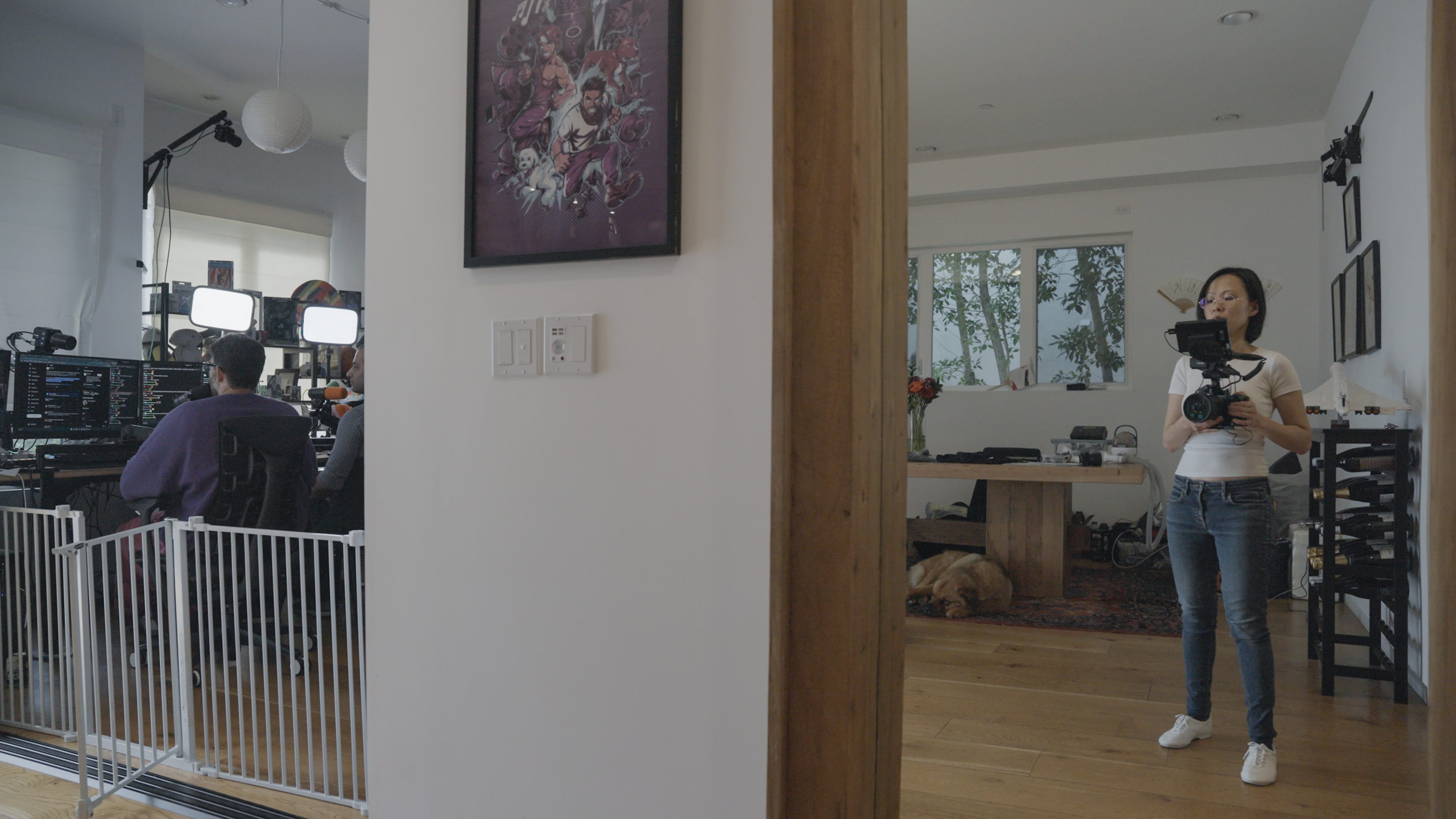
And then, you know, the exchange between Mark and Feroze—I have learned over the past two decades in my professional career: when you have a diverse team and teammates who are different from you, you can better handle situations and go forth together. You balance each other out, listen to each other. That was the relationship between Mark and Feroze.
That first scene you talked about—I actually cut that scene initially for myself. It is the second day I’m filming with Mark in early January, and he’s hesitant in showing what he’s showing me visually on his computer. And then he sort of scolds me, and I deserved it.
I’m glad the camera is not facing me; it’s facing him, because I’m actually crying—I’m so ashamed. It’s such a delicate balance of how much you show. You show too much and it’s gratuitous. You show too little and it’s not real.
I remember having this scene for myself. In the early days when you’re trying to raise funds for a documentary, you have scene selects and we would always—our team—we would show a scene on Zoom to potential funders, stop, talk about it, show another scene, talk about it.
This was the first scene that I’d shown potential funders. I remember showing it to one potential funder: show it, stop, and he said, “After seeing that, I guess I’m gonna have to watch your whole movie.” And I said, “I guess you do.” So that was why it stayed.
Vanessa: Wow. That’s the scene with the photographs of dead children on Mark’s laptop. So powerful.
I wonder, since this is really a lot about truth and the courage to dissent and take responsibility, I like how you frame it too as Americans—because obviously our government is funding this genocide, providing weapons to Israel.
How do you find your courage to dissent as a filmmaker, a mother, an American? You’ve spoken to it as a journalist and as a filmmaker a little bit. Are there other layers or levels to where you have this bravery and willingness to speak up and really show people how to find the same kind of courage that you have?
Poh: You know, I wasn’t born in the United States. I was born and raised in Malaysia. I came to the US twenty‑some years ago as a college student, when I was 18, 19, to San Francisco to study journalism.
From Malaysia, my background—the people there are very generous, and it taught me a lot about the importance of being generous. But it’s really in the United States that I learned how to dissent and how to fight for what really matters.
There was such a foundational aspect of my formative education from when I was 19 in college. I was a journalism student, so I worked in different newspapers across the country. I could see all these different movements. At that time it was also the Iraq War.
I feel like I really came into that voice because of a lot of mentors—journalism mentors, leaders who are people of color, Indigenous, Black, Latina, and professors. They helped me understand what’s special about the United States and that I belonged here.
So with the first Trump administration and now we’re talking about a second term, a lot of my friends and peers—and I don’t fault them—but the immediate thought is, “I’m out of here. I’m gonna leave. I can’t deal with this.”
Okay, I get it. I understand that. I know not to fault anybody; everybody has their own reasons. But for me, I feel I have benefited beyond my wildest imagination. No other country could have provided me everything that the US has.
So it almost feels like, yes, I should stand here and I should fight, and the only way I know how to fight is as a filmmaker. So I’m gonna make this film. All the lessons from the past two decades—that’s what I bring.
Vanessa: Yeah. I feel the same way. We thought about leaving when Trump won again—the vast, unbelievable levels of corruption in every possible way, and so overt about it.
But it feels much better to stay and fight and stand for what’s good in this country and the people who are here. It feels hard to actually be away from it.
Poh: In making this film, I learned a lot of lessons. There are a lot of things that are obviously not in one’s control. But there is so much that is in one’s control—and that is our own actions.
Making this film was hard and everybody said it could not be done. What I did and what the team did was: let’s focus on what we can do now and see how far we can go. That’s what we did. We finished the film in a year.
There’s so much. It’s important to think short‑term, medium‑term, long‑term. It’s important to plan. But when you’re in the midst of so much horror everywhere you turn, sometimes you focus on what you can do now. And that helps us through.
Vanessa: Yep. In fact, you take this film— all three doctors go to the halls of Congress, right? I wonder how that felt. The ability to respond to first‑hand testimony from these doctors who’ve just come back from Gaza versus stonewalling them or shutting them out—how did that all feel to you?
Poh: When I think about it, it’s pretty incredible. In terms of the timeline and how much has changed in society: we’ve been on the road for seven, eight months, and we made the film in a year.
If you go back to Christmas 2024, when we started the film, into January—it was really bleak. The doctors rolled up to Capitol Hill trying to knock on doors in January 2025. This was just last year. All doors were shut to them. Everybody ran away. It was depressing. There was so much despair.
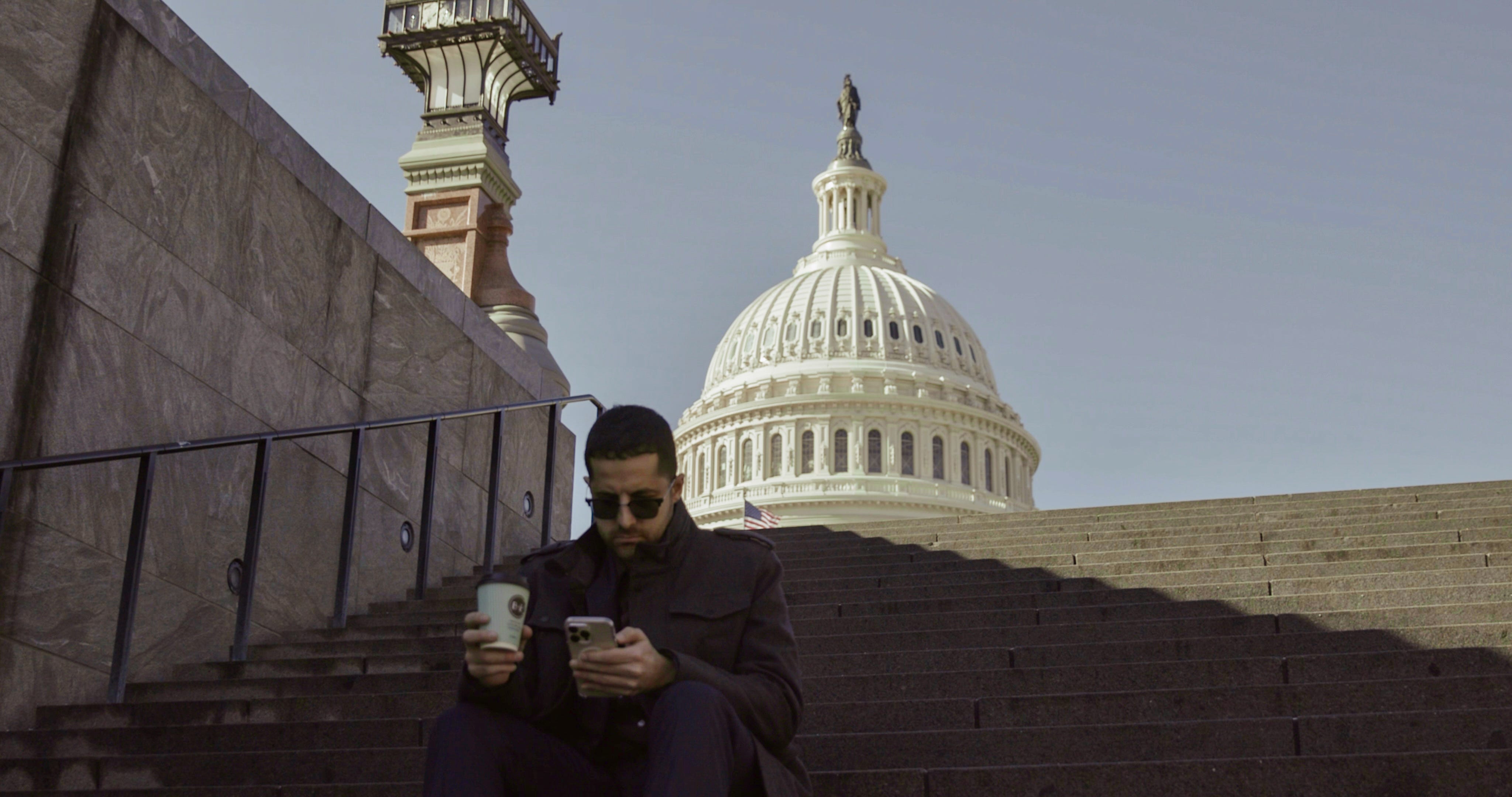
Fast‑forward to today. Just last month, in July, over a hundred Democrats voted to block billions of dollars of military aid to Israel. That is a seismic shift. Something is happening.
A lot of my documentary peers tell me, “Your timing couldn’t be more perfect.” And I think back: when we started, it felt like nothing was moving. It felt like we might not even see this day where we are now.
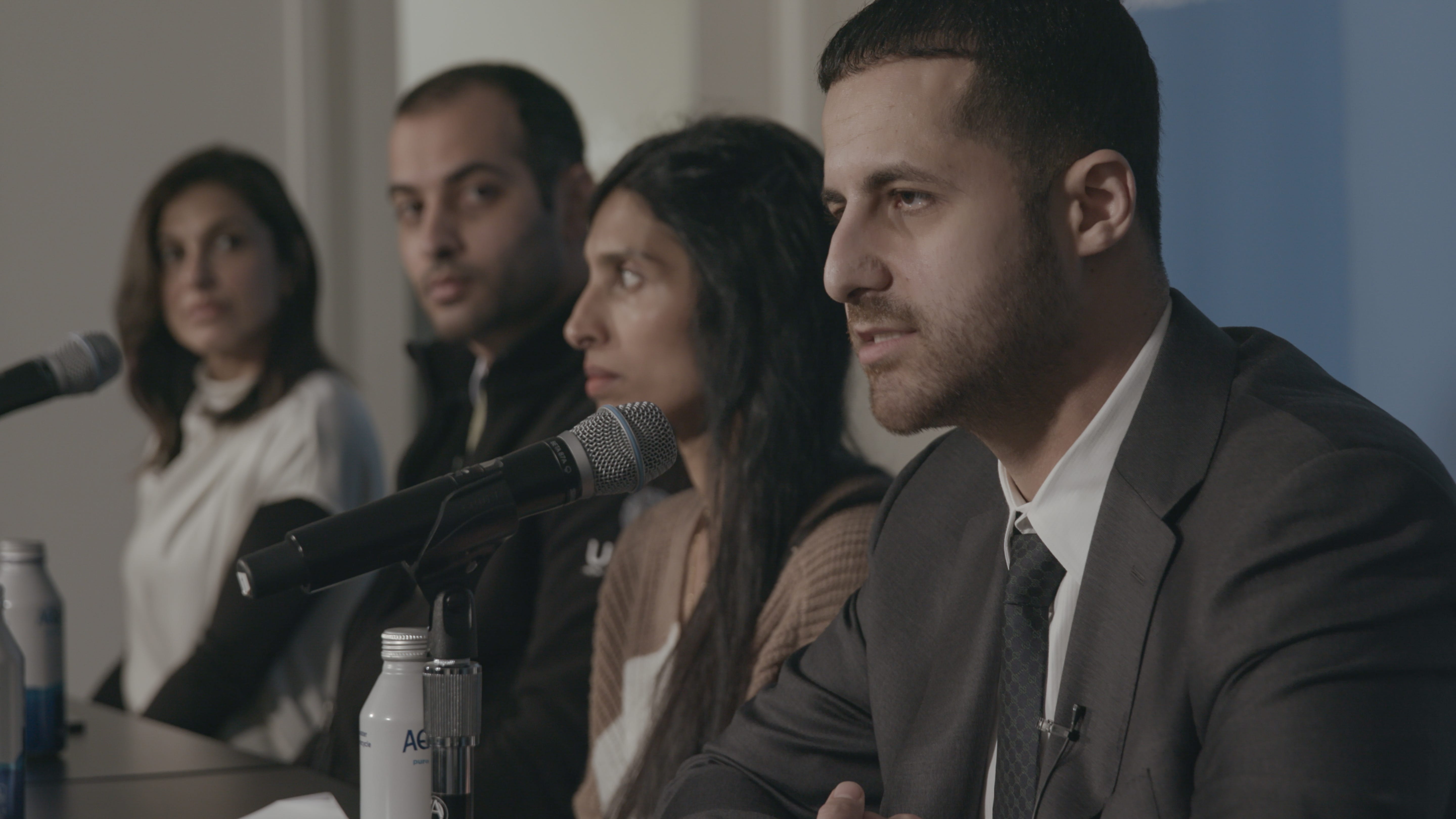
Of course, still so much needs to change. The ground situation in Gaza, what is happening with settlers going in and attacking people alongside the Israeli military in the West Bank—that is very real. It feels like every time there’s something terrible, the next day something even worse happens.
So there is a certain kind of urgency. But as a society as a whole in the United States, people have shifted, and that gives us a lot of hope.
Vanessa: And you feel that this work—so profound and excellent at countering all the dehumanization of Palestinians in Gaza and the West Bank—can break through somehow?
There are so many friends of Netanyahu with so much money and power in this country—from Trump to Ellison. Do we not worry about them and just worry about the majority?
Poh: You know, it’s interesting, that’s brought up a lot, and Thaer talks quite a bit about the film helps with the fight against the dehumanization of Palestinians. Those are his words.
I never thought of that. I’ll be really honest with you. I just wanted to make a film so that we could see Thaer, Mark, and Feroze for who they were and are. That is all.
I just wanted it to be as real for audiences as it was real to me—the good, everything, the strides that they made, and all the pummeling and challenges that they faced. And then leave it up to the audience. That was all.
It didn’t occur to me, “I’m gonna make this film for so‑and‑so, or to counter so‑and‑so.” I just wanted to make the film to be able to navigate and help myself, and maybe it can help other people navigate this time.
And also just hold up a mirror mainly to myself: What am I doing? I have a daughter who’s five years old. When she’s older, she’s going to be asking—our children, our grandchildren are going to be asking—“What did you do, Mom, Dad, Grandpa, Grandma, at that time?”
I just want to have an answer. And the answer is that we tried.
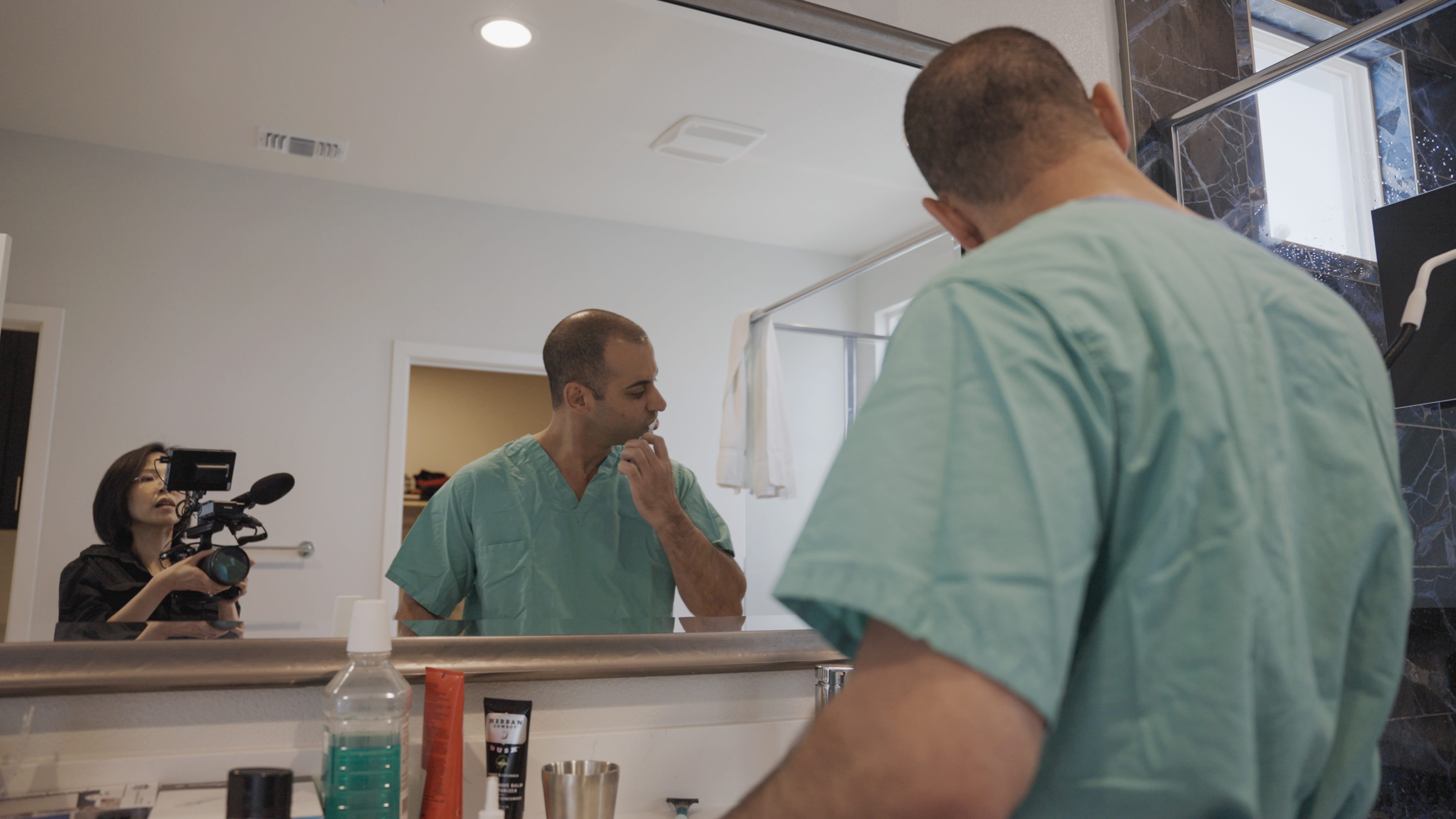
Vanessa: Yeah. So you began filming Christmas 2024 in the wake of October 7th and all of the escalating violence that followed. You’ve spoken to the training for being a filmmaker or a journalist in a war zone, and the doctors no doubt have their training too.
But as the director of this film, which is so much vérité, I wonder how you were able to take care of your team and your subjects through the process of making the movie.
Poh: You know, this film is about three very good men, but it’s made by a core team of three women. So much of it I owe to my producers.
Kirstine Barfod is a Danish producer, incredible. She was nominated for the Oscars in 2020 for The Cave, about a Syrian doctor in Eastern Ghouta. So she likes doctors in war zones—we have that in common. She had the experience to look after and make sure things are on track.
Then there is Reem Haddad, our other producer, who has the biggest heart. Not only is she really good at producing, but she also does all the emotional housekeeping. Anybody who’s a director here knows: when the director is focused, we can be a little nuts. “It has to get done, it will get done no matter what.” Somebody needs to do the emotional housekeeping, and Reem really looks after the team.
So much of it is the team. I’d be remiss if I didn’t mention two other people. The reason I share this is because this is how we do something together that’s very, very hard.
It could not have been possible without Simon Kilmurry, our executive producer. Simon is such a very firm but steady guy. When I have concerns, when our team has concerns, Simon says, “Keep going. You’re on the right path,” because you worry. There’s so much anxiety and fear around this subject matter.
And then Hamza Ali, our other executive producer, co‑founder of Watermelon Pictures. He came in six, seven months into the making of the film when nobody really was interested to support it financially at all—at all. He really gave me the confidence as a director.
He said, “We support you.” Because of Hamza Ali, his brother Badie Ali, and Watermelon Pictures, our film now has the wings to fly, and hopefully the message can go further. That is really the main reason. We just want the message of what the doctors have seen—what their colleagues in Gaza told them to tell Americans, to tell everybody in the western part of the world—to get out.
Vanessa: In addition to this wonderful producing team you’ve just described, you yourself have sat at multiple nodes of the documentary ecosystem—IDA, Al Jazeera, ABC/Disney, now your own Tiny Boxer Films.
Are you able to mobilize a network on behalf of American Doctor to help get it out? Watermelon Pictures must be involved in the distribution, no doubt. But you can imagine so many distributors being afraid that it’s “too hot” or too controversial—when it’s the most urgent kind of story and the most basic human thing to speak up for the most vulnerable when it’s hardest.
Poh: All the experience combined in the past two decades has really helped me and my team navigate this moment and also steer us away from making mistakes. We’re very careful in who we bring onto the team, because we have to be 100% on the same page about things.
Yes, our backgrounds may be different—and they should be different. We should be diverse enough that we can see different opportunities and different challenges. But we have to be on the same page about the fundamentals.
So I think it helped having this diverse work experience. In terms of Watermelon, I mean, I’m excited. The film’s rolling out in so many theaters across the country. I wouldn’t have dreamt, at the start of making this film, that this was gonna happen for this subject matter.
Because everybody, Vanessa, told me it’s not possible. Everybody ran away. All the funders ran away, all the program officers—you know what it’s like. And they’ll say “institutional risk.”
What I will say to filmmakers listening is: it is no small thing when somebody backs you when you’re not “there” yet. Six, seven months in, when Watermelon Pictures and Hamza Ali said, “We’re going to support your film, we’re going to support you,” it is a lot.
I would say to everybody: ride with the people who backed you early on. This is not to say that we didn’t get other offers coming out of Sundance—we did. But for me, it went back to that: who was there when it was the hardest? We will ride together.
We’re so proud to roll out our film with Watermelon distributing us come August.
Vanessa: Amazing. So your film is coming out August 14th, is that right? We’re gonna share all of the information on where people can find the film and go to a theater and see it.
Are there any takeaways you hope viewers—maybe especially Americans paying taxes who may feel distant from Gaza—will think about, or actions they might take, after viewing your film?
Poh: So many thoughts, but I’ll simplify it. It’s helped me a lot, and in the past seven months we’ve shared the film with different audiences. I think it’s fair to say everybody feels like it’s given them some language to navigate this moment.
I hope, for those who are going to watch it, that it will do that for you too. I have to say, in making it and then in rolling it out, I don’t know—I’m a different person now.
When I started, I wanted to run away from the world. I was just so full of despair. Then came rage. Now, having been on the road with the film, with Thaer and Mark and Feroze, there is a way forward now, and there’s no stopping it.
Vanessa: Beautiful. So beautifully said.
Well, thank you so much, Poh. Thank you for your time and this incredible movie, and I hope everyone has a chance to see it and share it and spread the word.
Poh: Thank you so much for having me, Vanessa.
DIRECTOR AND PRODUCER
Poh Si Teng is the producer of the Oscar®-nominated ST. LOUIS SUPERMAN and Emmy® Award–winning executive producer of PATRICE: THE MOVIE. She is a former creative executive for ABC/Disney, documentary commissioner for Al Jazeera, IDA grants director, and New York Times journalist. She is the founder of Tiny Boxer Films, which produces non-fiction feature docs, and docu- and unscripted-series for the US and global majority markets. AMERICAN DOCTOR marks her debut as a feature documentary director.
You frame this a a genocide from the onset, which is where you lost me. Looks like this film had a strong point of view before it began and I’m sure what you’ve presented supports this premise.
We can do better than this!!