
Man on the Run: "With somebody like Paul McCartney, he is the music—the words, the melodies, they’re all reflective of who he is and what he’s going through."
a vHopeful Conversation with Oscar‑, Grammy‑, and Emmy‑winning filmmaker Morgan Neville

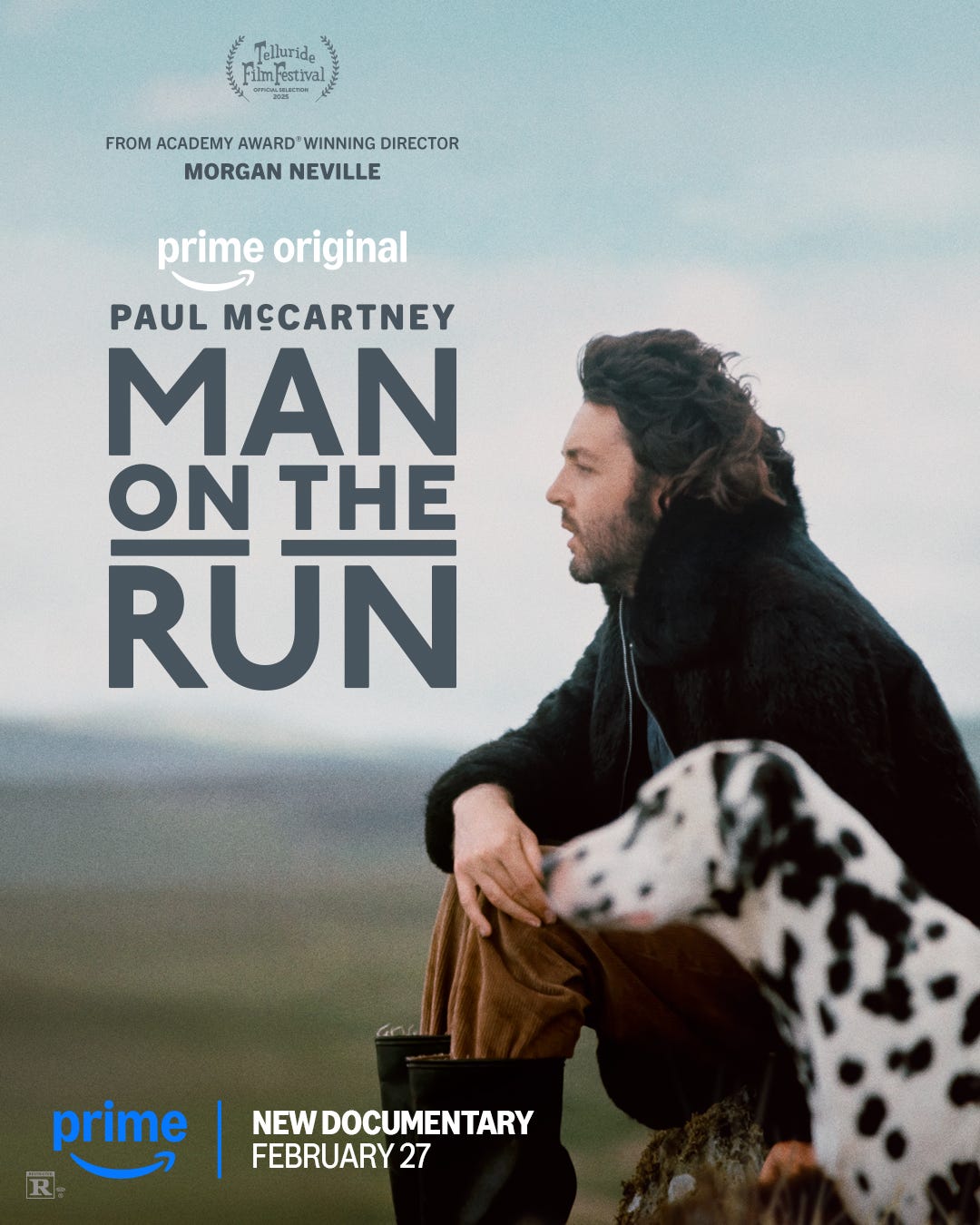
In this vHopeful Conversation, I talk with Oscar‑, Grammy‑, and Emmy‑winning filmmaker Morgan Neville about his new documentary Man on the Run, a wildly engaging portrait of Paul McCartney’s post‑Beatles reinvention. We trace Morgan’s lifelong relationship to the Beatles and Wings (via his dad’s jukebox and my own ’70s childhood soundtrack), then dive into the Scottish farm years when a 27‑year‑old Paul—reeling from the secret “divorce” of the Beatles and even the “Paul is dead” rumor—disappears to raise a family, make strange, radical records, and slowly build Wings from scratch. Morgan explains why he treats this film as a spiritual sequel to Get Back, why he keeps interviewees off camera to make the story feel present‑tense, and how, as a musician himself, he lets the music lead the storytelling. We talk about Paul’s vulnerability and generosity with his new band, the risks and genius of albums like Band on the Run, and the creative lesson of trusting your instincts even when the world doesn’t immediately applaud. Along the way, Morgan reflects on three decades of films about culture—from Twenty Feet from Stardom to Won’t You Be My Neighbor? and Roadrunner—and shares big‑picture thoughts about movies as empathy machines, the dangers of “good enough” algorithmic content, and why he sees his work as “paratherapeutic”: trying not to judge his subjects, but to understand them deeply enough that we can see ourselves in their stories, even when the subject is Paul McCartney.
Transcript lightly edited. Podcast available on Dream of a Better World, & Apple, Spotify or wherever you listen
Note: Ted threatened to divorce me if I sprinkled ‘Silly Love Songs’ throughout the conversation, because we reference it a couple of times—including Ted’s thoughts. :) But I’m sharing the official Wings music video here for those who want to listen to it… like me! And it’s a great video!
Vanessa Hope: I’m very excited to be joined by filmmaker Morgan Neville, who is an Oscar‑, Grammy‑, and Emmy‑winning documentary filmmaker known for deeply felt portraits of cultural figures, from the backup singers of Twenty Feet from Stardom to Fred Rogers—who everybody on earth loves—Orson Welles, Anthony Bourdain, and now Paul McCartney. A musician himself, which we have to talk about, he’s one of our great filmmakers about music and creative life, with a rare ability to translate artistry, ambition, collaboration, and public myth into highly emotional cinematic storytelling. That makes him especially compelling as a guide for Man on the Run, which we’re talking about today, where he brings both fan knowledge and real formal imagination to Paul McCartney’s complicated, vulnerable, and wild post‑Beatles reinvention. Morgan, thank you so much for being here.
Morgan Neville: Of course. Great talking to you.
Vanessa: Yeah. So I’ve heard that you’re a lifelong Beatles and Wings fan, and I wonder about that—when did this begin?
Morgan: Yes. I mean, there’s no beginning on it; it was there from the beginning. My dad was a giant Beatles fan. He saw the Beatles in ’64, and we had a jukebox in my house growing up full of Beatles 45s. So there was never a time when the Beatles weren’t part of my life.
I think that’s true for a lot of people, but I was born in ’67, so by the time I was really starting to be influenced by music and what I was listening to on the radio when I was young, Wings were what was happening. Anything with the Beatles I was connecting with—whether George, or even things like The Rutles I loved, anything Beatles‑adjacent.
But Wings were a band that felt more like my band too. It’s a band that didn’t get a lot of love, but was a hugely popular band. Part of what this film wanted to explore—what I wanted to explore—is trying to resuscitate not only the music but the work that was done in this decade and take it out of the shadow of the Beatles, if that’s ever even possible, and try to give it its own spotlight for a minute.
Vanessa: Yeah. I was born in 1973, and I completely associate all of the Wings music with my dad. The happy pop—like “Silly Love Songs”—brings back so many good memories. After seeing your movie I immediately started playing it around the house and Ted is like, “Turn that off, that’s not good music,” and, you know, he has punk‑rock taste, so this is not okay.
Morgan: Yeah. Does any Wings work for him or not?
Vanessa: I think he’s okay with “Band on the Run.” I think there are a few songs that are okay for him.
What you do in the film is so fascinating. Again, I knew none of this—the whole Scottish farm period and extreme creativity that Paul goes into with his wife when he has a family and sheep. There’s some radical music early on there too. I think Ted was into some of that music—the more extreme creativity.
But yeah, tell us this story because you track it so clearly in the movie. I knew none of it and was so fascinated to understand it better.
Morgan: Yeah. When I thought about how to tell this film, to me, in a way it’s kind of a spiritual sequel to Get Back—Peter Jackson’s multi‑hour, remarkable documentary about the Let It Be sessions.
Vanessa: One of my favorite documentary series of all time, which I could watch over and over again—just being in the studio with the Beatles recording and brainstorming and jamming. It’s the best thing to watch before bed. I don’t like being scared before bed with anything I watch.
Morgan: Exactly. That’s good, I haven’t tried that. I love Get Back. But as I was thinking about this, and when you look at the timeline of things, this film in a way begins the day after Get Back.
Essentially the Beatles are both creatively at their peak and also the tank is empty—they’ve kind of run their course. Paul’s the one who wants to keep it going more than anybody. Then it essentially evaporates in secret overnight when John tells Paul and the band that he wants a divorce.
The question I came into it with was: what do you do at that moment? All the momentum, all the creativity—you see songs pouring out of them in Get Back—what do you do when that just vanishes, and what’s the vacuum that leaves?
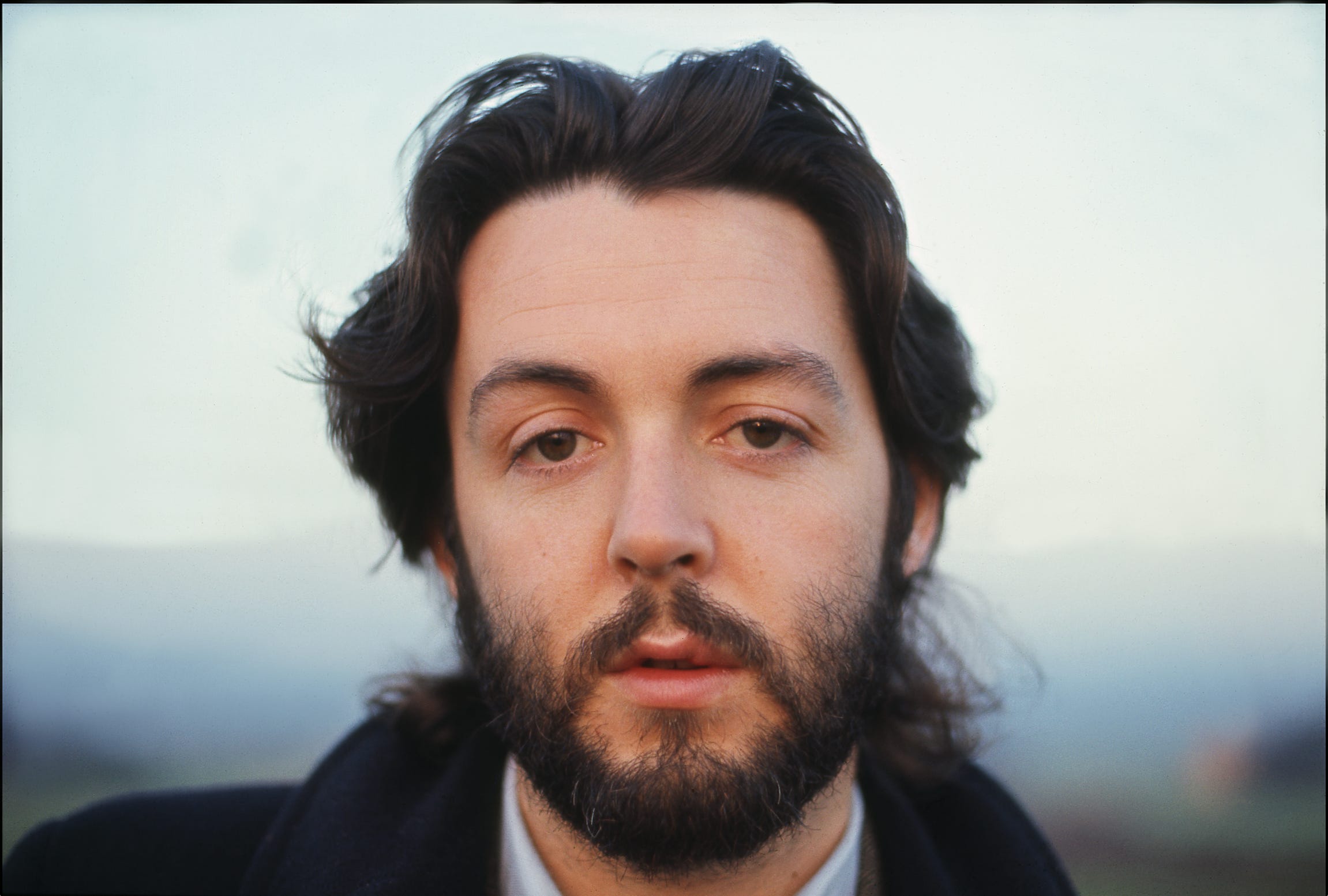
That became a great place to begin the film. I say it at the beginning of the film: Paul is 27 years old, which is insane to imagine, that they did all that work and he was still only 27. Paul really has kind of a midlife crisis going through this divorce at the age of 27 and makes a bunch of very unorthodox decisions—because that’s Paul’s nature.
Many of those, in retrospect, turn out to be the sanest decisions he could have made. So it was just following that journey of him trying to find himself.
The way I thought about it going into it was not, “Let’s make a film about Paul McCartney the genius musician.” We all know he’s a genius musician. Let’s make a film about Paul, this guy who’s in a crisis, who has a new wife and a new baby and is trying to figure out who he is. Essentially that’s what the film tries to tackle.
Vanessa: It’s so beautiful what you show us of him, because it’s amazing that this huge star—as you say, who had this huge body of work with the Beatles by the age of 27—is suddenly completely humbled and generous and attempting to bring a new band together and tell them he’s just one of them.
I don’t know if he had trauma from being in the Beatles—that he was a sort of superstar writer and performer and didn’t want to overshadow everybody, or there was rivalry he was compensating for by trying to be extra sensitive. But he’s so sensitive, so sweet and kind, trying to say, “I’m just one of you, we’re all in this together.”
Morgan: Well, there are about fifty books about that topic.
I do think Paul went into the experience of Wings—first of all, the reason he started a band was after his first two solo albums, first by himself and then with Linda. A band is what he knew. That was his comfort zone: there are other musicians, we have each other.
As insane as being a Beatle was, at least they had each other to normalize it in a way, just to understand it together.
Get Back, I think, was a reclamation of the real truth of the end of the Beatles—at least of the vibe at the end. Remember, Get Back is using the rushes shot for the film Let It Be. Let It Be, the movie that came out in 1970, the Michael Lindsay‑Hogg edit, is just all the bad stuff—it’s a film about divorce.
In the film and in the critical backlash about the breakup of the Beatles, the blame game that went on, everybody was angry at Paul. They’re saying, “Paul, you were pissing off George because you’re telling him what solo to play, and you’re pissing off John because you’re cracking the whip.”
So I think Paul was extra sensitive about not being overbearing. But he’s Paul McCartney. That’s the thing this film tries to track: him coming to terms with the fact that he can never just be one of the boys again. That is impossible.
Vanessa: Yeah. Right. And it’s fascinating because of that question of a second act or a new chapter. It really is such a fresh start.
It’s bizarre that preceding it there was this moment of “Paul is dead.” What in the world was that “Paul is dead” moment? Allison Anders has a whole script titled Paul Is Dead—as a young person she was obsessed with him. What happened there?
Morgan: I’ve talked to Allison about it. It started as kind of a kooky lark. It was a DJ at a college radio station in Ann Arbor, maybe, who started it. It had been floating around a little bit.
The thing I’d never quite pieced together until I started working on the film was that when it really took hold and became a big national story was exactly when Paul went to Scotland and hid out. Him disappearing to the farm in Scotland gave that crazy conspiracy theory—which nobody really believed, but it was a fun media story—a chance to catch fire.
So that’s the understanding: it all happened at the same moment. Paul’s vanishing to Scotland led to the “Paul is dead” rumor exploding. Then he comes back to London at the end of ’69 and ends up putting out his album in the spring of ’70.
There’s so much happening at the same time. Being a Beatle—every week of the Beatles’ lives was like a year of a mortal’s life. So much was happening.
Even the pace with which they made music—the speed from recording to release. And Paul, again, you see it in Get Back: all the momentum Paul has. He’s at this peak where songs are just dropping out of him everywhere, and he’s trying to figure out what to do with them.
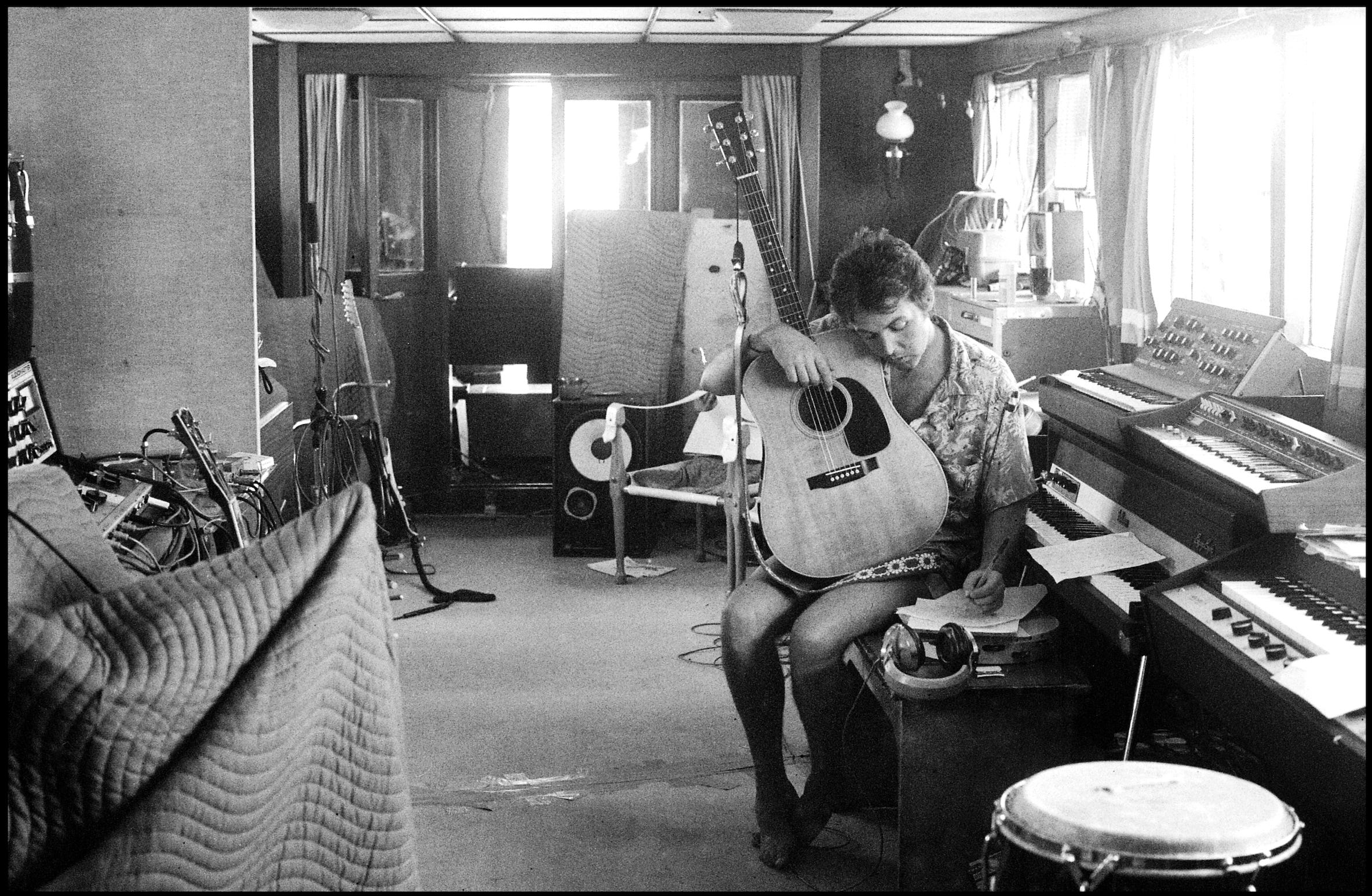
It takes him years and years to figure out: what’s the best thing to do, what do people want from him? I think the other thing he had to contend with was the kind of cultural heartbreak going on. Everybody’s angry, and they’re angry because they’re sad.
Fans and critics are like, “Why can’t you just be in the Beatles again?” I think all the Beatles got that, but Paul maybe a little more than everybody else, in part because he was initially blamed for breaking up the Beatles.
Vanessa: Right. Yeah. That’s what I was thinking about too—the complete saturation that everybody was immersed in the Beatles and expecting, “You can’t disappear, you can’t break up, you can’t change.” And they did.
But in that divorce process, as you said, there’s confusion about who did what and everyone’s trying to figure it out. I think your film really makes clear what really happened. I don’t know if that was new to you, if you were discovering anything, or if you just managed to communicate it extremely clearly.
Morgan: I’ve heard all those bits of the story, but they’re incredibly complicated. There are whole books—there’s a great book called You Never Give Me Your Money about the business end of the Beatles. These are all rabbit holes you could make a whole film about.
What I wanted to do was distill it clearly, because the average person doesn’t really pay attention to all that. At the time, there became this cottage industry in the media of starting to pit John against Paul: “Are you a Paul person or a John person?” That continues to this day—that you have to be one or the other.
Vanessa: Exactly. My dad is kind of Paul. I would say Ted is kind of John.
Morgan: I get it. My theory about the Beatles is that there’s a Beatle for every age you’re at.
When you’re a kid, it’s Ringo, because it’s “Yellow Submarine” and “Octopus’s Garden” and he’s silly and funny. When you’re a teenager, it’s John, because he’s taking on the world and he’s subversive. When you’re in your twenties and spiritually trying to figure out what life means, you’re George and you’re thinking about religion and spirituality. And then when you have a wife and kids, you’re Paul, because he understands that.
That being said, I love all the Beatles. I’m not one to pick sides.
Vanessa: That is a beautiful way to think about it actually—the Beatles as stages of life.
So what is it about being a musician yourself that might have helped you get into making such good documentaries about music? It’s clear you understand every aspect of it. I love films about the creative process, and I feel you really give us that with Paul. It’s so fun to watch how he makes music—it’s got that Get Back vibe.
Morgan: Creative process is one of my favorite things. I’ve made a lot of films about artists, and it’s never boring.
When I was doing Twenty Feet from Stardom about backup singers, these ladies—when I’d be talking to them and they would open their mouths to sing something, it was like they were transformed. In those interviews I was constantly saying, “How does that go? Can you sing that for me?” I just loved it when they sang and understanding what they could do.
Creative process is always fascinating to me and feels relatable as a creative person myself, even though it may be totally different. The music part of it—yes, there are obvious things like rhythm and editing and understanding that.
But I also think a lot of people in music documentaries treat music as filler. It’s wallpaper, or it’s, “Here’s a hit, let’s play it”—the Behind the Music thing. I’m not Behind the Music. I want the music. Tell me about the music.
To me, when it works best is when the music is the story and is the person. When you’re making a film about somebody like Paul McCartney, he is the music. The words, the melodies—they’re all reflective of who he is and what he’s going through.
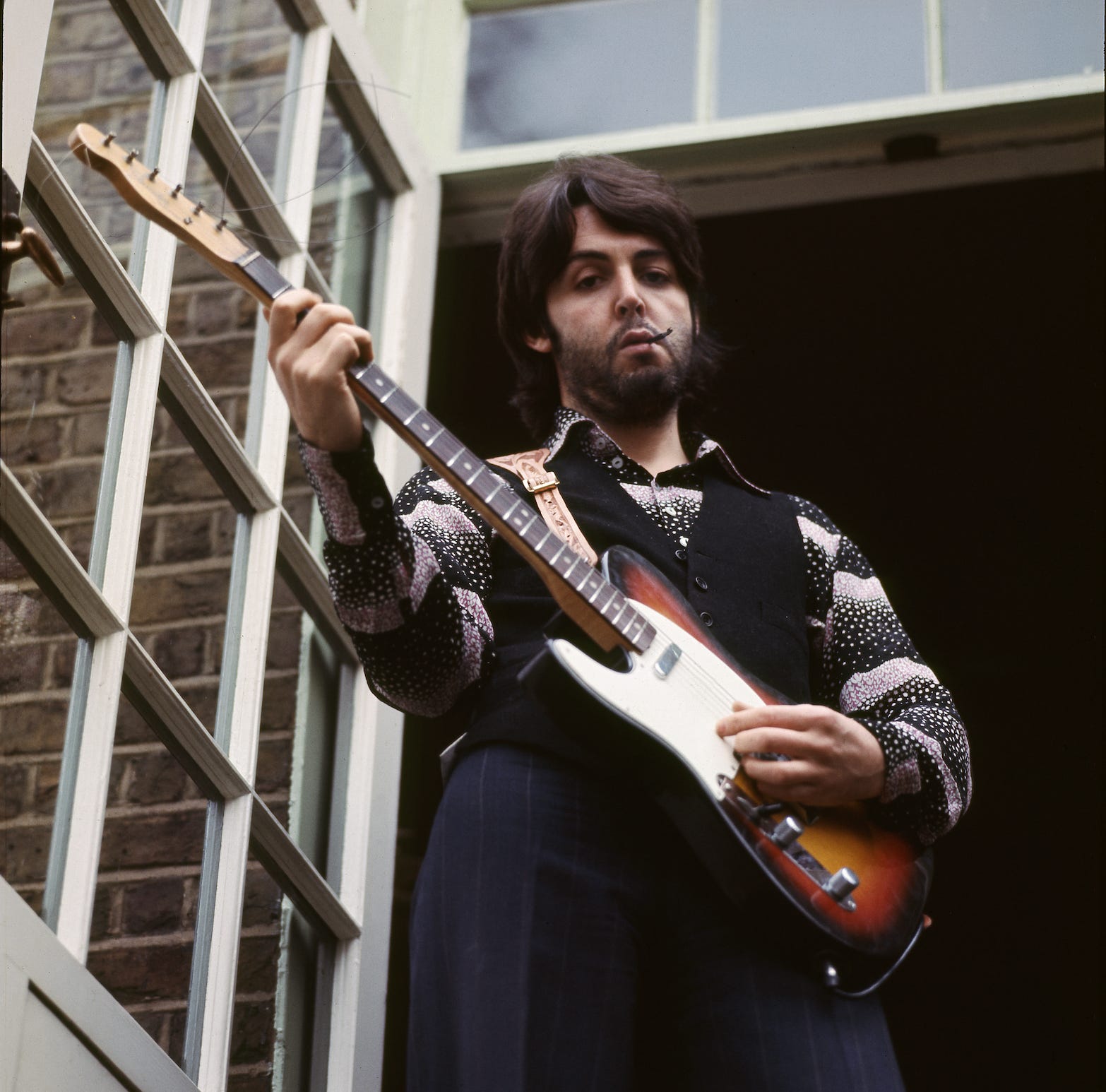
When I’ve made films about singer‑songwriters, those are people who are really giving you a map of their life through their art. Then it’s just trying to reconstruct it.
A lot of what I do—like on this film—is I made a soundtrack before we started the film, just to start to think about: if I was to tell this story just with songs, what would that be? Of course it changes, but it’s something I do on many films, even non‑music films. I’ll start with a soundtrack; it helps me get a vibe.
With somebody like Paul, first of all it was a lot of fun to go back and spend time going through his entire catalog, the box sets, everything. Little things like: the film begins with this piano demo of him doing “Silly Love Songs,” and you hear him singing the arrangement parts. You see the song fully formed in his head, even though he’s only on a piano, and the kind of innocence of it.
Things like that become anchors. They remind me: remember how the music helps lead the story, not just follow the story.
Vanessa: Yes. And did that contribute to your choice creatively to not show your interviewees on screen—that you have no real talking heads we see? We hear Sean Lennon, and by the way, I love your choice of having the children of these people speak about their parents. I’d love to know how you figured that out and worked that in. But first: how did you decide to keep your interviews off‑screen?
Morgan: There are a bunch of reasons. One is: most people in this story are older. There’s something about having a bunch of old people talking about “way back then, wasn’t it great?” that makes the film feel very retrospective and past‑tense.
When you take people off camera, it becomes more present‑tense. It’s like you’re living through it with them, rather than looking back on it, and I really liked that.
I also knew there was a really rich, deep archive, which meant I could get away with it—that there was enough visual storytelling to do. Then the animations that become a big part of the film also became part of that.
For somebody like Paul, who’s been interviewed so many times—if you can imagine—I felt like my biggest job was to talk to Paul in a way he doesn’t normally talk. That’s really hard to do if you show up with cameras and lights every time.
Instead, I was able to go with a tape recorder, sit alone with him, and talk for hours—then go back again and again and again and have conversations. When I’d go into conversations with Paul, I realized right from the beginning that there are a lot of stories he tells about that era. Like we all do, if somebody asks about something in your past, you go to the anecdote you always tell. I’ve heard all those anecdotes; everybody’s heard those anecdotes.
So it was: how do I get beyond that? I had a strategy of being really, really specific and really, really general. Rather than being a kind of six‑foot eye‑level point of view, I wanted to be microscopic and macro.
When I’d go in to talk to him, I would often start by talking about something like painting. He ended up learning to be a painter later. Linda’s dad, Lee Eastman, was a famous New York lawyer who represented composers and artists. One of his clients, who was one of their neighbors in the Hamptons, was De Kooning, and Paul got to know De Kooning. Paul also was a big collector of Magritte during the Beatles time and on.
So I decided: let’s talk about painting at the beginning—how a picture comes to you. Talking about things where he’s having a real conversation. You’re not just telling me the greatest‑hits stories you’ve told before.
Or we’d talk about parenting, or competition, or whatever—but in a way where you can have real conversations as opposed to just trying to get the greatest‑hits of the jukebox of anecdotes.
The other part was being really specific about musician stuff. Why do you like playing the Rickenbacker bass? Why did you play that throughout the ’70s? How did you play that bass line on “Silly Love Songs” while you were singing? It’s an incredible bass line and really hard to sing over. Things that he knows about but people don’t ask him about.
Those things helped him feel like, “This is fun, this is real. It’s not just me saying the same stuff over again.”
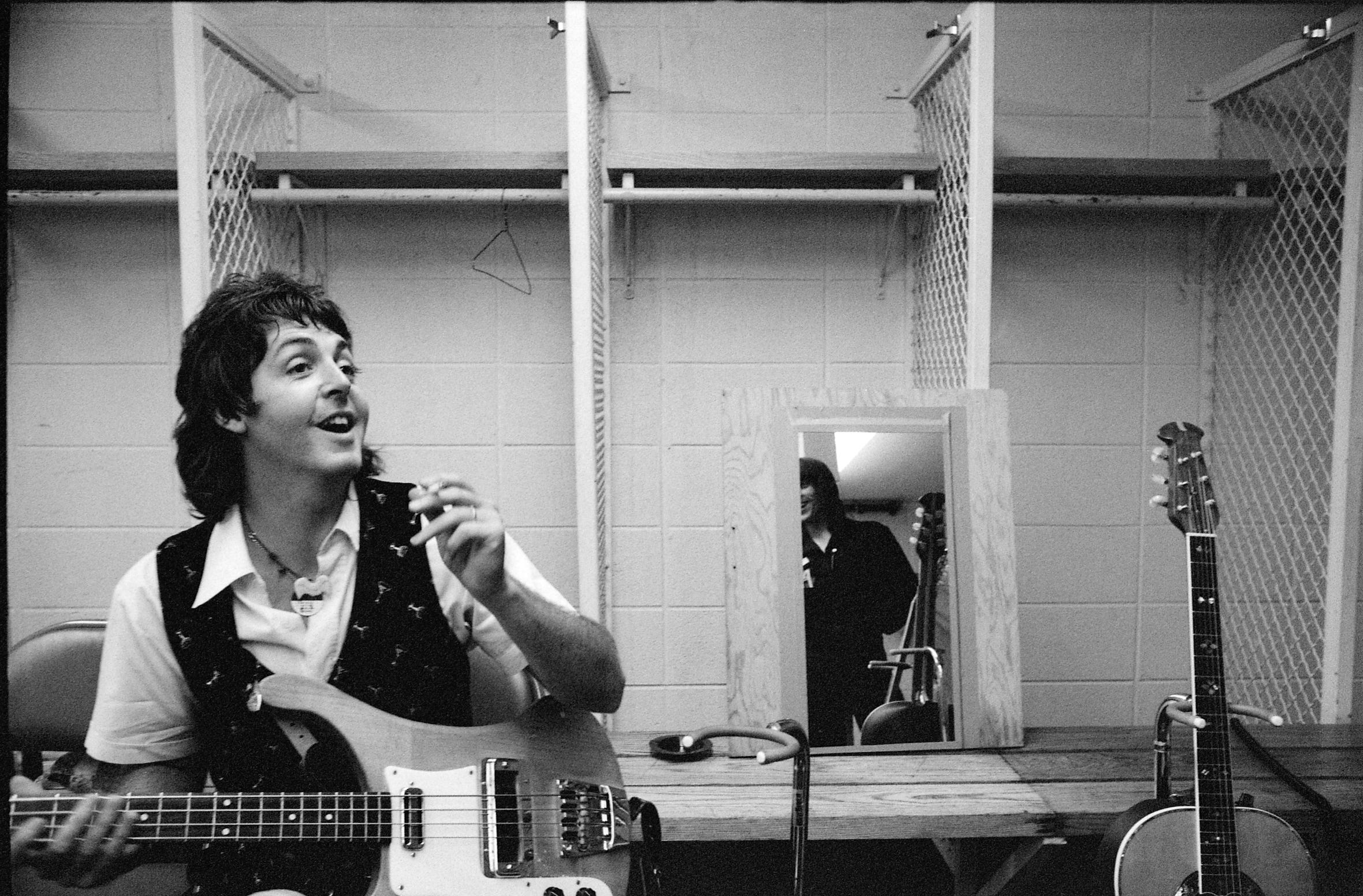
Vanessa: Yeah. And how does he feel—this is in your film, I know—about that lack of immediate early success with Wings? I actually love seeing that he felt he needed to book a tour in a minivan and go drive around to concerts, with a complete willingness to start over, build up his base for this new band.
Then the transition when he decides to go to Africa—you have this incredible archive and Linda’s photographs, because she was a photographer—and then you get a sense that he tapped into a zeitgeist.
Can you talk about putting all of that together? That he figured out there was something vigilante in the air, that people would relate to feeling like they were in prison and had to break out, and that Band on the Run captured that?
Morgan: Of course Band on the Run is— it’s not much of a stretch to say—a metaphor for escaping the Beatles.
Looking back on it, you see a lot of it in the film. There’s even more. Paul’s reaction when he saw the film was, “God, I did some crazy stuff.”
“Mary Had a Little Lamb,” which he released as a single. But he also put out “Give Ireland Back to the Irish,” a protest song about Northern Ireland. Then going to record in Africa, then in New Orleans, in Nashville—before people were doing that much.
Those kind of crazy ideas go back to the Beatles—that’s what kept them reinventing themselves in a way that kept them at the cutting edge of the culture. Not everything worked in the Beatles. Look at Magical Mystery Tour, look at playing on a rooftop—these are unconventional ideas.
I think Paul was accustomed to not questioning his own creative instincts. Sometimes things fail and sometimes they work. Things failed a lot, but then other crazy things worked. Recording in Africa became his greatest album of the decade, I think most people would say.
Also “Mull of Kintyre,” this Scottish folk song, which is amazing—but if it had been a flop, people would have said, “What’s Paul doing?”
As Spinal Tap would say, it’s a fine line between stupid and brilliant. You never know. But the thing is—and what I took from Paul—don’t question it. If you feel an instinct, do it. You can’t worry about how the world receives it.
Vanessa: Yeah, that’s such a beautiful thing to understand when you’re creative in life.
Speaking of that, this is capping maybe thirty years for you of documentaries about music and culture. Is there a feeling of that—big takeaways?
Morgan: No, I mean, that’s a long time—yeah, more than thirty years at this point. And it’s funny because it took me years to realize what kind of films I made. It wasn’t until I’d made a number of films that I realized: I make films about culture.
And culture could be music—I’ve made a lot of music films ’cause I love music and I’m a musician. But I’ve made films about artists and films about filmmakers and films about, you know, language and culture and...
Vanessa: Chefs, by the way, we should say—I love the Anthony Bourdain documentary (Roadrunner), and obviously that has struck a chord or hit a zeitgeist because there’s a whole fiction film about him coming out called Tony, right? So people really relate.
Morgan: Thank you.
No, and Tony—yeah, I’m really curious to see this film. I was just writing with Laurie Woolever, who was Tony’s co‑writer, his assistant who became his co‑writer on some of his books, who had written an article and visited the set of this movie. And, you know, I think Tony—again, I think he would have loved to have heard this—but he’s a little punk rock. He’s definitely a little John Lennon.
But also I think of Tony a little bit as a documentary filmmaker. He thought of himself as a writer first, but he never thought of himself as a chef first; he was somebody who was trying to understand the world through its culture, in the way that I totally identified with, which is why I wanted to make that film.
I felt like we were on a similar journey in some ways. In some ways fortunately we weren’t, because Tony was part of the story himself and I think that that was very difficult in many ways.
Vanessa: Right. Yeah. You handle that really, really well.
Morgan: Thank you. I mean, that was a very hard project to do and it became something that was part of the therapy of everybody in Tony’s life. For many, many of his closest friends, they hadn’t ever really talked about it. And so those interviews were the longest, hardest interviews I’ve ever done.
I was happy to do them, but it definitely felt like there was a lot of processing going on as I was making the film. But I feel like the relationship in documentary, for me—documentaries are many different things and many people have many different styles…
Vanessa: So you’re a therapist in addition to a musician and a filmmaker—that’s the job.
Morgan: For me, a lot of it is kind of paratherapeutic. I would say, like, the film I did with Steve Martin—a lot of that, I’m saying, “Tell me your deepest fears and thoughts,” and all of that. And when I showed Steve Martin the final film, his first comment to me was, “Can I show it to my therapist?”
Vanessa: Yeah. That’s excellent.
Morgan: And I thought, well, that’s a great compliment. So again, that’s probably more my style as a filmmaker: I’m trying to—I think about it less as trying to judge people and more as trying to understand people. I think when people see that you’re trying to just understand them and really hear them, they respond to that.
Vanessa: Yeah. Agree.
Morgan: And, you know, I think that’s more my method.
Vanessa: Yeah. So as someone who has gone deep into the stories, the characters, the context of so many major music and cultural figures of our time in the last thirty years, do you have any big conclusions?
I mentioned I’m reading David Thomson’s book A Sudden Flicker of Light about the film industry and culture. As someone who’s been writing about that for so long, it’s pretty wild to be on this ride with him. I’m only a third to halfway through the book, but he’s clearly upset that the big takeaway in our film culture might be not only that we’ve made everyone passive and disengaged from active participation in politics or culture—expecting to just be entertained—but also that we’re amplifying the worst male authoritarian, Michael‑Corleone‑kind of mafioso characters, putting them on the big screen, making them charismatic, and it’s come back at us and entered our real world.
I don’t know if you have any huge big‑picture thoughts on that.
Morgan: I need to read the book. I’ve read about it and I was just saying I’m going to download it and read it.
I did a film, kind of an essay film, last year for Netflix called Breakdown 1975, which looks at cinema in the mid‑’70s and how it reflected what was happening in America. It’s on Netflix, you can watch it—it’ll definitely give you a lot of movies to go watch.
That was kind of the high watermark and the end of New Hollywood. You look at a lot of those films—what I love about them, and what many people love, is the moral ambiguity. But for the most part, the protagonists in those movies are losers. Look at Dog Day Afternoon, look at The Conversation.
Even Michael Corleone lost many things personally—he paid a great price.
Then you see what happens in movies later: famously, movies like Wall Street or Scarface—these ’80s movies that are supposed to be cautionary tales become blueprints for how people should behave.
So I don’t want to necessarily throw The Godfather under the bus because it’s such a good movie. The moral price people pay in those original films is deep, and those films challenge their audience. They don’t make it easy for you.
Some of my favorite films—The Parallax View, All the President’s Men, Network, my God—those films…
Movies can do all kinds of things. I’m not anti‑antihero. But at the same time, movies can be, as Roger Ebert said, empathy machines.
Won’t You Be My Neighbor?, the film I made about Fred Rogers, exploded in a way that completely surprised me because people were so hungry for goodness too. So it has the capacity for that as well.
It’s all those things. I think the crisis, if we want to get deeply into it, is a crisis of taste. As we increasingly enter a world of potential AI content and algorithms, it’s not that people can’t make great things—they may not be able to get them distributed very well, and that’s a huge problem.
But people may not care that something’s just okay. “Good enough” might be enough. I think “good enough” is actually the enemy. Taking the big swing and failing or succeeding is great.
What the algorithm does—and AI does—is all about averaging and regurgitating and bringing everything to this cultural mean. That’s not how to make art.
Art can help us see ourselves in a way that expands our understanding of self. I see a lot of stuff now that just feels derivative and doesn’t make me think.
A lot of people, particularly in this world of second‑screening and because they’re more and more consuming content at home and not in theaters—just having somebody’s attention and using it, having the responsibility of somebody’s attention and using that to its fullest potential, feels like my responsibility and job.
I want somebody to be challenged. My films are often about asking questions of the audience. Won’t You Be My Neighbor?—six scenes in that film end on questions. The movie itself ends on a question. The title of the movie is a question. Everything about that movie is asking you as an audience member to think for yourself.
That’s something I lean into. I want you to have to be engaged and make connections for yourself. That isn’t necessarily what a lot of people want these days, unfortunately.
Vanessa: Well, hopefully we get more movies from you and more from people inspired by you and all that you’ve shared. That was really deep. I’m so grateful to have had this chance to speak with you because I think you also spoke to that in your process, your own creative process. For example, in interviewing Paul, you didn’t want the greatest‑hits stories retold to you.
You challenged him to give us more of what’s fresh—coming from his thinking and his creative process and his life experience. And then your movies offer that and are part of the empathy‑machine side of moviemaking, which is out there. So thank you.
Morgan: Yeah, well, thank you. I mean, just to finish up talking about Paul: even though I’ve made a lot of biographical films, there’s always an element of autobiography in them, because in a way I’m asking questions I’m interested in.
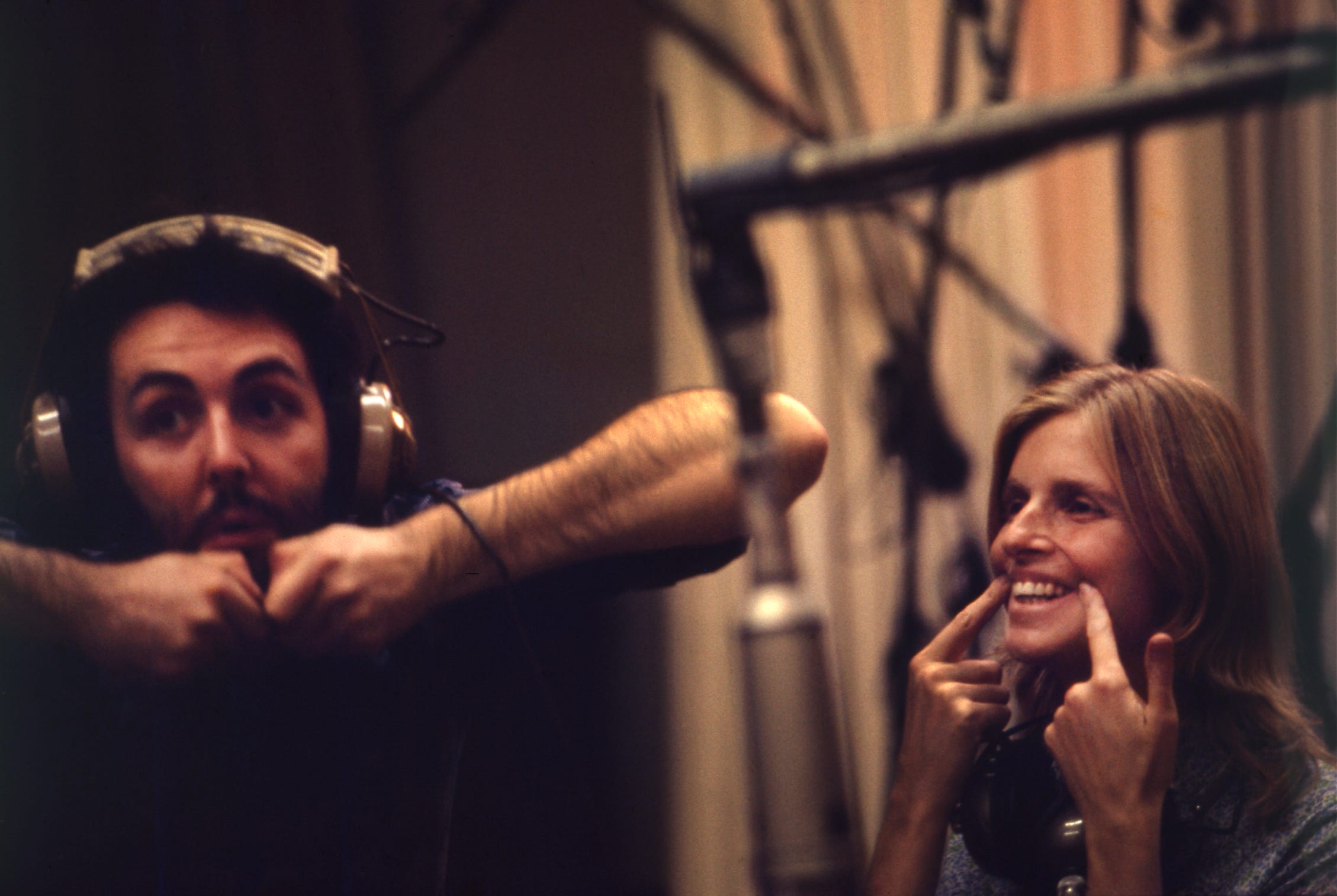
One reaction I’ve gotten to the Paul film, which I’m happy about, is people talking about how relatable he is. You think, “How could I ever relate to somebody like Paul McCartney?” But a lot of what Paul’s grappling with in the film are things like: How do I balance being a father with being an artist and what the world wants from me? How do I deal with my own legacy versus what I want to do now creatively?
These are questions I think about as a person. So I do think it’s about helping people see themselves even in a story of somebody like Paul McCartney.
Vanessa: Yeah, absolutely. And you succeeded. Thank you so much. Thank you, Morgan.
Morgan: Yeah—great talking to you.
Morgan Neville is an Oscar®, Emmy® and Grammy Award®-winning director and producer best known for his work as a cultural documentarian. His acclaimed film WON’T YOU BE MY NEIGHBOR?, a documentary about Fred Rogers, was one of the most successful and culturally significant documentaries of all time. His 2013 film 20 FEET FROM STARDOM won the Academy Award® for Best Documentary, as well as a Grammy Award® for Best Music Film. His film ROADRUNNER: A FILM ABOUT ANTHONY BOURDAIN premiered theatrically in 2021 and was the highest-grossing documentary of the year.
Most recently, Neville directed LORNE, the first-ever, behind-the-scenes look into the life of Lorne Michaels, the legendary creator and reluctant icon behind SATURDAY NIGHT LIVE, which was released in theaters in April 2026. In the same year, he also directed the Paul McCartney documentary MAN ON THE RUN for Amazon MGM Studios, which documents McCartney’s decade-long creative surge after the Beatles. The film premiered at the Telluride Film Festival and was subsequently released by Amazon MGM Studios in select theaters and on Prime Video, where it earned a 100% Rotten Tomatoes critics score.
Additional notable film credits either directed and/or produced by Neville include the Emmy®-nominated STEVE! (MARTIN) A DOCUMENTARY IN 2 PIECES, MISS AMERICANA, HALLELUJAH: LEONARD COHEN, A JOURNEY, A SONG, and the Emmy®-winning BEST OF ENEMIES. His body of work also includes THEY’LL LOVE ME WHEN I’M DEAD, KEITH RICHARDS: UNDER THE INFLUENCE, THE SAINT OF SECOND CHANCES, THE BREAKDOWN: 1975, and BONO & THE EDGE: A SORT OF HOMECOMING WITH DAVE LETTERMAN. His latest narrative film, PIECE BY PIECE for Focus Features, released in October 2024 and received a Grammy Award® nomination in the category of Best Music Film.
For television, Neville directed and/or produced SHANGRI-LA WATCH, THE SOUND WITH MARK RONSON, ABSTRACT: THE ART OF DESIGN, SONG EXPLODER and UGLY DELICIOUS. His documentary series SNL50: BEYOND SATURDAY NIGHT, celebrating the 50th anniversary of SATURDAY NIGHT LIVE, streamed exclusively on Peacock in early 2025 and earned him an Emmy® nomination for Outstanding Documentary or Nonfiction Series and a PGA Award nomination for Outstanding Producer of Non-Fiction Television. He also executive produced THANK YOU VERY MUCH, a film about Andy Kaufman and ART FOR EVERYBODY, a documentary on the artist Thomas Kinkade. Neville’s work continues to explore the lives and creative processes of some of the most influential cultural figures of our time.