

Hi! I’m D.L. Holmes from Three Left Feet Media, a Substack that covers the origin stories of movies, analyses of film scenes, and anything related to cinema, in a quest to learn how to make my own movies. A big thank you to Ted Hope for giving me this opportunity to do this HFF takeover to share what I’ve been working on for some time: what filmmakers can learn from the independent video game industry and how to apply them in their own projects.
The film and video game industries have more in common than you’d imagine.
Both are billion-dollar entertainment sectors, yet increasingly unstable to work in.
Both have big players laying off thousands of employees, while smaller companies struggle to get funding or be noticed.
Both have increasingly readily-available tools and equipment that make it easier than ever to make a film or video game, yet only makes it harder than ever to stand out.
But independent video game developers can teach quite a few things to independent filmmakers.
Creating video games can be more costly and time-consuming than making a film. That’s why developers don’t build an entire game and then hope it finds an audience; a lot of time is spent prototyping and building an audience through the entire development process so that when the game is ready to be released, there’s already an audience waiting to buy it.
Which sounds similar to the advice given to today’s independent filmmakers: Build your audience before making the film; share your progress; invite feedback.
Video games have been doing this far longer than filmmakers have.
So let’s look at how independent video game developers made some successful games, and how independent filmmakers can incorporate those strategies into their own process.
1.
Create your story by building on genres/stories that you love… but with your own unique twist.
Bonus points if the genres/stories are neglected or are in decline.
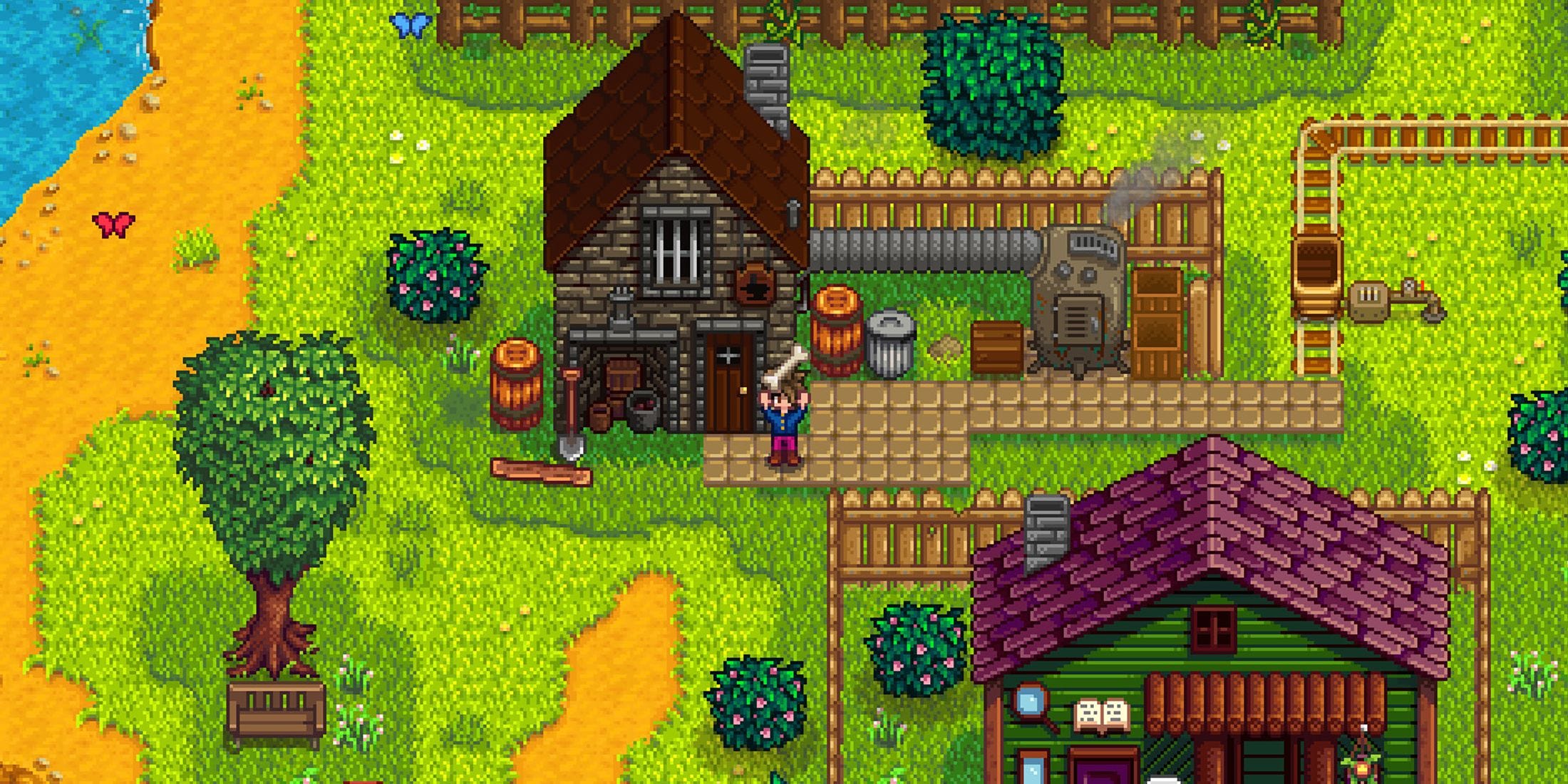
For Stardew Valley (2016), Eric Barone (ConcernedApe) had a simple goal: He wanted to make his own modern version of Harvest Moon, the popular Japanese farm simulation role-playing games (RPGs) developed in the late 1990s for the Super Nintendo Entertainment System (SNES).
Actually, he wasn’t even intending to become a video game developer; he only decided to make one to demonstrate his programming skills so that he could improve his odds in landing a job in computer science. In Barone’s own words:
I just wanted to play another game that was exactly like the first two Harvest Moons, but just with different people and a different map. I could’ve played that forever, different iterations of that same thing. But it didn’t exist. So I just figured, why hasn’t anyone made this? I’m sure there’s a lot of people out there who want to play this kind of game.
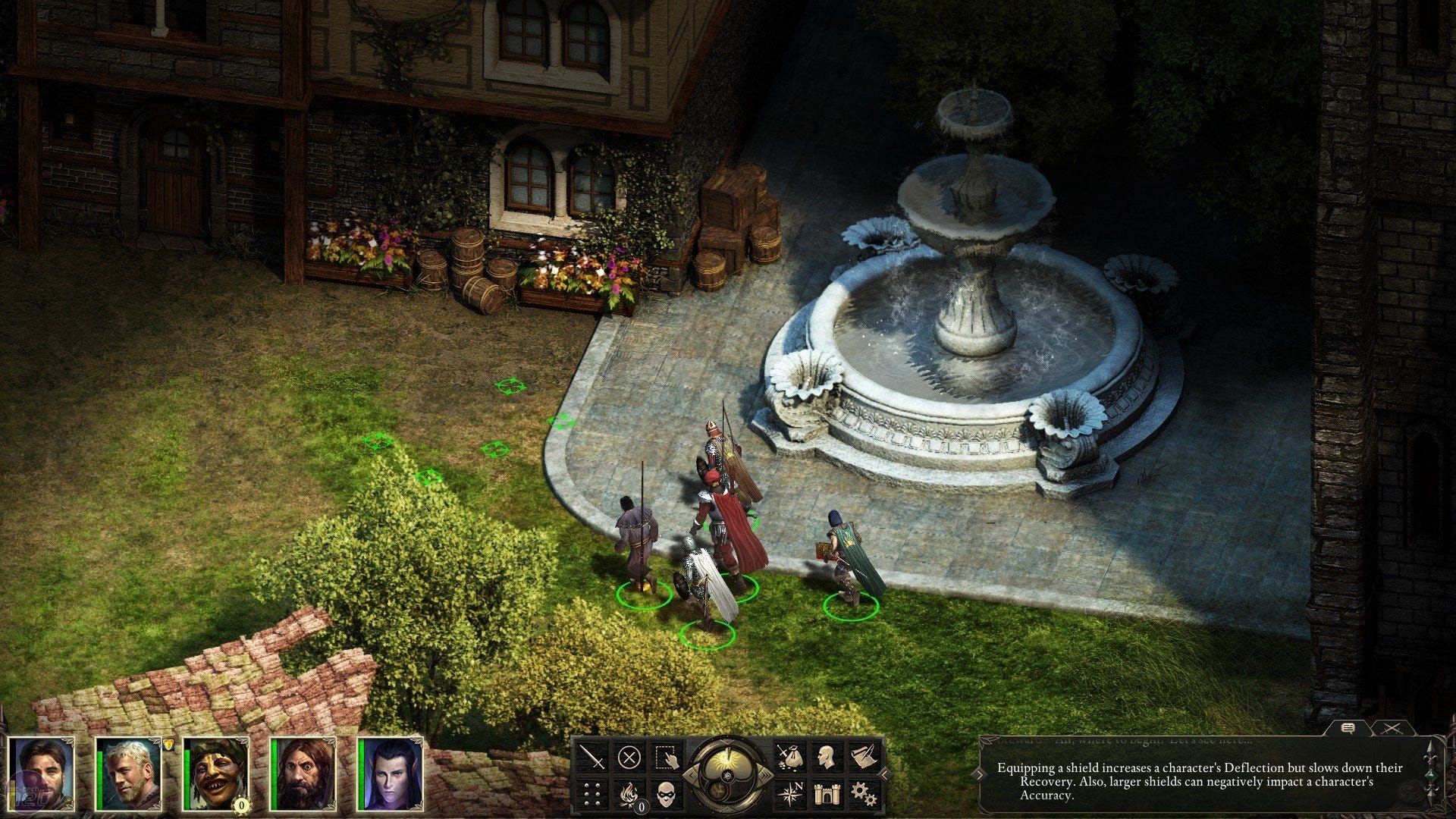
This line of thinking led Obsidian Etertainment to develop Pillars of Eternity (2015). In Blood, Sweat, and Pixels, Jason Schreier describes how Obsidian sought to create a modern version of old-school isometric RPGs— games inspired by Dungeons & Dragons, focusing on story and dialogue, with a fixed ‘isometric’ camera perspective as if looking down on a chessboard. RPGs that had fallen out of favor in the mid-2000s for games with 3D graphics, voice acting, and few conversations.
Except Obsidian knew there was an audience hungry for this kind of game. And there was.
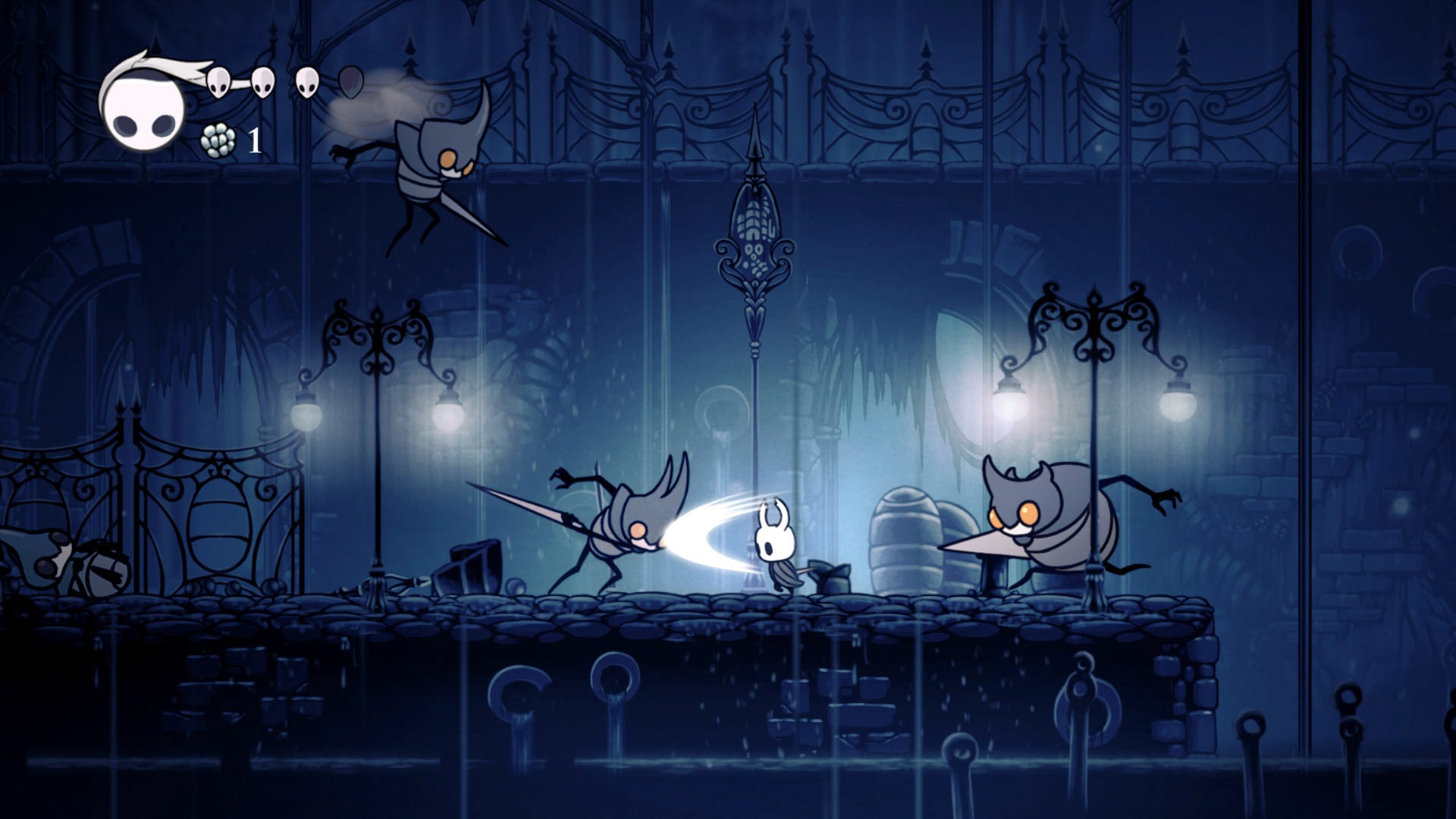
For a game like Hollow Knight, indie game developer Team Cherry took inspiration from NES-era platform games of the Metroidvania variety— a sub-genre of action-adventure games focusing on nonlinear exploration and acquiring key items to enter certain areas (the label is a portmanteau of the Metroid and Castlevania franchises).
In all three cases, the developers put their own twist on popular games that they loved but were not being made. This was especially crucial because it allowed them to tap into existing fan bases— a point that I’ll expand on in a moment.
In fact, you can actually see this kind of thinking behind successful smaller films:
The Terminator (1984) – Melding the horror/slasher genre with sci-fi, James Cameron’s breakout film answers the question “What if Michael Myers was a cyborg sent from the future?”.
Scream (1996) – Kevin Williamson combined the slasher genre with a whodunnit mystery, inspired by his love of Agatha Christie, and also John Hughes’ teenage films— at a time when horror films were in a slump, if you can believe it!
Memento (2000) - Christopher Nolan’s second film was inspired by noir films such as The Maltese Falcon (1941) and Double Indemnity (1944), taking a “traditional three-act structure” but played in reverse-chronological order.
Brick (2005) - Rian Johnson updated Dashiel Hammett’s noir stories for a modern high school setting, an unusual combination.
As with games, filmmakers can tap into known genres like horror or noir/neo-noir that attract audiences seeking something that is both familiar and new.
2.
Build the audience from the beginning
As promised, it’s time to expand on the point mentioned earlier.
A question that I’m constantly stumped by: “HOW do you build an audience for a film if you are starting from scratch?”
Independent video game developers solved it for me: Tap into existing fanbases.
Basically, you approach fans and say, “Hey, if you liked X, then maybe you’ll like Y that I made!”
And if you don’t have to have thousands of existing followers, it’s still possible to build an audience. Developers like Eric Barone, Team Cherry, and Yacht Club Games were not big names when they started. In fact, Barone had never even worked in the gaming industry!
Which makes Stardew Valley a good case study, since Barone created the game by himself.1
After working on Stardew Valley for nearly a year, Barone launched a website for his game. Then, he posted and shared a link to Stardew Valley on Harvest Moon fan forums, where he was certain he’d find other fans similarly disgruntled by the franchise’s later installments. Sure enough, people hooked by Stardew Valley’s lively and colorful aesthetic.
At this point, Barone would share regular updates of his progress via Twitter and Reddit, building his audience while also receiving feedback. It was in this manner that he attracted the attention of British video game developer Chucklefish, who’d partner with Barone to market the game—but for that to happen, Barone still had to find his first fans.
He accomplished this with a website that he posted on fan forums for the very game that inspired Stardew Valley.
To be clear, building an audience for a film is different. Unlike films, games are interactive, which is attractive. Developers often release a “vertical slice”— a small chunk of the game designed to resemble the final version as much as possible— to generate interest and to prototype.
Filmmakers don’t have the luxury of filming scenes in different ways to find what works. However, there are ways to still do this, as American International Pictures (AIP) did long ago to great results.
AIP was an independent film production and distribution outfit in the 1950s specializing in low-budget films. To avoid going bust, they used similar tactics that video game developers use to succeed in a challenging market.
The first thing to know is that AIP made films in existing genres. In this case, it was predominantly horror, science fiction, and films aimed at teenagers. Teenagers, it should be said, were often their main demographic, so they targeted this group.
Next, before AIP spent a cent on a screenplay or production, they started with a title. Yes. A title. These titles would be sensational— I Was A Teenage Werewolf, It Conquered The World, Terror From The Year 5000, and so forth.
If AIP liked the title, then they would proceed to the next step: Hiring an artist to design an eye-catching poster.
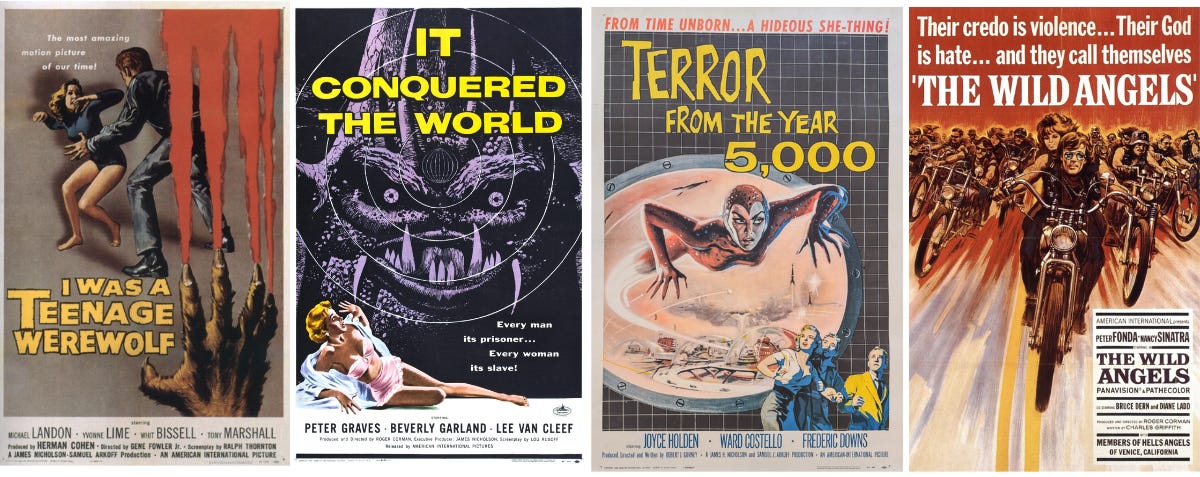
Along with the poster, an ad campaign was designed around the still-theoretical film to put in front of focus groups (often, their teenage viewer demography, as well as the exhibitors).
And only IF the response was enthusiastic did AIP finally actually raise the funds to make the film.
Oh, and get a script written. To, you know, actually shoot.
Now this might horrify filmmakers— especially where the script and story seem like afterthoughts. But that’s missing the point— what AIP did was work like a business where capital was limited: by testing an idea cheaply before committing a lot of money to it.
So let’s take AIP’s process and see how we can combine it with an independent video game developer’s process:
If you already have a story in mind or even a script, great. If you don’t, that’s fine. Because the first thing is to come up with a great title and a logline.
Hire an artist to design an eye-catching poster.
Set up a website for your planned film. If you have a proof-of-concept already, this is the place to attach it. Share links to your site on forums where potential fans might be hanging out, such as Reddit, Discord, YouTube, or Substack.
Keep fans updated on the film’s progress regularly.
This is why it helps to make your film in an existing genre. For example, if you’re making a haunted house horror film, you could share it on horror film subreddits or Discord channels specifically for haunted house films.
It’s not only horror or thriller genres that benefit from this; dramas can also do this by tapping into the film’s themes and finding people who will be interested in watching.
For instance, are you making a film about what it’s like to be the spouse of an alcoholic or being a survivor of abuse? You can approach groups dealing with this exact stuff and share about your film (note: depending on the sensitivity of the topic, it might be a good idea to approach any moderators first).
The purpose of all this is to test out the viability and durability of your idea at a low cost before investing more into it. Better to fall on your face this early rather than losing millions making a film nobody is interested in.
In fact, being able to drum up interest in your film this early makes it even easier to convince investors that you have a project with a built-in audience.
Other ways to test and prototype the film as an independent video game developer would to share scenes from the script, concept art, or photos from the production. If it’s possible with your budget, you could do create “reels”— drawings spliced-together with “temp” music and voices as a “crude” mock-up of the film—like animation companies do to test whether the story is working.
If that’s not possible within your budget, you can shoot the rehearsals and cut it as a rough “reel” to test it out.
The important thing is to let viewers get a feel for your film early on.
Oh, and remember to keep updating them on the progress. They want to know how it’s coming along!
But if you are reluctant to share anything that early if it’s still in “rough shape”, your best bet is a proof of concept such as a fake trailer; that’s what the Coen brothers did for Blood Simple. Or it could be a short film based on a scene from the script, as Damien Chazelle did for Whiplash.
Whatever you choose to do, showing proofs for feedback and sharing progress is key to building an audience.
Video game developers have been doing this for ages; it’s time that films did the same.
Also, read this excellent piece from Jon Reiss-8Above about finding audiences.

3.
Make your film visually attractive because artistry matters.
Games such as Hollow Knight and Stardew Valley are gorgeous to look at. I mean, look at it!
If you’re making a live-action film, you might feel at a disadvantage but here’s the strangest thing: You DON’T need the latest or most expensive equipment to make a film look good.
You just need talented people who can help create the best-looking thing on the existing equipment. It’s all about how you use it.
Take Halloween, for instance.
Shot on a low-budget, director John Carpenter and cinematographer Dean Cundey (Jurassic Park, Apollo 13) took inspiration from Dario Argento’s Suspiria (1977) to create a slightly surreal color palette. They also used a Panavision Panaflex Camera and a Steadicam-clone called a Panaglide to create smooth long tracking shots. In addition, Carpenter chose to start the film with a lot of wide shots before gradually tightening the shots, to convey the impression of being trapped with an unstoppable killer.
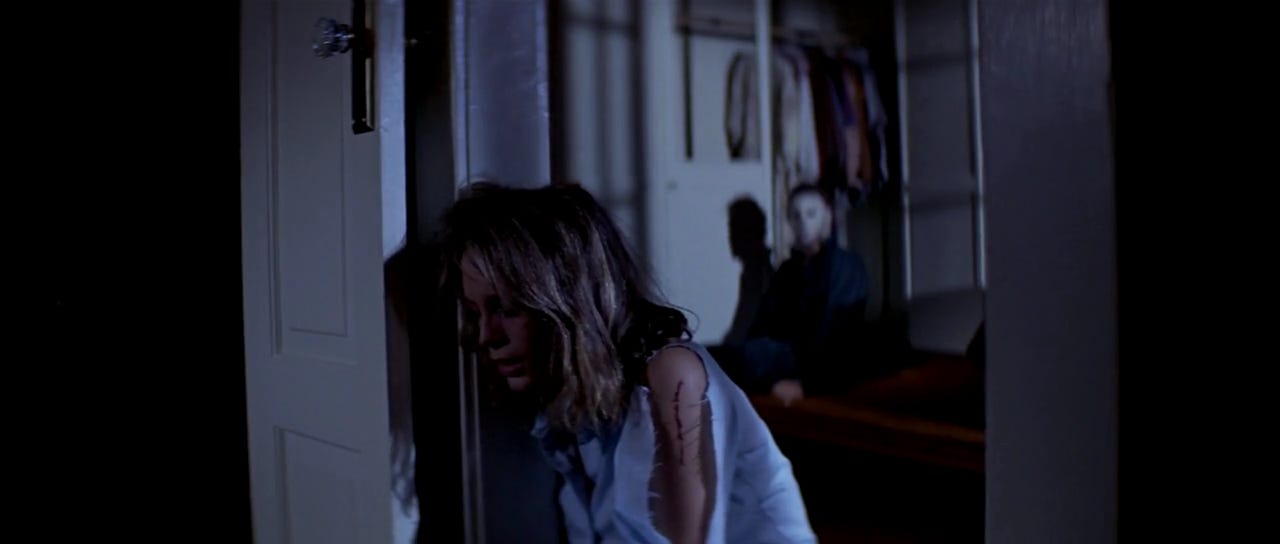
That’s style.
For Saw, James Wan combined frenetic camera movements (all hand-held) with “grunged up” shots— as if seen from CCTV cameras— spliced with news clippings inserts, to create a visually distinctive style that helped set it apart from low-budget horror films.
To make your independent film look visually appealing, think about:
Composition: Create memorable visuals by arranging the elements in your frame purposefully and taking advantage of your surroundings. Study paintings by brilliant artists for inspiration—that’s what Stanley Kubrick did.
Lighting: Use natural and practical lighting sources, and deliberately use your constraints to get creative. For Blue Valentine, cinematographer Andrij Parekh used only one big source light while relying on the practical light sources in the scene.
Camera: You don’t need expensive cameras—you need to know how and why you’re using a camera or lens to tell the story. Using the above Blue Valentine example, Andrij Parekh shot scenes set in the past on a 21mm lens, while shooting all the post-marriage scenes on the Red One, which helped to visually convey the emotional states of the lead characters.
Color schemes: Your film doesn’t need to be lit like a giallo film to be striking, but thinking about colors helps to create a distinctive visual identity, especially when coordinating with costume designers and production design. Look at how Carpenter and Cundey approached Halloween.
Texture of lives: This refers to little details in the film that makes the world believable and shows how they live and/or reveal personality. Do they dip fries in vanilla ice cream while eating? (Open-minded) Do they talk while multi-tasking? (Type-A personality) Are they reading a book? (Intelligent) Interacting with props help to create a fabric of the film’s universe and makes it more real than just having characters standing in a room and talking.
Storytelling style: Christopher Nolan used non-linear narratives in both Following and Memento partly to set his films apart from the crowd. Darren Aronofsky uses rapid cuts, split screens, and time-lapse photography to visually convey the thrall and spiral of addiction in Requiem for a Dream. Martin Scorsese uses red lighting, voiceovers, music, and even a SnorriCam for one shot in Mean Streets.
The point is: Be visually exciting! As you can see, it doesn’t cost millions to tell a story in uniquely distinctive ways.
4.
Find support from existing industry players
“No man is an island, entire of itself, every man is a part of the continent, part of the main,” wrote the poet John Donne. He’s right: Both video games and films have an entire ecosystem with people inside willing to help.
Stardew Valley, for instance, benefited from a partnership with Chucklefish: The British developer would help publish the game in exchange for 10% of the profits, and handle legal and PR work while Barone focused on the game. Without Chucklefish’s involvement, Stardew Valley may never have found a wider audience to become a blockbuster.
In filmmaking, this support exists at various levels. For instance, it was Jason Reitman who convinced Damien Chazelle to shoot one scene from Whiplash as a short film as a proof of concept.
Endorsement from credible figures can also be a big boost. It was Steven Soderbergh who convinced Warner Bros. to allow Nolan to direct the studio film Insomnia. And in 1982, it was bestselling author Stephen King’s effusive praise of The Evil Dead in Fangoria magazine (he saw the film at an out-of-competition screening at the 1982 Cannes Film Festival) that helped secure distribution deals and build buzz for Sam Raimi’s film. Roger Ebert and Gene Siskel’s love of My Dinner With Andre led to cinemas screening the film for a year.
While such endorsement is harder today in a fractured media landscape, getting the attention of film critics, podcasts, Letterboxd users, or YouTubers can help audiences discover the film. Game developers, for instance, send demos to Twitch streamers and YouTubers to help build buzz.
If you are a decent human being and you have something good, you’ll find people ready to help you. Thank goodness for the kindness of strangers!
5.
Have a deadline that forces you to work towards the goal (but never compromise on quality)
In Mastery, Robert Greene writes:
The feeling that we have endless time to complete our work has an insidious and debilitating effect on our minds. Our attention and thoughts become diffused. Our lack of intensity makes it hard for the brain to jolt into a higher gear. The connections do not occur. For this purpose you must always try to work with deadlines, whether real or manufactured. Faced with the slenderest amount of time to reach the end, the mind rises to the level you require. Ideas crowd upon one another. You don’t have the luxury of feeling frustrated. Every day represents an intense challenge, and every morning you wake up with original ideas and associations to push you along. If you don’t have such deadlines, manufacture them for yourself.
Video game crunches are a horror story; while you don’t need to go to such extreme lengths, setting a deadline can help to laser-focus on your film in a way that a loose timetable doesn’t. When you’re on the hook to get something done by a promised date, you rise to the occasion (and hopefully don’t sink).
But a deadline shouldn’t be met simply to honor an obligation (unless there’s a lot of money and a valuable opportunity at stake) at the expense of compromised quality. Yacht Club Games had fixed a deadline for their game Shovel Knight (similar to Hollow Knight in gameplay) after which point they would run out of capital.
Yet they still missed the deadline by four months because they didn’t want to ship a poorly-coded buggy game that would hurt them in the long run. Despite not taking money in those four months, the developers’ bet paid off as Shovel Knight eventually sold millions of copies across platforms.
Fix a deadline to push yourself to get the film done. But don’t compromise the quality to meet it.
6.
Do not seek to be all things to all people
Demand is growing for smaller, more idiosyncratic stories that aren’t tied to a brand or have a personal vision behind them. Original stories told well are gaining traction, from last year’s Sinners, Weapons, and KPop Demon Hunters to this year’s Obsession, Backrooms, and The Invite.
Kurt Vonnegut used to say: “Write to please just one person. If you open a window and make love to the world, so to speak, your story will get pneumonia.”
The same applies to your film. Make it uniquely yours.
7.
Create a compelling world for your audience
Developers excel in creating a universe that you just don’t want to leave (next thing you know, it’s 3 a.m. and you’ve been playing for 12 hours straight!). How can you replicate this in a film?
Let’s return to Halloween. Before Michael Myers starts his reign of terror, director John Carpenter spends a lot of time establishing the spatial dynamics of Haddonfield, using long tracking shots to set up the geography of the neighborhood— the houses, the front yards, the streets— to develop a mental map of the town in our heads.
You don’t need CGI or visual effects to suck viewers into your world. Establishing the environment and showing the inhabitants going about their lives is equally effective.
8.
Fun sells
Video games are fun. So are horror films, which is why horror films perform well at the box office.
That doesn’t mean you shouldn’t make your heartbreaking drama. We also need films like Aftersun and Blue Heron, or the world would be poorer without it.
But it also makes sense why people want escapism: their lives are hard enough. When it feels like the world is on the brink of another global war, when it feels like the parasitic rich are extracting every last cent out of the economy, and it’s a struggle just getting by, it’s hard to blame them for wanting to watch something that makes them forget their troubles, even for an hour or two.
9.
A meaningful story told passionately trumps polished yet soulless craft
People want stories that feel meaningful and have passion behind them— and they won’t care if it’s rough around the edges. In fact, they’ll embrace it all the more. Just look at films such as Night of the Living Dead, The Blair Witch Project, or Reservoir Dogs: none of them are sleek.
But audiences loved them because of the human factor behind them.
This is partly why indie video games sell massively: You can sense the human hand behind every pixel and its passion behind it.
Going forward, the human factor is increasingly becoming the secret sauce in stories, especially with the rise in AI slop. Audiences want to sense the artist behind the camera, not the technical gloss.
Paul Thomas Anderson made a similar point when he sat down with critic David Ansen after a screening of Hard Eight at Festival Theaters in Palm Springs, advising young filmmakers to spend more time on story over obsessing technical matters and cameras:
When you see a film, maybe it has a technical polish to it. So what? You know a film by its story, by its connection to people always… it seems that there’s a little bit of [a problem] where the writing isn’t strong enough but the there’s some amazing filmmaking going on… but the writing has to be so foundational and so strong.
This might easily be one of the worst times to be making movies as an independent filmmaker. But then independent filmmaking has always been a struggle, as far back as the time when John Cassavetes and Orson Welles would accept film roles to fund their passion projects. It’s the struggle for independent video game developers today; and as the barrier to entry seems to grow lower than ever, the number of indie video games and movies increase annually.
But more titles available means that it is harder than ever to get the attention of people.
That’s why studying independent video game development is valuable: because in both filmmaking and video game development, the inherent danger lies in being unable to recover the money that was spent to make the project.
What independent video game developers understand, however, is that the smart thing to do is NOT build the entire game and then find an audience.
No. They start small, with a prototype; they find fans and build an audience alongside the game.
This is what independent filmmakers are also being told to do now: Think about the audience before making the film, and bring them along the journey.
So if this tactic has worked for independent video game developers, I ask this: Why can’t we make this work for ourselves?
1 = He literally drew and coded everything— and also composed the music— despite not having any prior art or gaming skills to speak of.

What a great checklist. You’ve created a road map with nine essential pit stops