
Queen of Chess: "It’s extremely satisfying to watch, because it’s this unstoppable champion who is so driven, has such guts, and also has a sense of humor and a warmth about her..."
a vHopeful Conversation with Academy award-nominated director Rory Kennedy

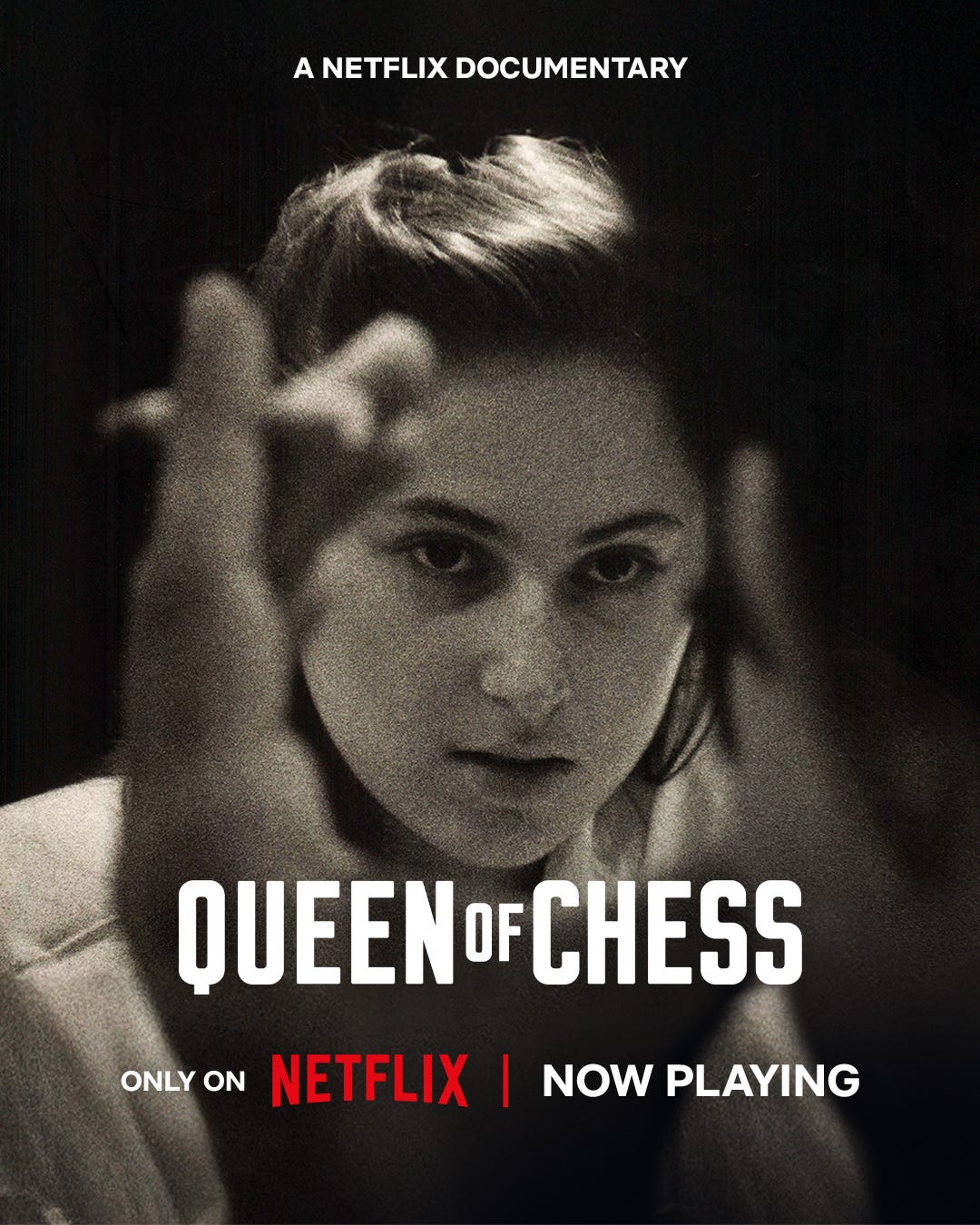
In this vHopeful Conversation, I sit down with Academy Award–nominated, Primetime Emmy–winning director Rory Kennedy to discuss her new Netflix documentary, Queen of Chess, about Hungarian prodigy Judit Polgár and her battle against a male‑dominated elite chess world. We explore Polgár’s radical upbringing in communist Hungary under her father’s “genius is made, not born” experiment, the structural and psychological misogyny she faced from legendary players, and how her mantra — “go back to the board and play your best” — transformed discrimination into historic victory. Rory reflects on crafting a punk‑inflected, edge‑of‑your‑seat sports documentary from sixty‑four squares through dynamic music, graphics, and rich archival footage, all while threading in Cold War geopolitics, poverty, and family intimacy. Our conversation links Polgár’s story to current attacks on women’s sports and Title IX in the U.S., the broader fight for gender equity, and the importance of voting and vigilance, and situates Queen of Chess within Rory Kennedy’s larger body of political and social‑justice documentaries and our belief that documentary cinema deserves to stand alongside fiction at the top of the awards landscape.
Transcript lightly edited. Podcast available on Dream of a Better World, & Apple, Spotify or wherever you listen
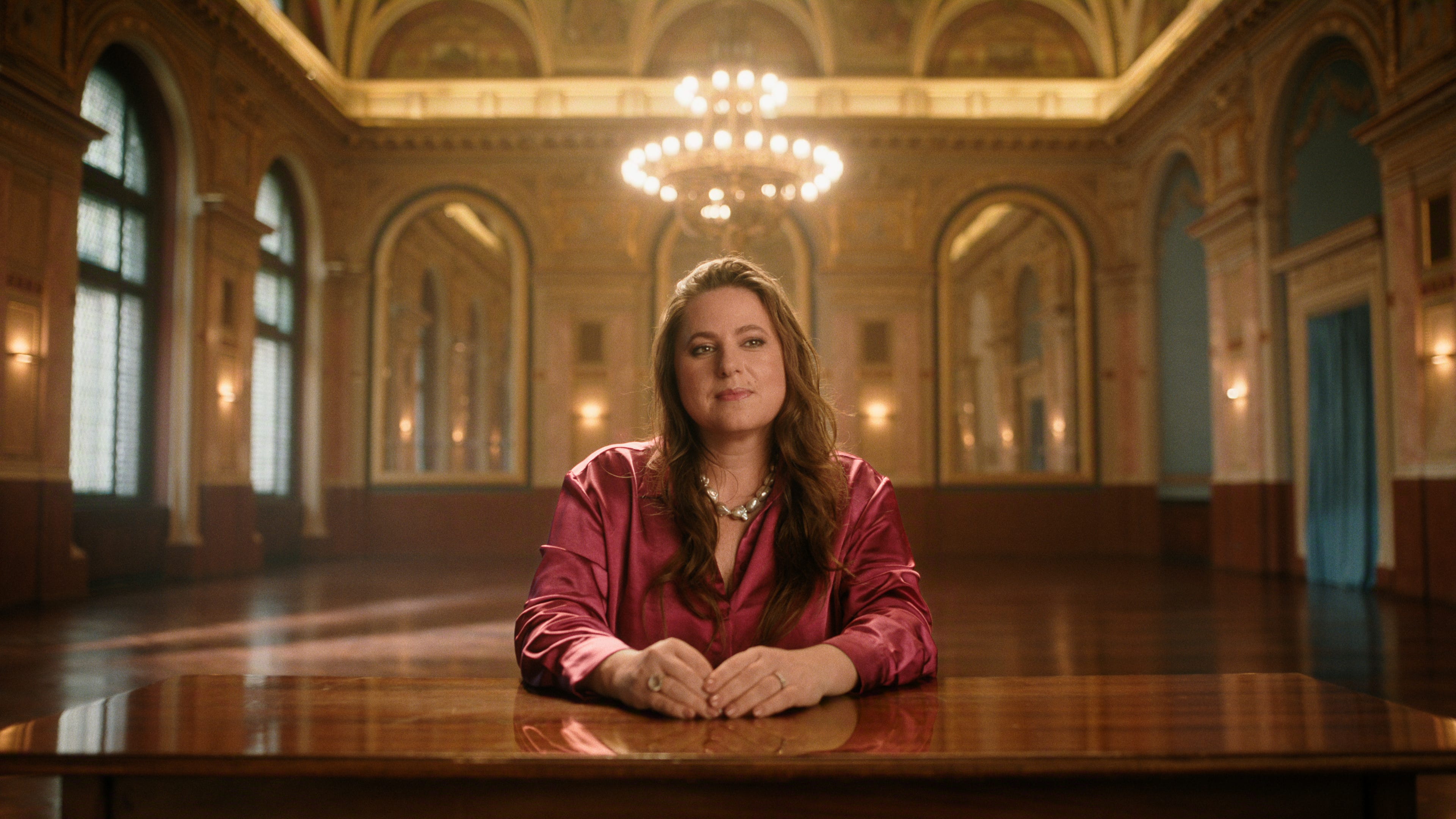
Vanessa Hope I am incredibly excited to be joined by Academy Award–nominated, Primetime Emmy–winning documentary filmmaker Rory Kennedy, who is a phenomenal filmmaker. Her work has explored politics, justice, and the human stakes of power with intelligence and emotional force. She’s the youngest child of Robert F. Kennedy and Ethel Kennedy, and has directed and produced more than 40 films. That includes American Hollow, Ghosts of Abu Ghraib, Last Days in Vietnam, Downfall: The Case Against Boeing, and Ethel. Her latest feature, Queen of Chess, which we’re about to discuss — it premiered at the 2026 Sundance Film Festival and is now on Netflix — brings her rigor to the story of Judit Polgár, the Hungarian prodigy who took on the male‑dominated world of elite chess.
With visual energy, music, and a rebellious spirit, the film feels as alive, defiant, and exciting as its subject. And Rory is the perfect filmmaker to tell this story. Rory, thank you so much for joining.
Rory Kennedy Thank you for that fantastic introduction, Vanessa.
Vanessa You’re so welcome. You are so deserving.
So, Queen of Chess tells the story of Judit Polgár, who is not just a prodigy but a girl taking on an entire male‑dominated system and sport. When did you first realize that this could be more than a sports documentary, and about so much more — power, gender, resistance?
Rory Well, it was interesting, because Mark Bailey and I — who’s my partner — were approached by a producer who had reached out to us and asked if we might be interested in telling the story of Judit Polgár, and we said, “Well, who is Judit Polgár?”
And then of course we learned that she was the number‑one female chess player and had held that position for almost twenty‑six years. She was the only woman to ever become a grandmaster. She was the youngest grandmaster, beating Bobby Fischer’s record, beating Kasparov’s record.
And you know, I don’t play chess regularly. I know how to play chess, but I knew who Bobby Fischer was and of course Kasparov, yet I had never heard of Judit Polgár. So we dug into her story and were just blown away that we didn’t know this person.
There was so much nuance and so many layers. She had grown up in communist Hungary.
Vanessa Yes.
Rory There were so many blockades for her to be successful and she just, with a sense of purpose and fierceness, broke through them one after another, blowing away all sorts of expectations and all sorts of resistance to her success.
It felt to us to be a really dynamic story and one that deserved to be told, and there was such rich archive to help us tell the story. As we dug into it, we pretty early on got hooked and really felt like, this is a story we need to tell.
Vanessa Yes. In the U.S., Jill Filipovic, this journalist friend, recently wrote a piece about the war on women’s sports in the U.S. Title IX is under attack because conservatives are saying that sports make women less deferential, less oriented toward motherhood and “traditional female grace.” And so there’s a whole new proposal to functionally dismantle Title IX that’s a little bit horrifying.
So this story is so relevant to this country. And I feel like one of the things I love so much about your film is the spirit — the music, the pacing, the sense of exhilaration and rebellion running through it from start to finish. I wonder how, as a director, you thought about shaping the tone so that chess feels cinematic and emotional and almost punk in its energy.
Rory Yeah, we did have a bit of a punk score in there, which was fun. When I was reading about Judit’s story, I was on the edge of my seat: Is she going to beat this champion? Is she going to win in this contest?
It’s interesting, because you think, “Okay, chess — pieces on a board, right? How is that actually exciting?” But then when you learn what the stakes are, and how one move can change everything, and how much they’re thinking so many moves in advance, and what’s going on in Judit’s head, I found it to be a very edge‑of‑your‑seat sports documentary.
So we did — and you had mentioned it being a sports documentary — we did strive to make it along those lines. And at the same time, we wanted to layer in this nuance of growing up in communist Hungary, growing up in poverty, people really resisting her because she was a woman, and growing up in a society where they really didn’t like people who did things differently than everybody else.
And the parents kind of had their own interesting story, where the father had an idea that geniuses were created, they weren’t born — that you had to create the circumstances. He married a woman who was willing to prove his experiment.
When Judit’s oldest sister was five years old, he said to her, “Okay, what do you want to do? You’re good at math and you’re good at chess,” and she had just found some chess pieces in the house. He asked, “What do you want to do for the rest of your life?” And she said, “I don’t know — chess, I guess, that’s fun.”
So the oldest sister started with chess. Then there were two other girls born to the family, Judit being the youngest. They all grew up in this environment to prove that if you do the same thing over and over again from a very young age and make it fun, you can be the very best.
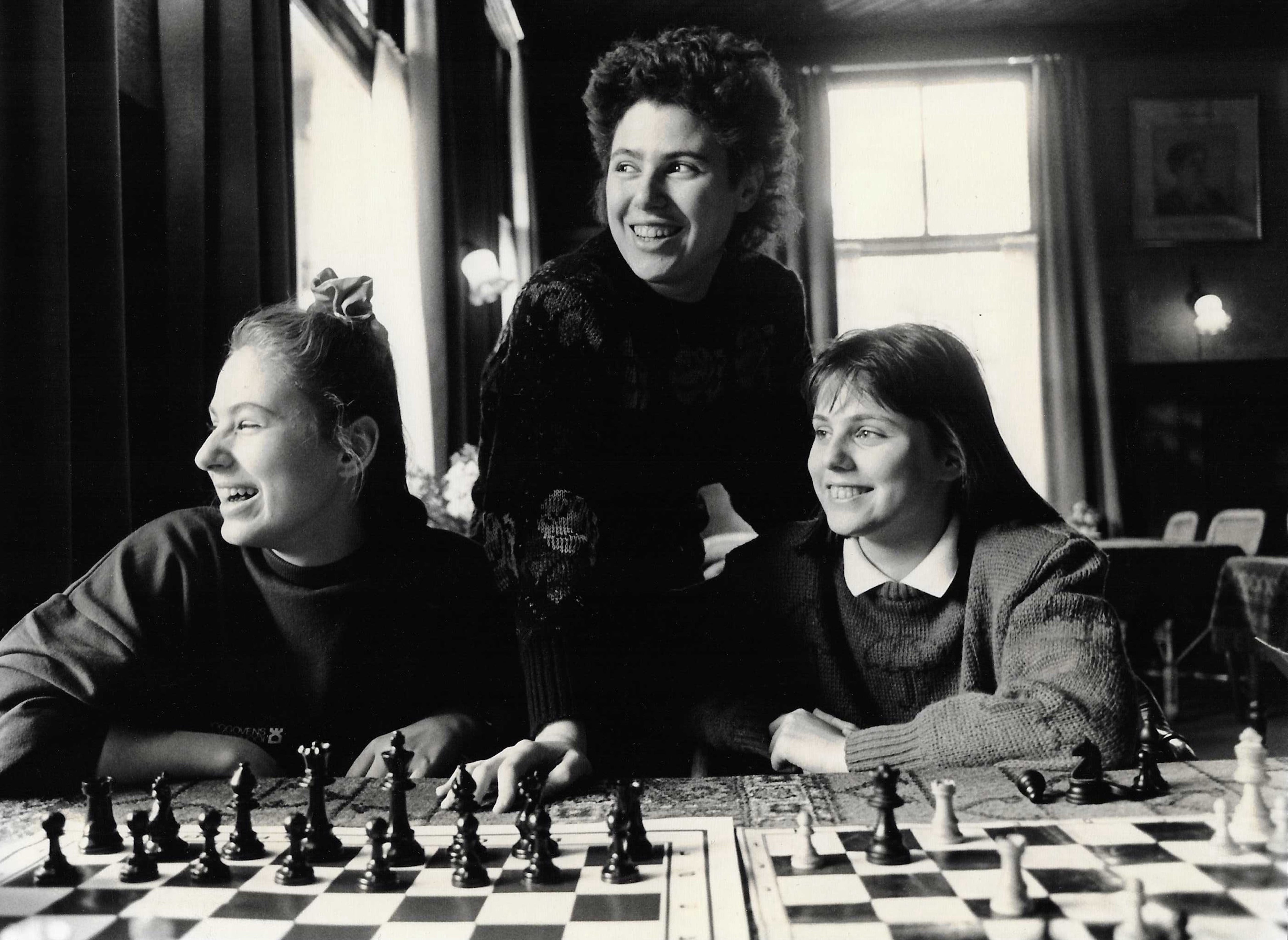
As a result of this, the government came in; they tried to throw the parents into prison. They tried to throw them into a mental hospital. And Judit was a part of this. She would go to chess contests and she’d be thrown out because she was the only girl. She was five, six years old and she was just beating older man after older man after older man.
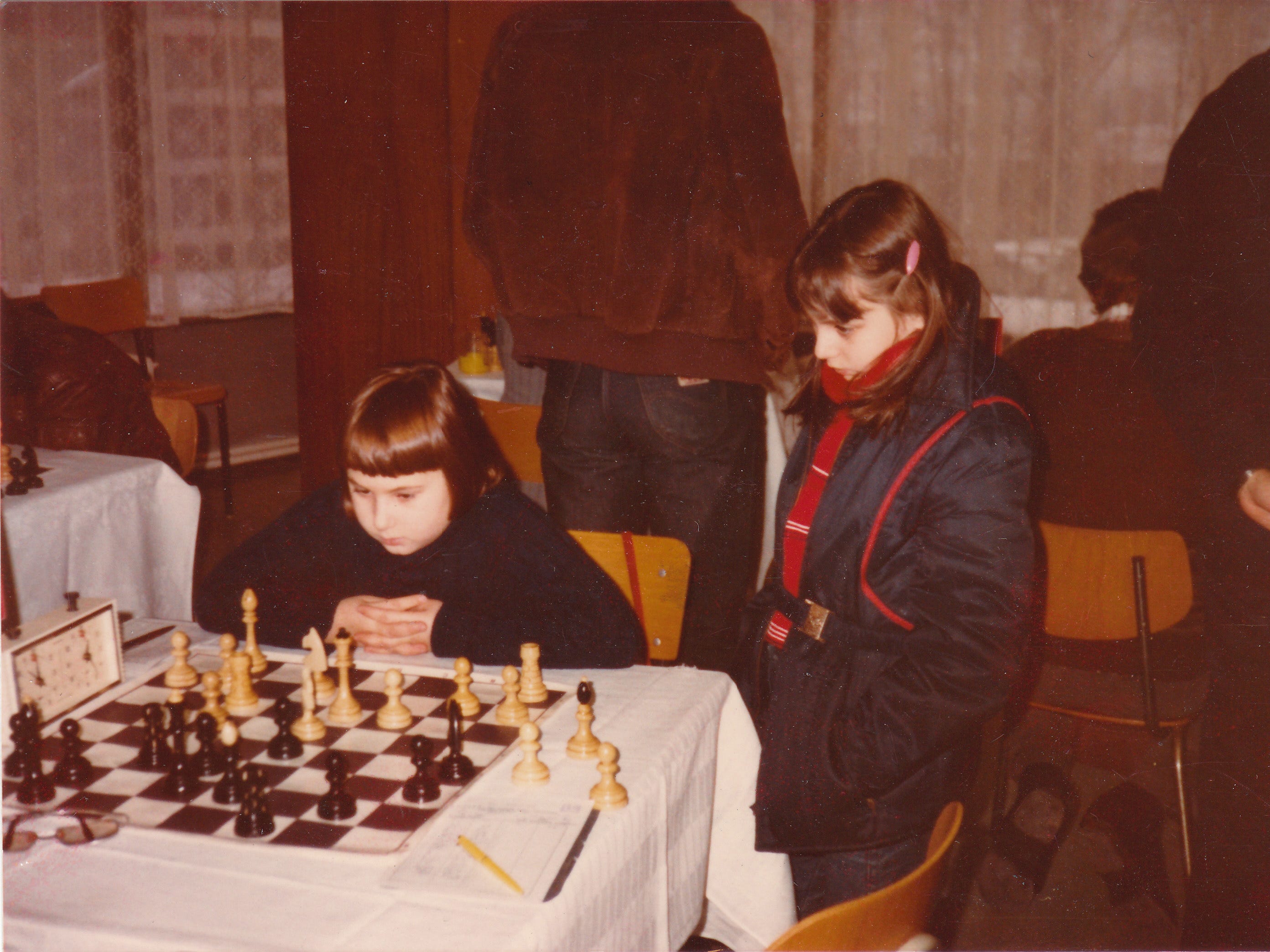
It’s extremely satisfying to watch, because it’s this unstoppable champion who is so driven, has such guts, and also has a sense of humor and a warmth about her that just adds to the whole story. So we were thrilled to tell this story and to try to add some stylistic dimension to it — like the punk score — and also the graphics, to keep it really engaging and lively.
Vanessa It is, and it’s so unquestionable, her talent, when you see her as such a young girl playing all these older men, as you said, with guts and confidence and just a sense of the game. You really make the game edge‑of‑your‑seat sports and it’s so fun to watch and learn from.
Rory It was exciting for us because — I don’t want to reveal too much about the film, but as you know, having watched it — there’s a pretty intense moment with Kasparov where she plays him. It’s a kind of seminal moment, and one that people in the chess world are very aware of.
I didn’t know anything about it, but we were amazed that we were able to find footage that captured that moment. It’s pretty dramatic to watch it in the film and see how it plays out, what the implications are, and how that narrative between Judit and Kasparov begins in this moment and then develops over time — how it changes, and the excitement and thrill of their relationship and their competition with each other, but then of course also a growing friendship.
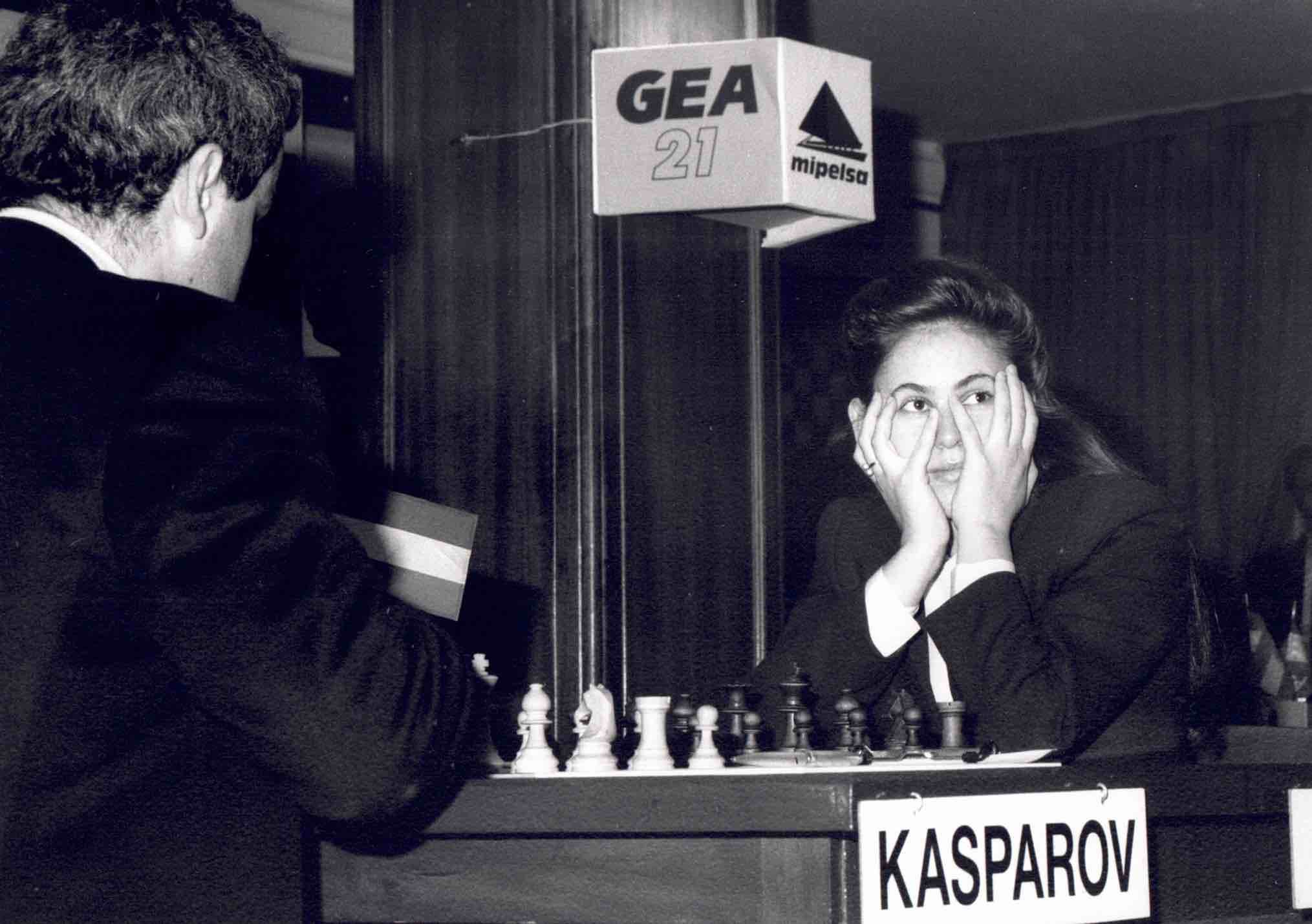
So there are lots of unexpected twists and turns in her story and consequently in the film, that I hope make it enjoyable to watch and entertaining.
Vanessa Yeah. You captured that. It is so enjoyable to watch and entertaining. And we won’t give away this important moment of competition in the rivalry between Judit and Garry Kasparov, but it is remarkable that you get him in interview, that you show what happened, and that we see their evolving relationship exactly as you described, in amazing archive. There is a real friendship.
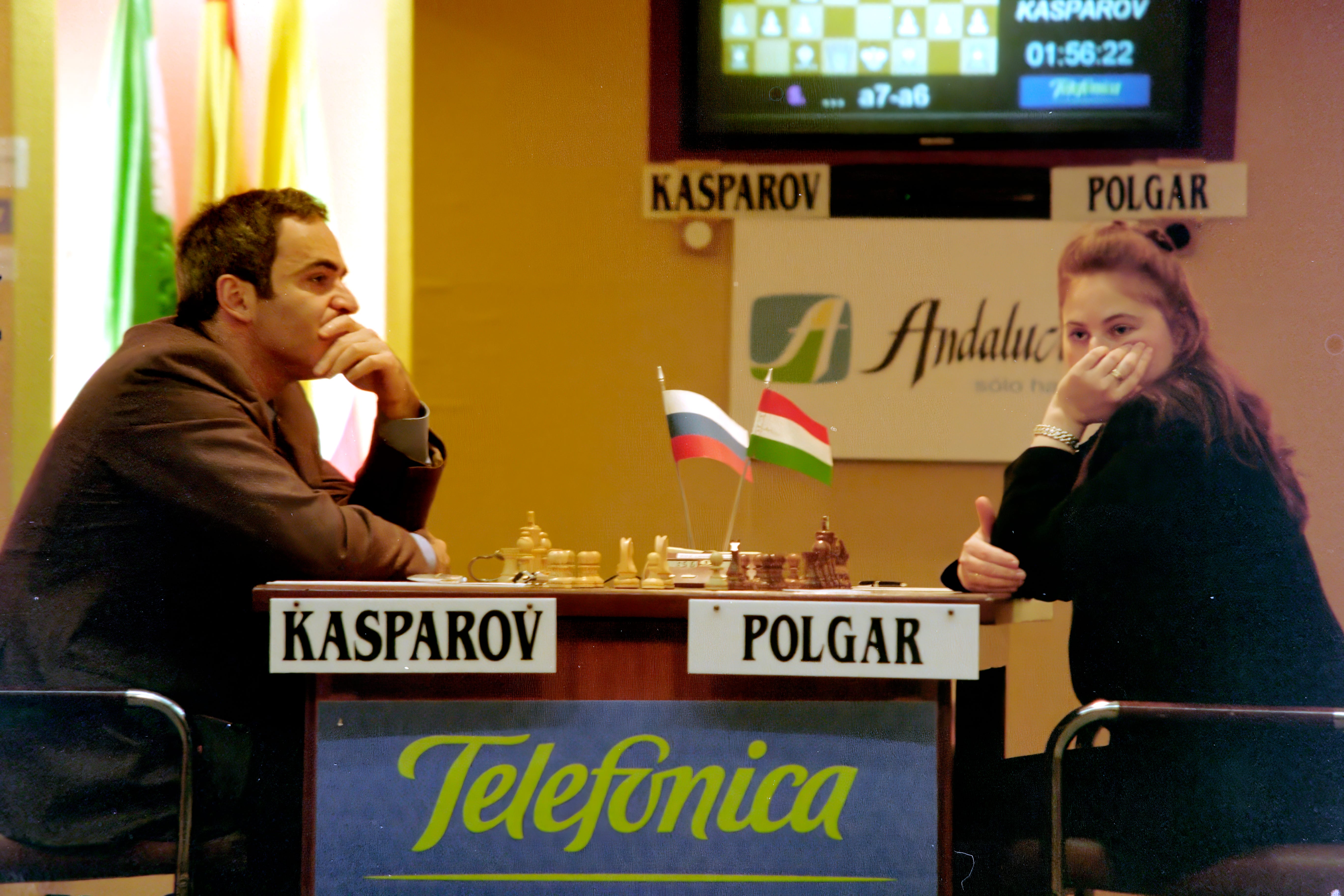
But I wonder, as a filmmaker and storyteller, how you came to understand the way misogyny operates in these elite sports like chess — not just structurally, but psychologically. You really show us that, and the interviews go right there.
Rory Yeah, I mean, it’s interesting because throughout the film you really hear first‑hand how these chess champions, like Bobby Fischer, would say things like, “Women just aren’t made to play chess.” They’d say women don’t have the smarts or the intelligence that men have. Others say it’s too challenging for women to sit in one place and be able to focus for that long.
Still others are very dismissive of Judit. She talks about how, when she would beat these world champions — which she did again and again and again — they would always say, “I just had a bad day.”
Like they couldn’t acknowledge that they were beaten by a woman fair and square. It was always, “Well, she’s very lucky,” or “I had a bad day.”
Despite all that — and then there’s that scene in the film where she’s at a very prestigious tournament and the norm is, after you play, you shake the hand of your opponent, whether you win or lose — she was beating one player after another and they would stand up and walk away and wouldn’t shake her hand. We see this in the footage.
It’s pretty revelatory, and one of the things I had mentioned that drew us to this film is the archive and how rich it is, because we’re not just telling people these things happened. You hear it from Bobby Fischer — you hear his words. You see people not shaking her hand. You see people cheating against her.
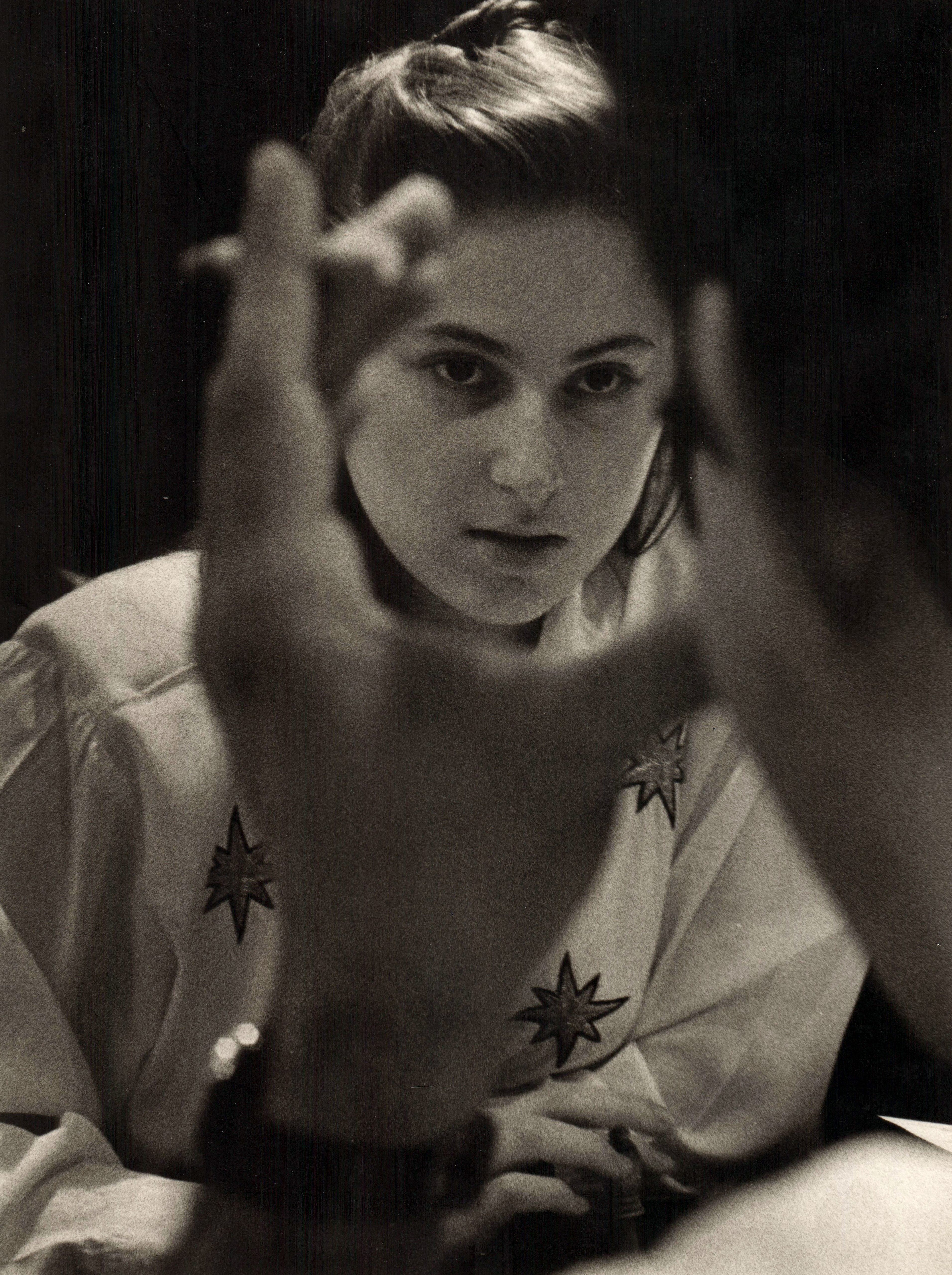
For a lot of people who’ve had these kinds of experiences — whether it’s women in sports or in other environments or professions — it’s enormously relatable. Audiences, from what I’ve heard, really connect to that part of the story.
Vanessa Do you think it was COVID and every single person on the planet watching The Queen’s Gambit at the same time, or is there something inherent in chess that just makes it so popular and watchable? Why is it such a compelling sport to watch, do you think?
Rory I think when you start to understand chess — and we tried to really break it down, particularly because I, Mark, and our team largely didn’t play chess — we had to make a movie that made sense to us.
Vanessa I love that. Yeah. I don’t play either, and I learned so much about the game from your film. I loved all your graphics, I loved all of that.
Rory Thank you. We really tried to break it down so everybody could understand it and have it be accessible. But when you do understand how the moves work and what the stakes are, I think it’s very hard not to be pulled into the game.
They use so many metaphors: it’s a battle, it’s a fight, it’s enormously technical, it’s mathematical, it’s philosophical, it’s spiritual. It operates on so many levels, and yet it’s sixty‑four squares on a black‑and‑white board, with people just moving pieces, right?
It’s interesting — the juxtaposition of the simplicity of it and the visual element of it, which of course is so important in filmmaking, and then, how do you translate all of those layers? That challenged us, as you can imagine. “How do you do that? This is going to be really, really hard.” But it challenged us in a way that was fun and exciting and pushed the limits of our creative process to really make this fun and dramatic.
I’ll take some credit, but I had a fantastic team of editors, and Mark Bailey as the writer–producer. Kevin McAllister was in there as well. We had wonderful editors — Azin Samari and Jesse Overman — and we partnered very early on with Netflix to make this film, and the executives there also really contributed.
So it was all of us really pushing. We all shared a similar vision, which was great — to get everybody on the same page. Then it was about, how do you deliver this? What can we do with music? What can we do with graphics? What can we do with storytelling? How do we bring these characters alive? How can we use archive in interesting ways and really push this to be engaging and fun, and help people understand what the stakes are, even people who’ve never played chess before?
That was an exciting challenge.
Vanessa Yeah. And as you said, there are so many stakes and layers because you’re also moving us through Cold War Hungary and a changing Europe and this global chess world. This is countries against countries who are playing. But you never lose the intimacy with Judit and her family and her father’s unique experiment. You manage this balance.
I wonder if you thought at all about what we can learn in the U.S. — women who play sports or who care about not losing Title IX — from Judit’s story. Because on this intimate level you share, she was under a certain level of control with her father, but she also evolves as a person and ends up seeming to have a great life.
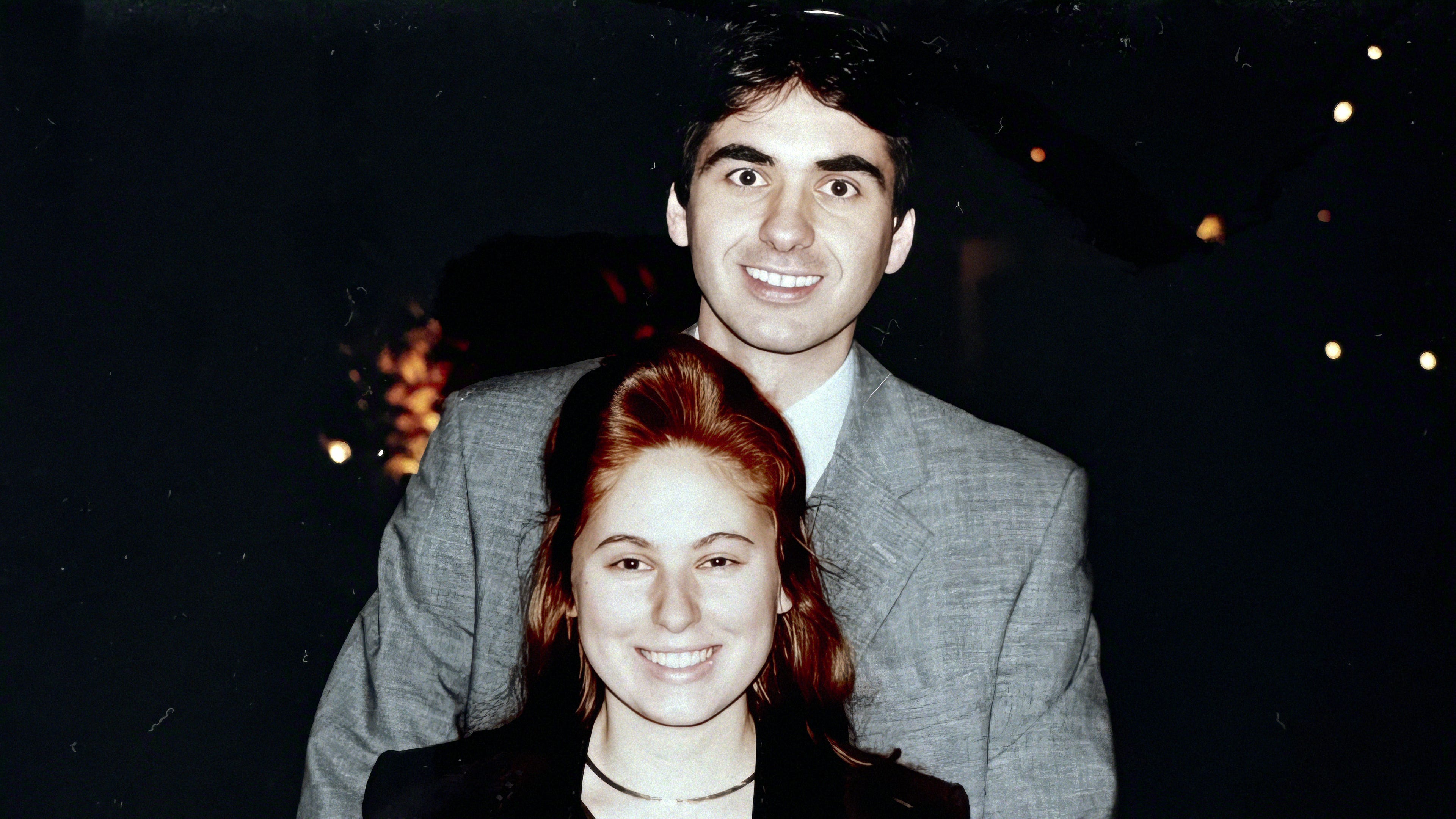
So I wonder what people in this country who are concerned about what’s happening here might take away from watching your amazing film.
Rory Yeah. Well, listen, I think — of course you can imagine I’m engaged with the stakes of the election. In terms of the bigger issues of Title IX and the assault against women in this country over the last couple of years, I think that people can vote and look at who’s making these decisions, and whether those decisions are in the interests of women and of our children — girls and boys, for that matter.
So I think it’s important for people to be monitoring and aware of what’s happening, not just in sports but in other areas, in terms of the treatment of women and the fairness of what is accessible for women. That’s my larger feeling. We’ve got an election coming up that’s very important, as we all know. Focusing on that and voting and doing what you can is hugely important.
That aside, in terms of watching this film, I think what you’ll find, for people who haven’t seen it, is that what Judit’s father would say to her over and over again when she was up against situations where she was treated unfairly because she was a woman was: “Go back to the board and play your best. Go back to the board, play your best.”
Vanessa Thank God she kept winning. Thank God she kept winning.
Rory Exactly. She just kept at it. She wouldn’t go down the rabbit hole of “This is unfair, this person did this, da‑da‑da.” She was just like, “I’m going to play,” and then she kept winning over and over again.
At some point they couldn’t deny it. They couldn’t keep saying, “Well, you’re just lucky,” or “I had a bad day.” When she breaks through and she’s the youngest grandmaster — you can’t really dismiss that. When she’s the only woman who’s ever become a grandmaster, the only woman who’s been in the top fifty chess players in the world, it just becomes undeniable.
When you see her success — and she points this out in the film — she actually has a lack of resentment and a deep understanding of why she faced that level of pushback and, arguably, discrimination. In fact, none of these men had ever seen a woman be so successful. Just the fact that she was so successful, more than anything, made them challenge their assumptions.
Vanessa Yes.
Rory It’s very hard when you’re given no resources. There’s a contrast between the support that Kasparov was given in Russia, in his town, where he had all of the best people training him. He got all the resources. He was able to fly all over the world at a very young age.
Meanwhile, she wasn’t allowed to leave Hungary or communist Europe. She wasn’t able to engage in these big tournaments. They grew up in poverty, so they spent all of their resources getting a makeshift group of trainers to come in. Then the father learned how to play chess in order to train the kids. They had a library of books and they read the books on how to learn.
When you contrast that with the support that the men were given, it’s kind of stunning that she was that successful.
Vanessa It’s stunning, it’s inspiring, it’s so well told, and I’m so happy it’s you who told this story. Do you have any last thoughts on your whole body of work — all the documentaries you’ve made — and where this may sit in that body of work for you?
Rory Well, thank you for saying that, Vanessa. I’ve really enjoyed speaking with you today. This is a special film for me, and it was great to be on the journey with it and go with Judit to Sundance and have her be there — to see how young people, young girls and boys in particular, are so moved and motivated by her story.
We had a chance to show the film to students in Utah, and they just thought she was so cool. They were so psyched and gave her a standing ovation. It was so sweet to see how much her story is and continues to be motivating for other people. I really love that legacy.
Recently, it was fun because a couple of weeks ago she was asked by the head of the government in Hungary to run for president. She ended up declining, but I love the recognition she’s getting and the acknowledgement of everything she’s done in her life. It’s fun to find somebody whose story really wasn’t told, to elevate them, to see them go off in the world.
Not that she hasn’t already gone off in the world, but to just help emphasize and buoy and support her story and get it out there, and see how it can impact others, is enormously satisfying.
Vanessa Yes, and I’m just going to say this. I listened to your interview at Sundance and I loved the way you talked about how Sundance not only started your career because your first film went there and succeeded, but that you appreciate that Sundance has always treated documentaries on the same level as fiction films.
The larger world has confusion about this, that documentaries are somehow “less than.” I’ve spoken to filmmakers who’ve described it as being like the second‑class citizens in the Oscar campaign race: you’re put at the children’s table, you’re segregated.
I think it’s high time that a documentary enters the top‑ten list of films for Best Picture Oscar. I’m just saying, this is a good one to enter that race, because the level of male domination in the fiction film world right now is so sick, and I’m so sick of it. So please let this go into the top ten, Rory.
Rory Thank you, Vanessa. You’re the best. I appreciate you — I really appreciate the opportunity to talk to you and see you. So thanks to you and Ted. Okay, take care.
Vanessa Okay, all right. Same. Thanks. Thanks, Rory.
Rory Kennedy is an Academy Award–nominated, Primetime Emmy–winning documentary filmmaker who has directed and produced more than forty films. Her films have appeared across major platforms including Netflix, HBO, National Geographic, PBS, and Hulu.
Kennedy and her husband, Emmy-nominated writer and producer Mark Bailey, co-founded Moxie Films. This year, Kennedy directed and produced FREEFALL: A RECKONING FOR BOEING, a Netflix feature documentary and follow-up to DOWNFALL: THE CASE AGAINST BOEING, uncovering further revelations about the Boeing Company. The film premiered at the DC/DOX Film Festival in June 2026 and launches on Netflix this August. Also this year, Kennedy directed and produced QUEEN OF CHESS, a feature documentary about Judit Polgár, the greatest female chess player in the world. The film premiered at the 2026 Sundance Film Festival, Kennedy’s tenth documentary to debut there, and launched globally on Netflix on February 6.
Recent projects include the HBO documentary series THE SYNANON FIX (2024), examining the rise and transformation of the controversial addiction treatment organization, THE VOLCANO: RESCUE FROM WHAKAARI, a Netflix feature documentary about the deadly 2019 eruption of New Zealand’s Whakaari/White Island volcano that became the platform’s #1 film worldwide, and DOWNFALL: THE CASE AGAINST BOEING, a feature documentary investigating the two tragic Boeing 737-Max crashes which went on to break the Netflix Global Top 10.
Kennedy’s earlier work includes the Academy Award–nominated LAST DAYS IN VIETNAM and HBO’s ETHEL, which received five Primetime Emmy nominations. In 2007, her HBO film GHOSTS OF ABU GHRAIB premiered at Sundance and went on to win a Primetime Emmy Award for Outstanding Nonfiction Special.
Kennedy has served two terms as a Governor of the Academy of Motion Picture Arts and Sciences and is the founder of the Climate Emergency Fund.