
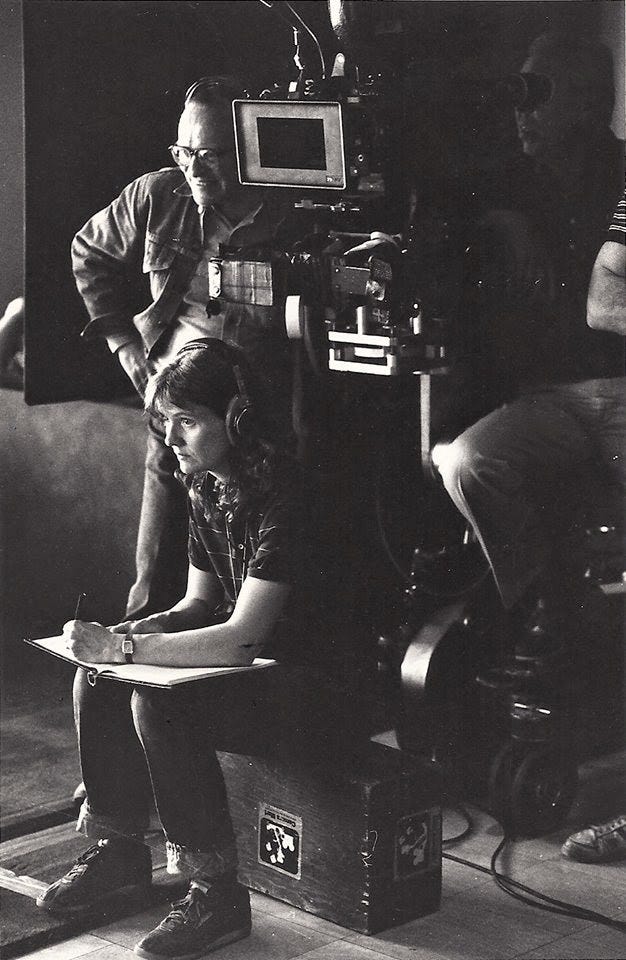
Sidney Lumet in the ‘80s
An excerpt from the book CINEMATIC IMMUNITY by Michael Lee Nirenberg

Today we have another book excerpt for you, and it is a good one! The book is filled with great “stories” by the crew who worked on a wide variety of legendary projects. Reading it you can’t help but feel they sure don’t make them like they used to!
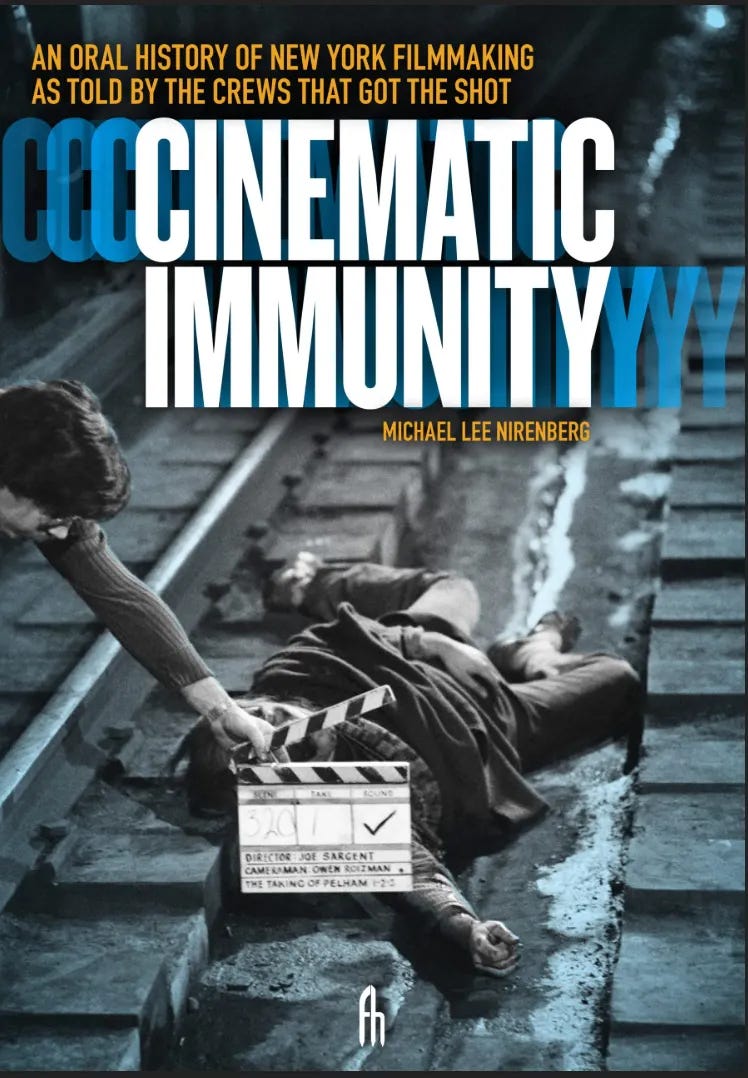
Cinematic Immunity tells the story of New York City’s movie industry from the crew members who created the sets, lit the scenes, and shot the film. Focused on the golden age (1950-1990) of New York filmmaking, Cinematic Immunity covers On the Waterfront through The Sopranos.
The East Coast film industry, thousands of miles from the Los Angeles executives, existed by its own rules and with little oversight. It was a close-knit and freewheeling community of movie technicians that took on the most outrageous challenges to get the shot. Readers will hear the unvarnished truth of the New York movie industry—tales about union politics, studio bullshit, movie families, dangerous locations, complex shots, volatile directors, plus anecdotes about actors, pranks, friendships, rivalries, generational shifts, substance use and abuse, technical feats, and more.
Includes stories about classic (and not so classic) films and television shows including: Midnight Cowboy, The Warriors, The French Connection, The Exorcist, The Godfather, The Wiz, The Taking of Pelham 123, Annie Hall, Cruising, Do The Right Thing, When Harry Met Sally, Home Alone 2, The Sopranos, and Law and Order.
Tales of their exploits, what they saw (and did) on these sets was previously only passed among themselves as showbiz lore but now, readers learn of Marlon Brando’s pranks on the set of The Godfather, how crews kept William Friedkin from killing them, the actors, and himself, and how consummate New Yorker Sidney Lumet was the angel to Friedkin’s demons.
Sidney Lumet in the ‘80s
an excerpt from: “Cinematic Immunity: An Oral History of New York Filmmaking As Told by the Crews That Got the Shot”
BILL REYNOLDS (Prop Master, Set Decorator): I think a lot of directors were intimidated by New York and had difficulty in New York, whereas if you got a guy like Sidney Lumet or Woody Allen, they understood New York, and they could get what they wanted.
GARY MULLER (Assistant Camera Operator): I would say Sidney was probably the most influential person in the film industry. He taught me the most about screen direction, how to block a shot. He was very conscious, technically. On The Wiz Sidney would cut the camera if the actors missed their mark, and he’d say, “Bubala, you got to hit your marks.”
LARRY HOFF (Grip): Sidney came out of directing live TV, and for your half-hour show it took a half an hour to shoot. That was it. Hitchcock shot all these films, and then once he had a TV show he would take his TV crews to shoot his movies. The film crews are too slow. Let’s get TV guys in here, because they know how to do it.
BILL REYNOLDS: But without question, he was the most together director. You can have the artistic end of it, and you can have the more mechanical end, and Sidney had enough of the art, but he certainly was mechanical. He knew how to get it done, and shooting on schedule was as important to him as getting the performances.
TOM PRIESTLEY, JR. (Director of Photography, Camera Operator): A lot of moviemaking is problem solving. You do a major scene and then you try to figure out, well, how can I make it better? What can I fix? How can I make it flow better? How are things going to edit? Things of that nature. It’s a constant ever-evolving situation. It’s not very cut and dry, except if you work for Sidney Lumet.
BILL REYNOLDS: The schedule was very important to him, and I think that that came from his time in television at the beginning, when it was critical for money and everything else. Of course you can’t now, but I would never invest in a movie unless Sidney was directing, because Sidney will come in on schedule, or in front of schedule. He will never be late, and he’ll never be more expensive.
The Scout
TOM PRIESTLEY, JR.: Everybody should work with a Sidney Lumet once in their life, just to see the other end of the spectrum. I’ve never met a director like that. I mean, no one’s ever come that close to Sidney with the organization and the dedication and the speed.
RICHARD ADEE (Prop Master, Special Effects, Set Decorator): I did about three movies with Sidney. He was fabulous. You go on a scout with Sidney Lumet and you’d scout all the locations and he’d say, “All right, camera’s here. I want a 50 [millimeter lens] on it, and we’ll make one dolly move.”
That was it. I mean, that’s how thorough that man was. You knew exactly what he wanted.
BILL REYNOLDS: He’d have very elaborate scouts, and he’d say, “Okay, the camera’s going to be here.” And if it was a period job especially, he said, “It’s going to be 24 millimeters here. The left frame is going to be the edge of that building over there. The right frame will be this. You have a 35 [millimeter lens], so don’t worry. Anything above the third floor, don’t worry about.”
And you could say to him, “Well, what about that telephone booth over there? Is that going to be a problem? It’s not really in the period.”
He’d say, “You know what? It won’t be. It’s not going to be a problem.”
And they [the sound crew] would wire Sidney. He would be on a microphone and a transmitter, and the lemmings behind him, which could amount to thirty people, would all have speakers set up to be able to hear what he was saying. Any question you had about what was going to be required or where he would be looking—this was particularly helpful for the DP [director of photography] pre-planning and that, but the detail he would do, and he wouldn’t vary from it.
I remember doing a movie with him on the Upper East Side, and they were having some trouble lighting. I think it was that they didn’t account for where the sun was going to be. It was looking out at the building across the street. It was all black buildings. So there was a big rush to get some lights on that, so you could have some depth, and it didn’t look like a black hole behind them. And the DP said to him, “It’s going to be a little bit of a while,” and I remember Sidney looking at his watch, looking back at the DP, right in the eyes, and saying, “We will be shooting at 11 a.m.” And they were.
TOM PRIESTLEY, JR.: He could tell you, “Next Thursday at four o’clock, we’re going to be on the corner over there with a 35-millimeter lens on the camera,” and, by God, we were there. I mean, that’s how precise he was.
BILLY WARD (Gaffer): Sidney used to scout the location, and he would tell you exactly, “The master from here, over the shoulder here, over the shoulder there,” and when we came back we shot it exactly as he said, which was nice in some respects, because you knew what you were into. But sometimes something’s come out of a rehearsal you feel that could change something.
Rehearsal
GARY MULLER: In pre-production, he would rent this Polish Hall out in Lower Manhattan, and every actor had to be on payroll from beginning to end—you couldn’t start and leave and come back. You had to be there if you worked, or if you didn’t work. You got paid for the entire six or seven weeks.
BILL REYNOLDS: We had taped out the floor to signify the walls, the outside walls, in various colors, so whether it was an apartment or was an office, they could stand in basically in the position. We taped that furniture on the floor so they could relate to it.
MARTHA PINSON (Script Supervisor): In a big empty room with the set taped out on the floor, and we would just do it. It started with a table-read and then a discussion, and he would show pictures and things, historical or whatever, the location issues, so that the cast would all be educated as to the setting and lots of other factors.
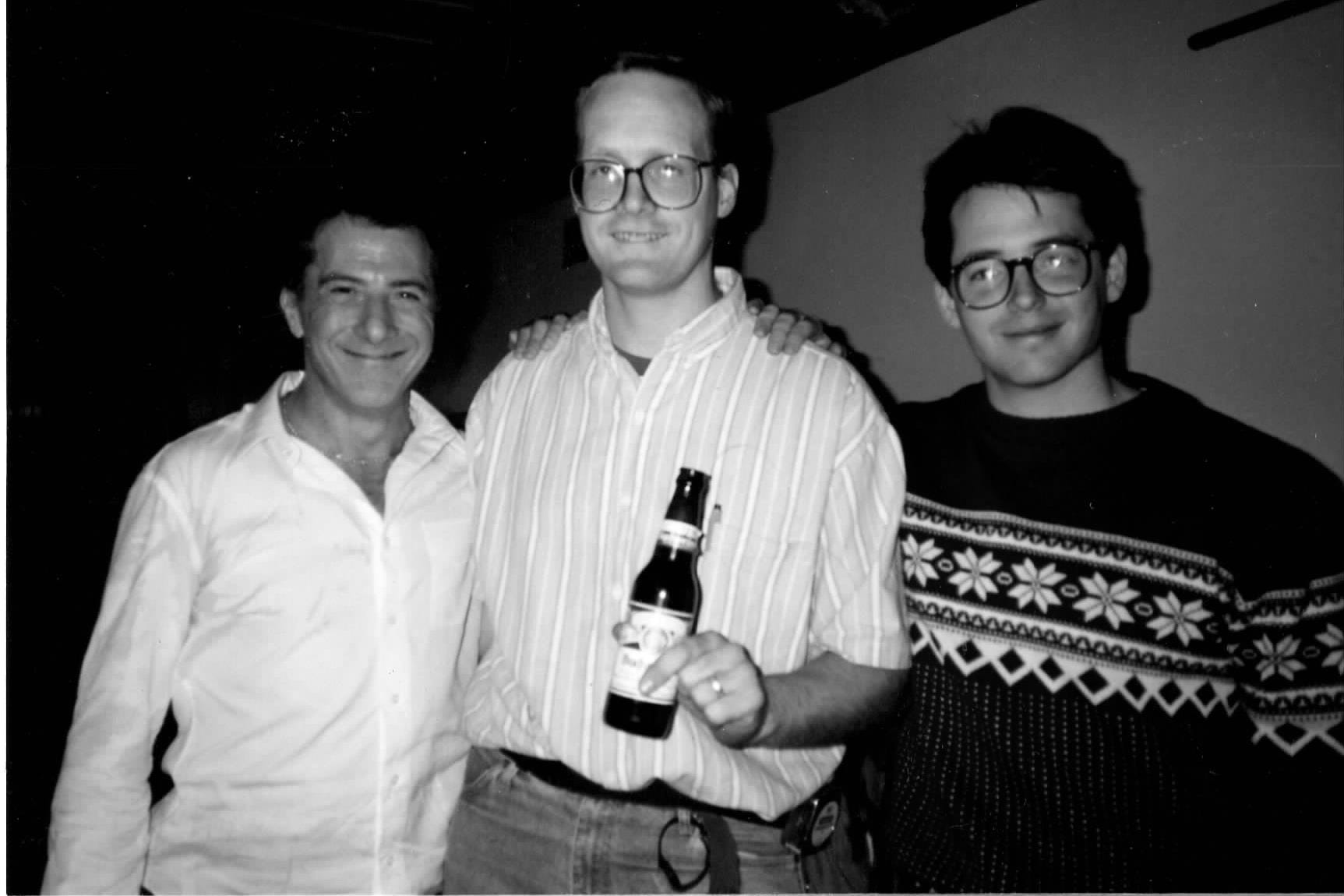
BILL REYNOLDS: I was on Family Business [1989]. The talent was Matthew Broderick, Sean Connery, and Dustin Hoffman.
So, this was the first read-through, and they sat down at a conference table. Sidney was at the head, and he gets up and he says, “Gentlemen, I can’t believe how lucky I am to have the talents that I have here in front of me. But let me be very frank and very clear right off the bat: there is one final voice. It is mine. You may have heard I only do one or two takes. That is very true, and I stick with that. If you have an extremely good reason, I will occasionally let you have a third take, but I can almost tell you there will never be more than that.”
GARY MULLER: Sidney said, “Sean, listen, if I think I got it, that’s it. Dustin, no two takes. If you’re in frame and in focus, and I like the acting, don’t ask.”
BILL REYNOLDS: I think Hoffman was a little aghast, but they finished two weeks early.
MARTHA PINSON: I would have my [script] breakdown there, and then he would take it to read certain sections, reading this and that, and then we would do a rehearsal—staging of every scene in the film, in the two or three weeks that was allotted for the rehearsal.
GARY MULLER: The first week he’d do script reading. The second week, there was a PA [production assistant] at the door. When the actor came in the door, he took the script. The actor had to have the whole script memorized. Then the first couple of days they would just block it and then towards Thursday or Friday of the last week of prep the actors would go through it, and then the DP.
Sidney used this famous Mitchell finder, from the old days, and the DP would go down there, and they blocked the shots out.
MARTHA PINSON: Then the DP and a couple of other crew people would come in for a full run-through on the last day. The DP would know what the staging was going to be in each set, each scene. You would know if there was a car or something that they would just sit and pretend they were in a car. We’d use chairs. But we did have the actual size and shape of the rooms with a few basic props, a chair, or something so that they could use it, and so the actor might say, “I want to try this one, like, being insanely angry,” and Sidney goes, “Okay, do it,” and then he might tell the actor, “You know what, on the day, I think that the anger is good, but sit on it a little bit—just make it a little more subtle.” The actors would be prepared as to various things that they would need to do in terms of pace, performance, and character. Everything was discussed.
BILL REYNOLDS: It wasn’t as if he didn’t want the actors’ input. He didn’t want input that was going to upset his schedule.
MARTHA PINSON: I think they had those discussions, but it was more private.
TOM PRIESTLEY, JR.: Every actor knew their motivation, what was expected of them—do it, boom, gone—and actors love that because they’d come in at eight and go home at five. It was great. I mean, shooting the movie was almost anti-climactic because he had the movie in his head. He was like Alfred Hitchcock. Hitchcock had the whole movie down on storyboards.
MARTHA PINSON: It was well-planned, and they would be thinking about how to transition from scene to scene as it were, or from series of scenes, segments of the film, to, like, another segment that might be a flashback or years later or something.
I worked with Miloš Forman on Ragtime [1981] and it’s been so long I don’t remember whether I had it on paper, something of a shot list, or with sketches. Martin Scorsese annotates his script by taking the physical script and jotting down, both in words and sometimes in images, three quick sketches of how he wants to see something and then we shoot that; we shoot what he plans.
On Set
GARY MULLER: Sidney, most of the time—for a camera assistant—he’s very difficult because he only wanted to do one take. There’s so many shots in Paul Newman’s sequence [The Verdict, 1982] that are one shot, one take through a couple of rehearsals.
Most camera assistants like to work on the operator’s side, the left-hand side of the camera. Very few back then like to work on the other side, the right-hand side of the camera. Sidney, when it was time for a closeup, would come up to the matte box and say, “Bubbie, other side.”
He wanted his nose right next to the matte box. What the lens was seeing he wanted to see in an actor’s eyes—even if it was a difficult dolly shot, he wanted that—and that’s how I learned how to be a really good assistant working from the dumb side of the camera. Sidney always wanted to be near the matte box for closeups.
BILLY WARD: We did a lot of movies with Lumet. At that point, of course, I was a kid. I knew Sidney pretty well at that point. In fact, in those days Boris Kaufman was the cameraman. It was so different back then. We would come in at eight-thirty. We would light until one-thirty, go to lunch, and then come back and start to shoot. In the later years Sidney, he ripped through the script—boom, boom, boom. Once you lit for the master, a couple of corrections—boom, we shoot.
MARTHA PINSON: There would always be a rehearsal when you come to set in the morning. You got to block the scene. And then they go to wardrobe, hair, makeup, and the camera guys, and everybody does their work to light the set, set up the props and everything. It would be six hours a day that we would be there.
LARRY HOFF: I worked a couple of days for Sidney Lumet in Central Park. We have a nine-o’clock call. I think we were done in four hours, and we came in—boom, boom, boom, boom, boom—”This is okay. Let’s go home.” He shows up at ten. I think we were wrapped at two, something like that.
It’s called block shooting. We do it now—where we’ll shoot three scenes looking at the judge first or at the witness first. Sidney invented it.
RUSSELL ENGELS (Gaffer): It’s very hard on actors too when you break it up like that, because you’re doing it just in one direction. There was no over the shoulder, back and forth conversation-wise, so it could be tough on them. The actor would be into the scene and go about two sentences or so and he would say, “All right, cut.”
And the actors would say, “What the hell? What are you cutting for?” and he would say, “I’ll be over here on this guy when you’re doing that.” He knew exactly where he was going to use that guy, or that line, or that sentence. Then he was going to be on somebody else or whatever, and he would cut right there in the middle of the scene: “All right, we’re done. I got that. I’ll move over here.” Because it’s a lot less days on the job. The general cost would go way down when he could do that.
BILLY WARD: It was almost like he didn’t like the process of making the movie—we shot so fast—which was nice because you knew you weren’t doing overtime. You could make an appointment that night because you weren’t going to be late.
TOM PRIESTLEY, JR.: It’s one of those strange dichotomies: you want to work with a guy because he’s brilliant, but you don’t want to work with the guy because he’s brilliant. On one location, on Family Business [1989], I think we shot, like, sixty setups in a day.
GARY MULLER: We went into this building, which they let us in on New Year’s Eve because they had off. It was, like, this perfect location, and Sidney says, “Guys, I have fifty shots. We’ll be done by lunchtime. I promise.” Fifty shots.
TOM PRIESTLEY, JR.: In a room—out of the room—”Put the camera here, put it there.”
GARY MULLER: He said, “Gary, don’t tell me there’s a hair in the gate. Don’t even look in the gate. I’m taking that responsibility. We’ll blow it out. We’ll figure it out. Two lenses—film, handheld camera, that’s it. I want it lit; I want to go.”
Well, in about three and a half hours, we did forty-something shots, and I said, “Sidney, we got three more shots.”
He said, “I forgot those shots. We don’t need those shots.” But in between [script supervisor] Mary Kelly’s saying, “Sidney, you gotta do another one. Sidney, [the] screen direction’s wrong.”
And he’s saying, “Mary, what are you taking notes for? I don’t need notes. All I can do is cut the slates out and I got my sequence. Please. I don’t even know why you came today. You could’ve stayed home. Just give Gary this slate number. That’s all. Please.”
It’s so funny, though. He was, like, telling us, “Don’t take notes.” We were laughing our balls off behind him. He was like, “Everybody’s getting in my way. I only want four people. I want the actors, I want Tom, I want Gary, and Andrzej [Bartkowiak, director of photography]. You go away, too.”
TOM PRIESTLEY, JR.: Andrzej Bartkowiak had to place pre-rigged [lights]. So there were mostly the hallways, which you just point the camera and shoot—maybe he had one light for fill somewhere or something, but basically just pointing the camera and shoot, and that’s what we did, and most of the equipment stayed on the truck—just the camera and maybe one or two lights. It’s also about getting coverage. The more coverage you have, the better editorial rhythm you can achieve.
GARY MULLER: Man, we worked our balls off. He didn’t even have a shot list. He had it all in his brain.
BILLY WARD: There was a time we were working and a couple of days prior the prop man, his father had died, and so Sidney walks on the stage and he says, “Ah, Harold, terribly sorry to hear about your father.”
So, Harold starts to say, “Well, he was sick . . .”
And Sidney cuts him right off and says, “Okay. Just grab that couch and pull it over there. Let’s go.”
He didn’t want to hear anything. He just did it for the formality. He was a piece of work, Sidney. But it was fine because, like I said, I knew I was coming home that night and you set the clock because you were going to finish at five-thirty.
JIMMY ARCHER (Set Dresser, Props): One movie, they started in New York, did a shot in Kennedy Airport, went down to Washington, D.C., did a shot there, came back to New York, all in an eight-hour a day.
GARY MULLER: Seven hours, he’s done. Get to a point where, Jesus Christ, you couldn’t even take a piss. Sidney wanted to work French hours. Why do we have to go to lunch? Sidney’s like, “I can take a nap at home.” You could be home. Okay, Sidney, you’re making two million bucks; I’m making thirty dollars an hour.
BILLY WARD: I remember Dustin Hoffman working with him, and I guess they explained to Dustin before, “This is how it works,” and they had a conversation, but Dustin didn’t like that. Dustin always wanted another take. “No, no, no, it’s fine. Bubbie, it’s great. Let’s move on.”
GARY MULLER: Dustin was pretty damn good. So then Dustin started—a couple times on his dialogue—he said, “Sidney, I’d like another one. Gary, you need another one, don’t you?”
I’m like, “Please don’t say that,” because he was commenting, “I’m going to fuck up on purpose, because I want another take.” He would get under Sidney’s skin. I think I’ve asked Sidney for another take maybe once in my career, and I think the same thing for Tommy [Tom Priestley].
BILLY WARD: I remember one time we were on top of a roof. After the take, the operator said, “No, that’s no good. I clipped off his head.”
He says, “Oh, it makes for tension. It’s beautiful, bubbie. Let’s go. Let’s go.” [laughs]
GARY MULLER: Sidney was a control freak, from beginning to end. Once my brother pulled focus with Sidney, he would say, “I try to say five things to Sidney a day. If he takes one of them, I’d go home and have another glass of beer.”
Dailies, Money, and the Cutting Room
TOM PRIESTLEY, JR.: With Sidney, dailies were at five-thirty p.m. It wasn’t like other shows that were nine o’clock at night. The Teamster would have the car waiting for him on the last shot. They’d say wrap, he’d be out the door in the car, down to dailies. By the time we wrapped out and we go get our cars and get down there, he’s coming out of dailies saying, “Oh, everything was great. I told the projectionist to hold it for you,” and he’s gone. We go up and watch it by ourselves. But that was Sidney.
GARY MULLER: The joke in the cutting room was that he didn’t have to cut anything. All he had to do was cut the fucking slates off and put the film together and the film was done.
BILL REYNOLDS: Sidney wanted to be on a helicopter on Friday afternoon going to his place in the Hamptons and you knew you were going to get a short day on Fridays if you were on the shooting crew.
In fact, most times, shooting crews are the ones that make the money, with the hours. In a Lumet job, it was the dressers and construction, because you’d think that a set might be coming up two weeks from now and suddenly we’ve been burning through this, so we’re going to get to it a week early. Set dressers always get it last—it gets built, it gets painted, and then the dressing comes in.
There was many a time when you’d be finishing up that morning when you thought you had plenty of time, and the shooters would be coming in to do a pre-light in the evening, where you thought you had the whole day. So the stress really went on construction, and scenics, and dressing. The carpenters are the most old-school blockheads. They’re incredibly talented, but they don’t like their schedules upset. If you set a schedule, if you said, “You might need a Saturday or you might have to go to twelve [hours].”
GARY MULLER: Daniel [1983]—see, that’s when that got a little dicey working with Sidney, because we always had a twelve-hour guarantee. We work eight hours and nine hours, but a lot of the crew had a twelve-hour guarantee—sixty hours a week from the prep to finish—and with Sidney, if it was a ten-week schedule, you knew it was done in eight weeks because he would shoot so fast. So you were losing money working for Sidney after a while. And Daniel was very close to his heart because it was about the Rosenbergs, and it was part of his political makeup.
He didn’t have enough money to make that movie. So he reached out to Burtt Harris, producer, his best guy—reached out to everybody—and said, “Listen, I don’t have a lot of money, so can we just work for eight hours?” and we do forty-hour weeks, and working for Sidney for eight hours is like working for fourteen from anybody else. I mean, put a broom up your butt and you could clean the streets in New York. You don’t sit down; you don’t do anything. I think everybody agreed to work for normal rates and bend the rules a little bit.
I mean, the Teamsters got their money, and everybody else and producers got their money, but sure, okay, we’ll do one for Sidney. But he was very tense, very tense. Sidney knew he had to hurry. I think the movie was, like, so politically motivated that nobody understood it. Nobody really cared about it, and then when we went to do Garbo Talks [1984]—it was sort of the same—like, “Oh, okay.” Everybody anticipated that we would get reimbursed for our previous movie, but no, they said they didn’t have enough money, and that was an okay movie. Then we went and did Power in, I think, 1986.
The Teacher
TOM WHELAN (Unit Production Manager, Location Manager): After about six years of working in theater and television, I went back to film school and went to Columbia University. Miloš Forman was the chairman of the department. I didn’t see him that much, but he was there. I studied screenwriting and directing. I had seminars with Frank Perry, Sidney Lumet, and Ralph Rosenblum.
The seminar with Sidney Lumet was the most memorable to me. He was also an extremely well-read person. He knew everything about the theater. He knew everything about theater history, European films. He was just amazing. And so the seminar was basically sitting around a table listening to him talk and us talking back and forth.
At the time he was finishing the movie Running on Empty [1988], and he took us to the ADR [automated dialogue replacement] sessions. He took us to the editing room. We would go to the editing room with him, and he still had a standup Movieola that he would look at his cuts on, and he would say, “Come over here and look what I’m doing at the Movieola.” There’d just be a couple of us there because he would do, like, a very small group. We’d stand five feet behind him. He’d say, “No, get your nose into this screen here and see what I’m doing. You have to see this.” And it was an unbelievable experience to watch him work and to be there when he was doing his stuff. None of us had ever been to an ADR session before. And here we have Judd Hirsch in front of us doing his work. It was quite amazing. I never got to work on a production with him. But for me that was a formative experience.
TOM PRIESTLEY, JR.: He made great movies, and he made average movies, but he never really made a bad movie. Made forty or fifty movies, starting, I guess, with Twelve Angry Men [1957], which is incredible. The Verdict was another great one. The great movies transcend time, you know? You can watch Twelve Angry Men, made in 1955 [sic], today and it’s got carrying power. The same with The Verdict. The same with Network [1976].
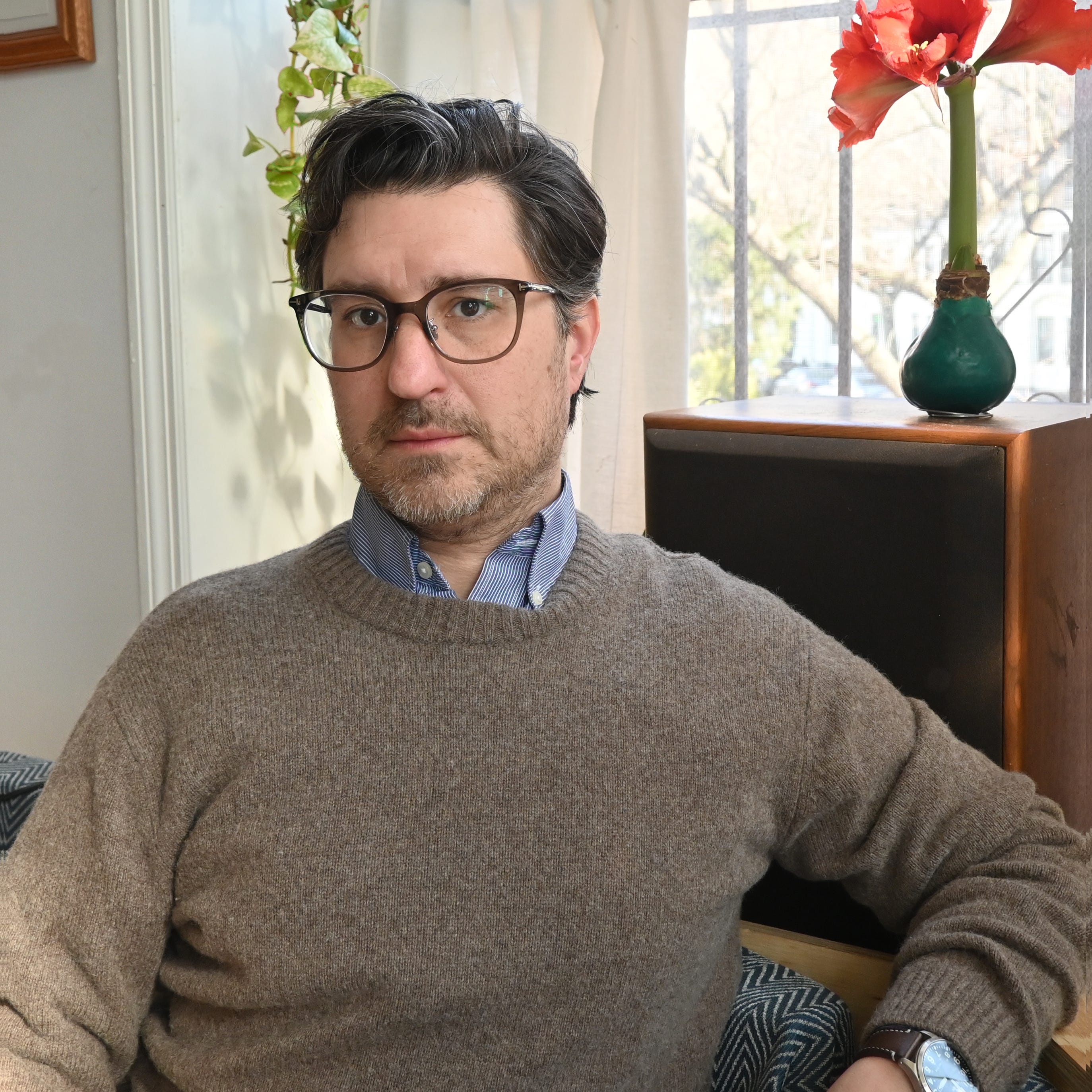
Author Michael Lee Nirenberg has worked as a scenic artist in New York since 2006, and in many cases, alongside many of the people featured in the book. This book is a labor of love comprised of over 150 interviews and hundreds of hours of recordings. Cinematic Immunity includes behind-the-scenes images from studio archives and from the technicians who were there.