

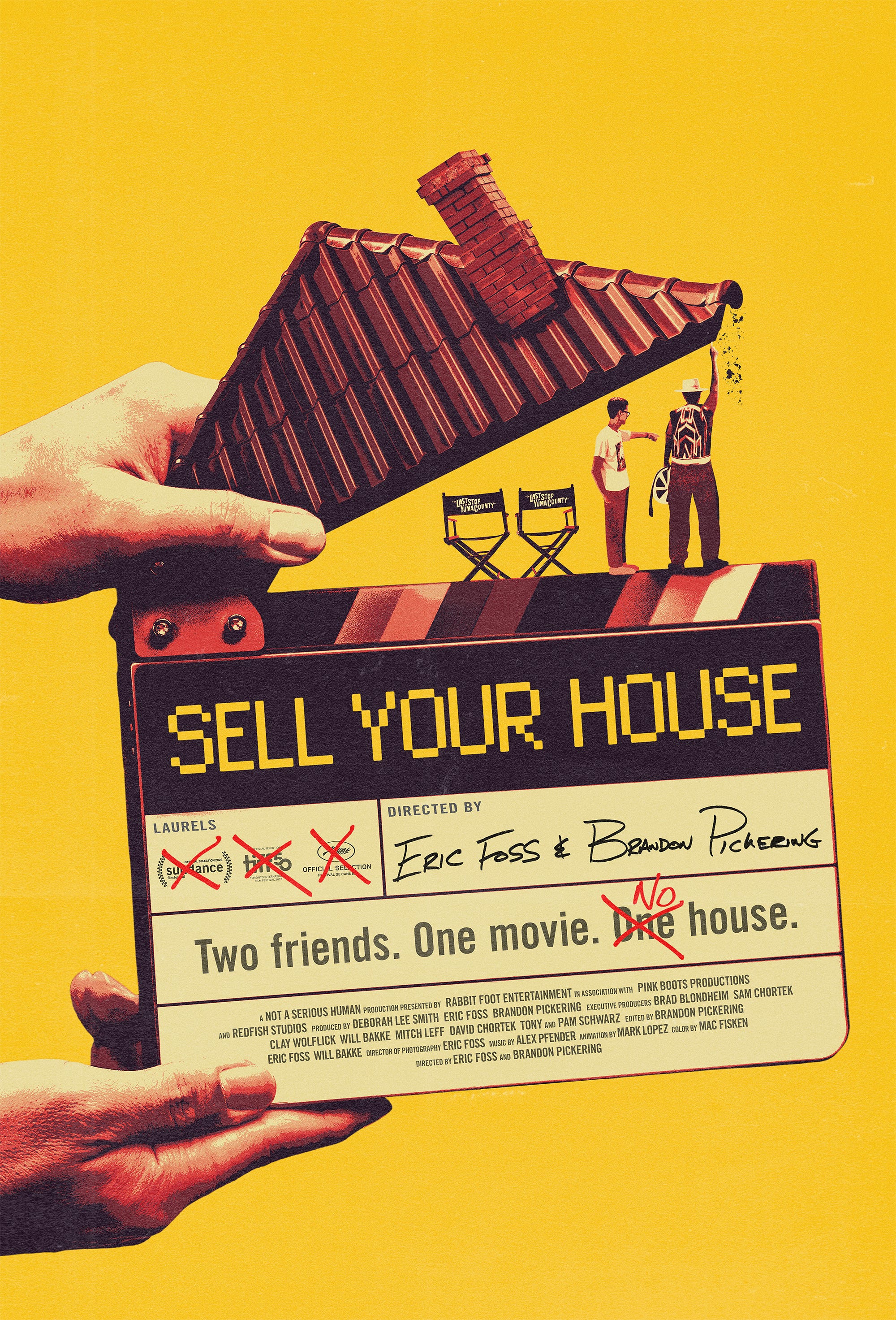
Nobody knows who I am, nor should they. I’m a 38 year old reality TV camera operator with an anxiety disorder and a bad filmmaking habit. I think the reason that Mr. Hope agreed to this takeover is because I just finished my first micro budget feature documentary called “Sell Your House” which is a good case study for the topics discussed on his substack.
“Sell Your House” is about the production and distribution journey of a successful indie film called “The Last Stop in Yuma County” that was funded when writer/director Francis Galluppi convinced his best friend, James Claeys, to sell his house to fund their movie. “Sell Your House” is a movie about a movie that follows not just their production and distribution journey, but also the pressures that puts on their friendship.
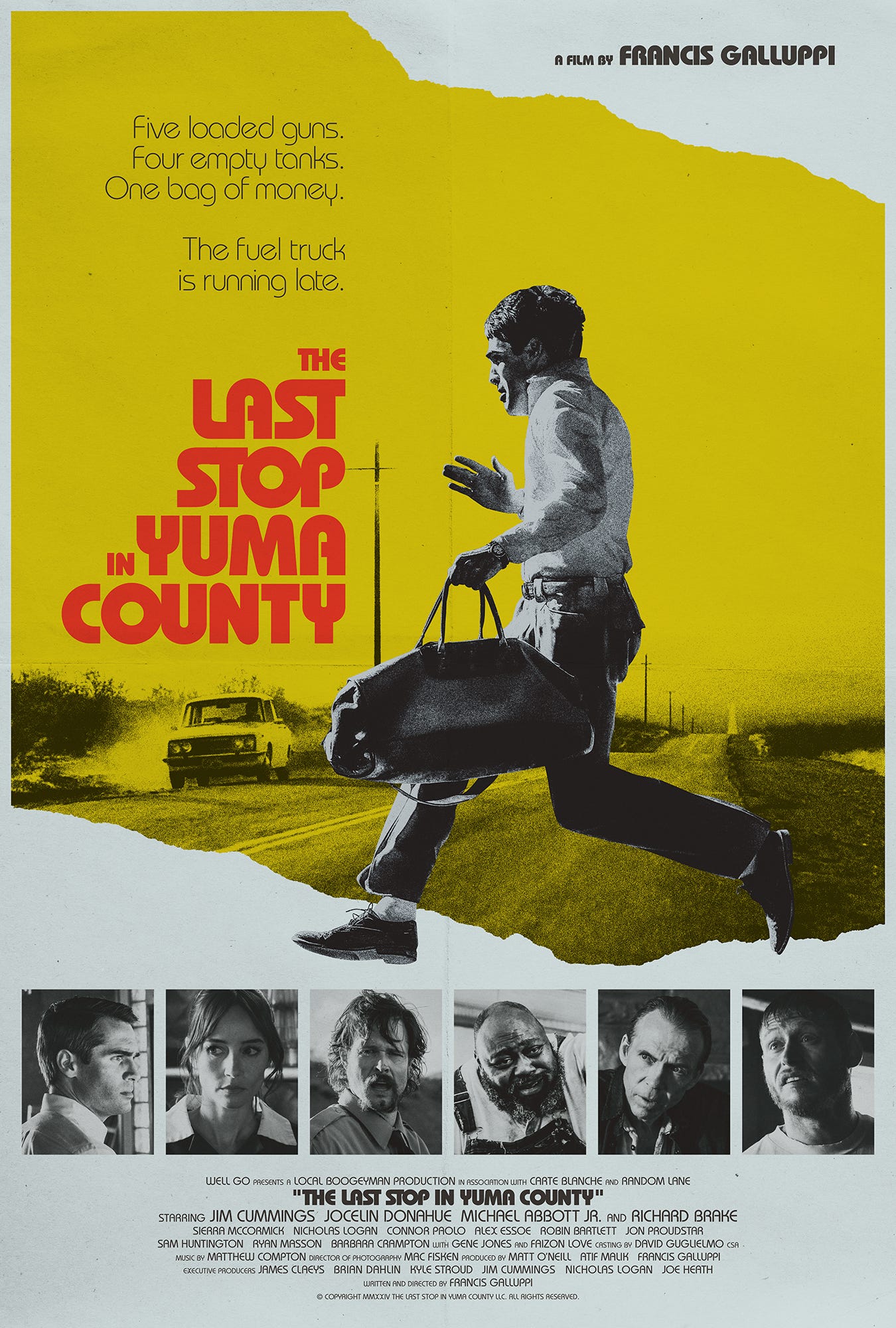
Being friends with Francis is the closest I’ve ever been to somebody successful. He just wrapped production on a new Evil Dead movie. He’s met with everyone in Hollywood. You will be hearing his name a lot in the next ten years. But before all the success, Francis was just my friend across town with his own bad filmmaking habit. I would come over and we would watch a movie together or we would help each other on set whenever one of us was in production. Then he wrote “Last Stop.”
When James sold his house to fund “The Last Stop in Yuma County” he and Francis were going to make movies independently together forever. The plan was to retain creative control by financing themselves, find a distributor, sell their film, and use the MG (minimum guarantee) to fund the next project. But after they sold their film, their distributor did what they all do they misrepresented the film in the marketing, and underdelivered on their promises.
So far, their distributor has made about $3,000,000 for “Last Stop.” By all accounts, that’s pretty good, but it was at the cost of the artistic integrity of the marketing and James was not ok with that. On the other hand, Francis was willing to compromise on the marketing as long as it didn’t affect the film. This created a rift between James and Francis. To make matters worse, Francis was offered a dream job to write and direct the afore mentioned “Evil Dead” film. You can’t fault Francis for taking that opportunity. He had worked on “Last Stop” for three years after quitting his job with a wife and two kids and was $150,000 in debt. I would have taken the dream job too. I mean, was he supposed to wait till James finally made his money back? He still hasn’t four years later.
In my opinion, the root of this conflict is the distribution system. As has been expressed on this Substack before, the indie film distribution model is broken for many different reasons. But while people smarter than me are attempting to fix it, those of us with finished films are still faced with distribution decisions. I’m going to provide three distribution case studies, one for traditional distribution, one for hybrid distribution, and one for self-distribution and I’m going to explain the positives and negatives of each. The hope is that this will help us see what needs to be fixed and help people choose the best of the worst model for their specific film.
Case Study 1: “The Last Stop in Yuma County” - Traditional Distribution Model
It’s midnight on February 23, 2025. I’m standing outside a bar getting yelled at by James, the guy who sold his house to finance “Last Stop.” We just had a test screening for “Sell Your House” which both James and Francis attended. I’ve been out here with James for an hour, trying to make things right.
“I invested in a career with you guys! You guys don’t fucking care what happens to me!”
James tends to lump me in with the “Last Stop” team because I’ve been friends with Francis for a long time and I’ve been filming their story since day 1 of production. I’ve never tried to convince him otherwise because my doc opens a wound every time he watches it, and honestly, I feel a little guilty about it.
“Dude, James,” I plead, “we care. We all love you. This is a situation created by the system you agreed to when you signed with your distributor.”
James turns away and fights back tears. “It just fucking hurts. You all got yours.”
I’m desperately trying to figure out how to reason with him. “All your money is tied up in your investment with “Last Stop.” People aren’t asking you to get involved in their projects because they know you haven’t made your money back, but that’s nobody’s fault. None of us are doing this to you.”
“Fuck you, man!”
“Dude, I’m not saying we don’t want you to be involved in future projects. I’m saying you’re limited by this system where the distributor gets paid first. You need money to make money but you currently have no money.”
James continued to yell at me for another half an hour and I didn’t blame him. I’d be upset too if I sold my house, the film I sold it for actually turned out to be successful, and I wasn’t able to share in the success that everyone else was enjoying. The other producers were taking meetings and booking other gigs. The cinematographer was shooting a new project with Kevin Bacon. And Francis’ career was being launched into the stratosphere. Meanwhile, James was left empty handed. For investors like James, no money equals no opportunities. It must be frustrating to have done everything right and not be allowed to continue doing the thing you succeeded at.
To my understanding, “Last Stop” has made about three million dollars gross. By my calculations, James should have seen about $500,000 (he invested about a million). He’s only seen a tenth of that. Francis got what he wanted: A career. Aside from “Evil Dead” he has sold three other projects that I can’t talk about that have A list actors attached. Francis didn’t make any money from “Last Stop,” but he got a career. I think James could have harnessed the success of “Last Stop” into something besides a death spiral, but he is very fixated on not being able to work with Francis in the immediate future. I think that’s what hurts him the most. He invested in a future with Francis, but the future took Francis away from James. Again, not Francis’ fault. That’s just how the system works.
Unfortunately, this is an all too common story. The distributor recoups their advance and marketing costs and if you don’t have a marketing cap, which I don’t think “Last Stop” did, those recoupments can last for years. I’m not totally sure what the financial details are, but I know that James has only made $50,000 back on his million dollar investment and Francis will likely never see a dime. They both took a huge risk making “Last Stop” and it did really well. But if something is successful shouldn’t you be able to get paid for it? Apparently, not. Apparently, the last person who comes in, the distributor, gets paid first and then has control over the creative accounting that screws the people who took the biggest risk.
Obviously, this model is flawed. If good filmmakers can’t make any money then they can’t keep making movies. Francis got lucky and is now making money on bigger films, but that almost never happens and many filmmakers suffer the same fate as James. So the distribution system is making it impossible for good filmmakers to continue providing them a product that sells because they’re too broke to make a second movie. This not only hurts the filmmakers and investors, but also the distributors. But it cannot be ignored that “Last Stop” launched Francis’ career and made more than the budget. Would Francis have been successful were it not for their distribution deal?
Case Study 2: “Stolen Kingdom” - Hybrid Distribution Model
I’m at another bar, this time in L.A. two months ago. I’m talking to Josh Bailey, the director of “Stolen Kingdom,” a documentary about the black market of Disney memorabilia that gets stolen from rides at theme parks around the world. They’re in the middle of a road show and just finished a screening at Brain Dead in L.A.
“I hate to say it, but you look tired, buddy!” I smile to soften the blow.
Josh slumps onto the table behind his beer, “no man, I’m so alive. Life on the road is awesome!” He closes his eyes pretending to fall asleep.
I chuckle. “How’s your distributor working out?”
Josh sits back up. “I mean, we wouldn’t have this without them. They’ve breathed new life into the project for sure. But we’re only a week in. Three more to go.”
Part of me feels bad for Josh, but another part of me is a little envious of their success. To me, they’ve made it! And this is just part of the job! At the same time, I’ve worked on the road and know how exhausting it can be, especially when things go wrong.
“Don’t worry though. This indie documentary nobody’s ever heard of about a subject matter that isn’t important is going to make us all filthy rich and it’ll be totally worth it and I don’t regret any of my life choices.”
I hold up my glass. “Here’s to financial irresponsibility.”
Clink.
“Stolen Kingdom” did a year and a half of film festivals and art house screenings before signing with a brand new distributor that just came on the scene. This particular distributor was open to taking a smaller percentage of the profits and not recouping marketing costs in return for help with an in person road show and social media marketing. On paper, the road show was a big success. They made about $75,000.00 over one month. Despite the numbers, the tour was a slog. The “Stolen Kingdom” crew was on the road for a month without a break, very little money, and questionable quality in hotels. After the tour, the “Stolen Kingdom” guys explained to me that they had a lot of trouble getting in touch with their distributor who was spread very thin.
There seems to be new distributors popping up every day, and some of them are doing some really great things! The fact that “Stolen Kingdom’s” distributor isn’t recouping marketing costs is unprecedented. They also raised money for the tour through a sponsor which is also an unconventional but smart approach. That said, new distributors often don’t have enough manpower to realize everything they envisioned. So the filmmakers are forced to fill in the gaps. This requires time and effort from the filmmakers and, in the case of “Stolen Kingdom,” caused some stressful situations on the road. Despite the stress, at the end of the day, “Stolen Kingdom” is on a very successful road to financial success and the producers have already been able to partially repay their investors.
Case Study 3: “Sell Your House” - Self Distribution Model
“Bill, I want to introduce you to Eric Foss. He made a great documentary called ‘Sell Your House.’”
It helps to know charismatic people with good looks at film festivals. Staley stands smiling as I shake Bill’s hand.
“Yeah, I remember you, Eric. We spoke briefly yesterday about your film. The one about the guy selling his house to finance a film, right?”
“Yessir! Super nice to meet you again. Yeah, I’m just trying to learn as much as I can about distribution because we are trying to decide what do to. I mean no disrespect, but we are considering self-distribution, but at the same time I’m starting to realize how much work it is.”
Bill is the head of a pretty big distributor. He probably doesn’t like hearing filmmakers talk about self-distribution. He’d rather me faun over him and tell him why we should work together.
Bill rolls his eyes “I think the narrative is getting really confusing for filmmakers right now with Markiplier and Curry Barker. They already had these huge audiences built in. That takes a lot of time and not everyone can pull that off.”
“Yeah, I’m learning that. Finding an audience isn’t easy.”
Bill goes on to explain how they work WITH filmmakers to create a custom marketing plan for every film. He started working in distribution because he loves indie film and he really cares about it. I then proceeded to backpedal and explain that I’m not anti-distributor by any means. I left out the fact that I cast the distributor as a villain in my documentary.
“I’m coming to your screening,” Bill says with a smile.
“Oh awesome!”
I’m not sure if he actually came, but I found myself putting myself in his shoes during our screening the next day and realizing he would probably be pretty insulted. Whoops.
Half of “Sell Your House” is about distribution, and because James got screwed by their distributor, we are not very nice to distributors in our film. Because of that, we are not expecting distributors to be very excited to distribute our documentary. Being aware of that, we are developing a full self-distribution model with our co-production company Rabbit Foot Entertainment. There are three steps to this process: Audience building, physical screenings, and a VOD release. Audience building starts at film festivals and is completely word of mouth. I have been messaging and meeting every filmmaker at every festival we have been to so far, meeting every festival representative I can, and trying to start conversations with industry professionals like Bill. I also have been trying to utilize social media. I try to post every day which is its own full time job.
For our physical screenings, we are going to start with an educational film school tour. We think every film student should know how distribution works and our film is a good way to provide a spoonful of sugar to help the medicine go down. We will then use the buzz from those screenings to lead us into a road show, very similar to what “Stolen Kingdom” did. Finally, we will end with a TVOD release using an aggregator which costs about $3000.00 but that anybody can do.
The sacrifice I make for this model is that I have to work full time to market our project without getting paid for the rest of the year. I’ve turned down $50,000.00 of work so far and expect to turn down another $25,000.00. By the beginning of next year, my bank account is going to be empty, but I hope that 9 months of commitment (I started in March) will be enough to help us find a paying audience. Financially, it is going to hurt, but I’m willing to take the risk. Otherwise, I’d feel like I was fumbling at the ten yard line on something I’ve invested four years of my life into.
Another problem is that we don’t really have the experience or connections to do this easily. It takes us much longer to get things done than it would for a competent distributor. We are kind of building an airplane while trying to fly it. But, at the end of the day, we have complete control over our own fate and we don’t have to split the profits with anybody.
The Takeaway - TLDR
All of these models have benefits, problems and compromises.
With Traditional distribution, the benefit is that somebody who has done this before is doing the work for you which frees you up to keep making movies and leaves you in the hands of an expert. The problem is you might not see any money because of recoupments, and you may have to compromise on your creative freedom, especially in the marketing.
With the hybrid model, the benefit is creative freedom and extra help, but the problem is the amount of work required from the filmmakers. Furthermore, there is a compromise with trusting a smaller company because they likely have limited resources and experience.
With the self-distribution model, the benefit is complete creative freedom and control, but the problem is you have to do everything yourself. You are unlikely to have the experience, time and resources necessary to accomplish everything you envisioned. You will be forced to compromise by making choices on what to prioritize because there simply isn’t enough time in the day or financial resources to do everything yourself.
Conclusion
So what in the flying fuck do we do? Is there no good solution? Should we give up? Probably, but if we were going to quit we’d probably have done it a long time ago. Maybe the answer is this NonDē thing you guys won’t shut up about. But like most good things, the NonDē model is going to take a long time to develop into something actionable.
The NonDē movement isn’t going to build itself. We all have to show up and we all need to contribute ideas. What would happen if every nonde filmmaker posted about another nonde film every week? What would happen if we made free marketing content for our local indie theaters? What would happen if we started building systems and structure around these ideas that make them actionable (nonde 50 seems to be starting to do that).
Yes, we are all really busy making our movies. But what if every filmmaker who is talking shit about the distribution system devoted one hour a day to developing a solution? If we did that, maybe in 5 years there would be a path forward that didn’t require the above three bad options. But what do I know. I’m just a reality TV camera operator with an anxiety disorder.
Please feel free to talk shit in the comments or tell me how wrong I am via DM.
 | A guest post by
|
I’m a former AD (20+ yrs DGA) who learned a lot from being the right hand of so many directors and I had wanted to direct for a long time but relied on meritocracy and the gatekeepers and finally said f**k it i’m gonna finance it myself. It has been fun and I’m enjoying the process but as you said there are good, bad and challenging days and I had to do it and hope to have another couple of full swings at it again… thanks for the essay and for commenting. I moved to Paris from LA to find my spark and in the process I lost my LA community so I’m rebuilding my community unconventionally like here on Substack.
I’m in the middle of post on my first feature, starting to think about how the hell it is going to get out into the world and I read this - nothing new - but still, my stomach is queasy and I want to crawl into bed. Grateful for the reality check