

The weekend here at HopeForFilm has recently become a time to examine where we are in limiting media consolidation. It is a bit hard to keep up with all that is going on and the various perspectives, and so luckily we’ve been helped out with a TakeOver of that track — yes, this makes it a double TakeOver week, but each with their own lane.

Intro:
Thanks to Ted for asking me to do a takeover. It’s a humbling task, not just because of all the great and talented minds that share their views here, but because the subject we are discussing changes daily, if not hourly.
I am referring to the potential Paramount/Warner Brothers merger, but from a viewpoint that you may not have considered; the local, mission driven independent cinema in your neighborhood. My biggest concerns that few have discussed are:
· The control of the archive
· The perpetual, backfooted approach by government when dealing with Hollywood
· The faulty focus on windows, which is not a one-size-fits-all solution
· How the lack of distributed content puts art house cinemas at risk
· How all of this reflects the enormous gap between the 1% and the rest of us
To understand my POV, here is a bit of my background: I spent the first half of my career as a professional actor and still proudly carry a union card. Paramount was my favorite lot to work on, with its historic gates and buildings. I then worked between the studios and public health agencies in DC on tobacco use onscreen, an effort by congress and the AG’s to legislate Hollywood into submission, producing a documentary in the process, so I know a few things from that journey.
I then worked for ten years in the documentary space leading the Full Frame Documentary Film Festival (I still consult and produce docs), served as founding VP of the Film Festival Alliance, and then spent a few years leading a four-screen cinema in Omaha, NE called Film Streams. I will finish a four-year term on the Board of Art House Convergence (AHC), where I serve as President, in late December. To be clear, some of these views overlap with those of AHC, but what follows are my views only.
1
The archive, and the death of physical media
At Full Frame, it was clear that journalism was dying and documentary was filling the void left behind. This means that vital human stories once told nightly or weekly via television are being told by filmmakers who rarely make money, much less earn a living as filmmakers. The festival circuit continues to be their true distribution platform. To this day, if you do not see a documentary at a festival, many that win major awards (HOLDING LIAT and SEEDS come to mind as recent examples), the only way you will see them on a big screen is via self-distribution by the filmmaking team. Those stories not reaching the general public is a travesty in and of itself.

But the archive- and by this, I mean repertory film exhibition, is not controlled by your local cinema. Access to these films, where many art houses make their bread and butter, is controlled by the entity holding the rights and the (physical or digital) copy of the movie itself. The most glaring example of the negative effects of a studio merger is when Disney acquired 20th Century Fox, not so long ago. Disney is long known for their rule of 35 or die. What I mean by this, is that if Disney has a film they have not digitized, you may only screen that film using a 35-millimeter print that they may lease to you, and it may not even be in good condition! No Blu-rays allowed. If you do not have a 35-millimeter projector, and a projectionist (many of whom are union employees), or you cannot afford the above plus the shipping of those reels in their climate-controlled courier BOTH ways, you can’t screen the film.
Case in point: Film Streams curated a retrospective of Kathryn Bigelow’s films, and we were told we could only get STRANGE DAYS, her mind-bending gritty look at a future LA hellscape, on 35, and it was a C grade print at that. This film is by the first woman to win the Oscar for directing. They haven’t digitized or properly kept all of her films? Repertory being made accessible and affordable for art houses is essential, Because a) it is our collective human history, because b) it is an important revenue stream, and c) it is the most affordable and accessible venue where you can see such work. It has begun to make up for the lack of distribution of indie films, most especially among Gen Z audiences, upending the notion that repertory film is uncool and for Boomers only. There is a reason the newsreel played at your local art house cinema back in the day.
Taking this one step further, if a studio will not permit access to a title or limits access to a title, or if a documentary is not released theatrically, or any title is moved to streaming, what of your access then? If you are lucky, the streamer recognizes this as a title you may want to see, or they may even use AI to jack the price of that film for you because they know you want to see it, but otherwise, you can try to maneuver around the algorithm to find a title you want. But that title may be eventually removed entirely, because you don’t have the right to see it whenever you want. Which brings us to the death of physical media.
When you could buy a DVD or a VHS tape of a film, you paid a price to the studio for the actual film, and owned the piece of work you could now watch over and over again. It was another revenue stream for the artists involved as well. You can hold it in your hand and put it on your shelf. Streaming has taken that power away, and true cinephiles like those that have made Letterboxd so popular, have to buy older titles bootlegged. It’s far more financially beneficial for a studio/streamer to have you pay a monthly fee or even a large one-time fee to access that film, until, of course, the technology changes again. (Who has a Beta deck in their garage?)
But, stay with me, what if the person or people who own the studio has vastly different political views than you do? An unheard-of issue a few decades ago. What if, say, for a quid pro quo, maybe investing in an expensive real estate project for political favors, might mean you’re less inclined to show films about the ethics of journalism (those words went together once, in films like ALL THE PRESIDENT’S MEN or BROADCAST NEWS, a film whose moral center is around whether a reporter manipulated a story or not. (Talk about history!) What if that streamer decides any film written by let’s say, Aaron Sorkin, like AN AMERICAN PRESIDENT, or A FEW GOOD MEN, or the entire series of THE WEST WING will never be seen again?
It’s a kind of book burning.
2
The government always has to play catch up
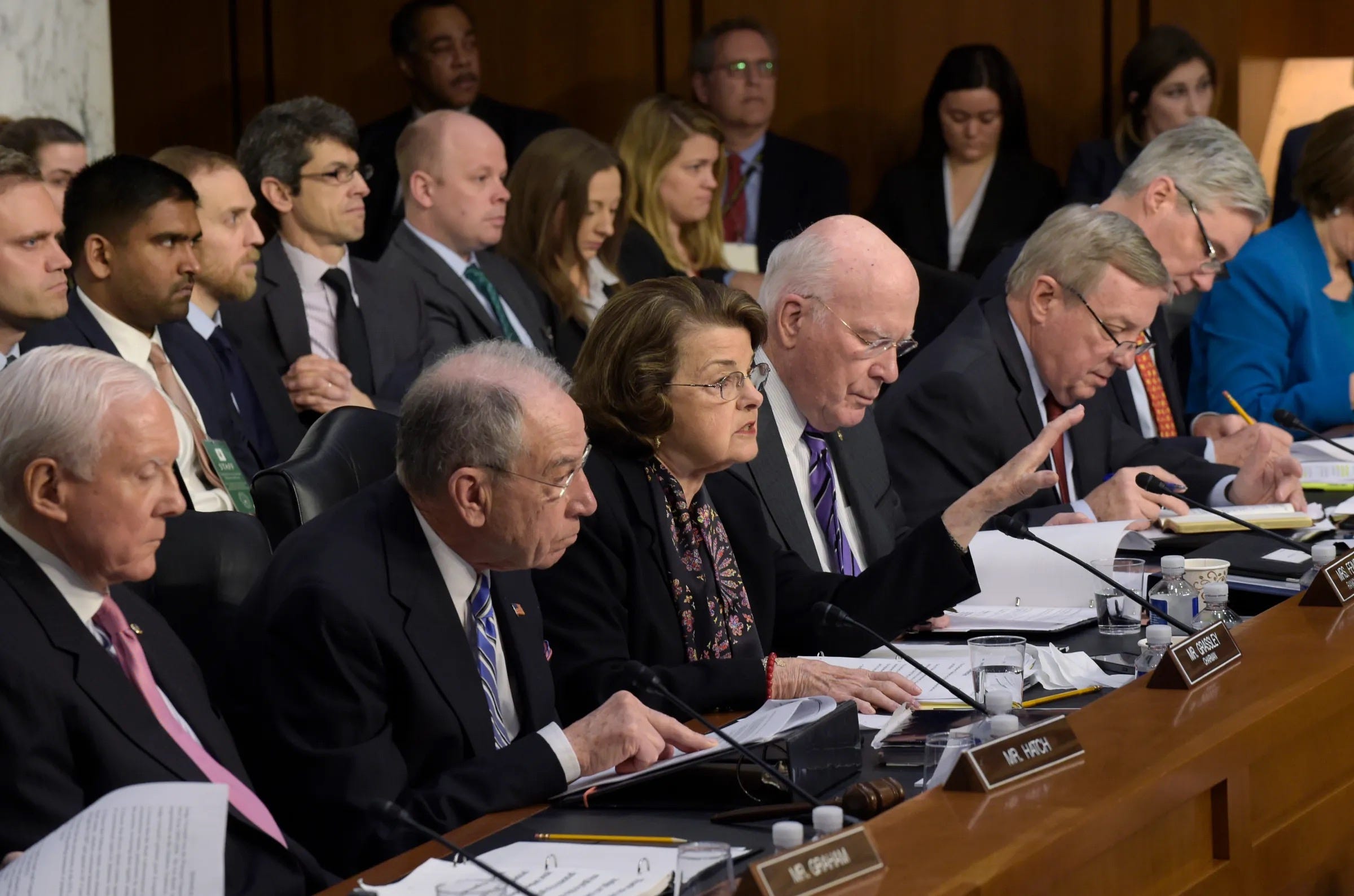
We can’t expect that elected officials are experts over every industry they create legislation for. That’s why they have consultants. In the case of Hollywood, this is by design. Jack Valenti created the (then) MPAA as a way around legislation, to serve as self-regulation by the studios regarding onscreen content, and to inform parents about any concerns they might have regarding sex, violence and language. Its extremely imperfect, because you can create the rating but then its streamed and, in your home, but as for going to the movies, it serves as a parental guide.
In short, my work focused on harm reduction by reducing onscreen tobacco use and brand identification (tobacco is the only product barred by federal court order for paid product placement), but not demanding, as many did, a mandatory R-rating for tobacco use onscreen. R-rated films generally make less money, so, we saw that as a losing idea, and I am proud to say tobacco is a warning for parents who care, but not an immediate cause for a rating shift in a film. (Tobacco does seem to encourage first time smokers who are younger if seen onscreen, and since it’s addictive, legal, and deadly, you do the math).
So, when AHC got a call from a staffer with the AG’s working on the Paramount merger, I shouldn’t have been surprised that their 20+ page document focused almost entirely on Netflix as the buyer of Warner Brothers, instead of Paramount. I informed them that my Deepthroat in DC made it clear Paramount would win the bidding (or as my contact told me, and yes this is the quote,“Follow the money. Who wrote the check for the ballroom?”) The staffer disagreed. It was clear they did not change tack until much later when the Paramount winning bid was evident.
If Paramount were an average citizen or company they would have to wait until the AG prepared the case, not ask a judge to overturn that timeline because they made a deal with shareholders that costs them millions every day the merger is postponed. Those monies they are asking for come from regular taxpaying citizens who the AG’s represent. To be fair, the AG’s need a delay to prepare a case. This is not an area they know or understand, which was abundantly clear when I explained how little percentage cinemas retain of ticket sales, how little control of what, when and where they can screen, and of course, for how long. (The staffer’s response, after a long silence? “How on earth do you make any money?”) Bingo. So, let’s talk about…
3
The faulty focus on windows
Let’s be clear, major movie theater chains serve shareholders, not communities. They are part of the “too big to fail” narrative the pro-merger folks are trying to sell. And I will digress for a beat here. Its amazing to watch the tactics, from calling individuals involved with #BlocktheMerger antisemitic to throwing a tantrum and saying I’ll take the studio Daddy bought me and move to another state.

AMC, Regal and Cinemark all belong to Cinema United (CU), formerly known as The National Association of Theater Owners, which historically was a predominantly white, male group of theater owners, now with a broader reach and membership that overlaps with AHC member cinemas. It’s fair to say not all of Cinema United agrees with its largest most corporate members, or they would say so. Every few days another entity announces that they support the deal, so clearly there are bespoke offers being made. As late as August 19th, CU wrote:
For many in our industry, the current environment is marked by disruption and uncertainty. That is why we believe that it is incumbent upon both of you to meet in good faith to discuss a resolution that would provide robust protections and serve the entire industry.
Theatrical windows are an important issue here.
A window refers to the amount of time the cinema has to screen the film. After COVID you would be lucky to have a two-week window to screen a film before it moved to streaming, and here is where people started declaring cinemas dead. (My husband, who runs one of the largest regional theaters, (as in live theater) says something similar about the death of the theater, in general: People have been saying theater is dead for over 2000 years. It’s clearly not.) The trouble with a short window is that all data shows people are most likely to go see a film in a theater if a friend or family member suggests that they do so. The second concern is parking, where mega theaters like AMC thrive, as they are either in a mall or an island unto themselves outside a city center, whereas art houses are often in pop-up spaces or historic buildings within city centers, where parking is less readily available.
So clearly the offer of longer windows is a good thing for everyone involved, right? Well, no. Because if you have only two screens or maybe even one, making a deal to hold a film for 45 to 90 days may mean empty seats after a week or so. Especially if the studio says you have to play it every day at 1, 3, 5, 7 and 9PM. To have flexibility for our (AHC’s) members to negotiate what is the best window for them and the communities they serve would be the best-case scenario. That neighborhood movie theater is often the only affordable air-conditioned place for a family to go watch a film together on a hot summer day. Don’t give us a one size fits all window scheme.
What about the promise of 30 titles a year?
4
How the lack of content hurts smaller cinemas
First, let me clarify: there is no lack of good films. Currently there is a lack of a definitive platform for films without distribution to reach art house cinemas in a way that will be fruitful for all. AHC is working on this with our own programs, but eventually I would love to see an online platform like Film Freeway that is owned by AHC, so films can more easily reach our circuit of cinemas which have vacancies to fill with unrepresented indie films, of which there are many.
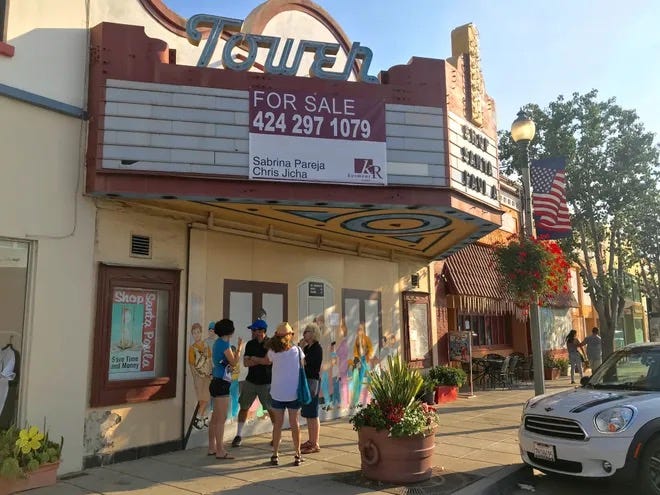
Let’s say the merged studio does manage to produce thirty films for theatrical release a year. There is still one less studio making films, with less competition, and inevitably people will lose their jobs (whether or not they leave California). Considering how far in debt Paramount is, can we count on good films? Why not assume they will just regurgitate existing IP with worthless sequels? Most of all, what if they don’t keep their promises? You know, like the one about not changing 60 Minutes?
When content got scarce, as it was during COVID, something strange started happening. First, many of the independent film distributors art houses count on started acquiring less films (see the documentary section above). Some, like Lionsgate and A24, started not playing films except on the coasts (according to a booker, when asked why we couldn’t screen THE UNBEARBLE WEIGHT OF MASSIVE TALENT, the response was, “Lionsgate said they were not interested in cashing little checks from around the country.”) But the biggest change was seeing indie films suddenly show up at multiplexes.
Yes, turns out when you have 24 screens and nothing to play, AMC and the like started playing foreign titles, documentaries and films that generally are favored by the art house crowd. Heck some of them even started playing IT’S A WONDERFUL LIFE, a standard holiday event at many independent cinemas. And there they are, in a suburb with all that parking. Of course, people started watching those in the multiplex. For all the discussion about AMC screening THE ODYSSEY in their impeccable cinemas, ask the average patron in Indiana or Kansas about the lack of staff and messy seats.
The less readily available the content, the more competition independent cinemas have. And just to be clear, the average cinema makes, on average, 30% of the ticket price, and has little control of showtimes or even, if they have more than one location, which cinema or screen the film will show on. That is why so many are nonprofits, independent and have donors or members.
5
The richest in Hollywood no longer know who we are
Do you recall the damning scene in DA Pennebaker’s THE WAR ROOM, where Bush Sr. is in the grocery store and didn’t know what a grocery scanner was? I am talking out of touch, like we-do-not-live-on-the-same-planet out of touch.
I don’t need to underscore it here, but from all I have reflected above, and from the tone of AMC, the DGA and even IATSE’s (hang in there, Teamsters!) announcements, it’s an “I got mine” message. Shame on #DGA the wealthiest of the unions. Stating that the delay will hurt more than the cure is giving in to the employer, the sole thing a union is NOT supposed to do for workers, unless I guess they are the boss. You betray the union brothers and sisters who have consistently been willing to hold out for a better future, and it’s shortsighted, because jobs will still be lost.
The latest study and rallying cry for Paramount is how many jobs will go away if they leave California. Here’s the thing, currently, no other state has enough specialized talent to immediately build a studio somewhere else. There are so many specialized jobs at a studio, because, in fact, there is no other business like show business. You can’t just replace a wig master, a pull focus, or a gaffer. These are very special skill sets that most other states only have a handful of, to do such work.
Paramount is making deals to save the merger because without Warner Brothers, it remains upside down with a massive debt ratio. Do you think if you foreclosed on your house, you would be allowed to buy another one? Only the rich can do that. Do you believe they won’t censor content on CNN after firing Colbert and turning 60 Minutes upside down? Do you think the people of California should pay the money they owe their shareholders until there is a trial, because they negotiated that deal? They, at Paramount, out of hubris or greed or both, expected this merger to go through. And they are desperate to make you believe it is inevitable.
I’ll borrow this oft used but modernized quote from Emerson:
“What you do speaks so loudly that I cannot hear what you say”.
I don’t believe that Paramount realizes the damage they are causing from their corner offices all the way to a one screen cinema somewhere on Main Street, USA. Worse, I don’t think they care.
Thanks for reading. -Deirdre Haj
