

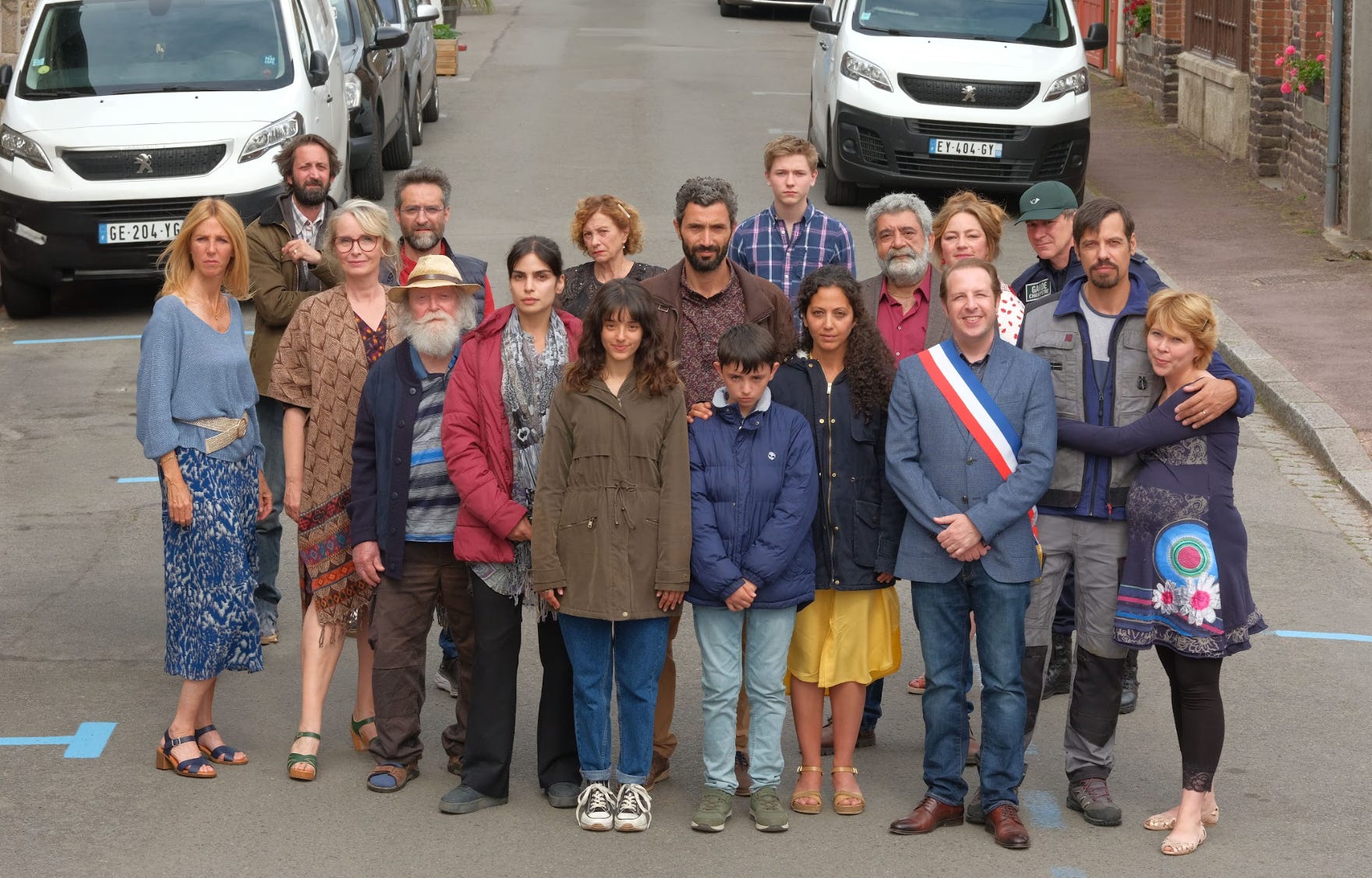
In this conversation, actress, writer, and director Julie Delpy talks about her latest film Les Barbares (Meet the Barbarians), a sharp comedy about a Syrian refugee family resettled in a small village in Brittany. She unpacks how the film uses humor to confront racism, fear‑mongering, and the “great replacement” narrative, while highlighting everyday desires—love, work, family—that make refugees recognizably human.
Delpy reflects on balancing comedy with real grief and outrage, her own visit to a Syrian refugee camp in Jordan, and the political backlash the film has drawn from the far right. She also discusses directing herself, working with her father, her resistance to fake Hollywood romance, and why love, solidarity, and a sense of hope are essential tools against rising authoritarianism.
transcript edited lightly for clarity and brevity
Vanessa Hope: I’m very excited to be joined by actress, writer, director Julie Delpy. I think American audiences know you best from the Richard Linklater series Before Sunrise and Before Sunset (and Before Midnight) with Ethan Hawke. They may not know that your career began working with some of the world’s best directors. In France—Godard (Detective). The Three Colors trilogy, Kieślowski ’s films. Agnieszka Holland (Europa, Europa).
But Americans, alas, are missing out on the fact that the film we’re about to discuss, which is called Meet the Barbarians in English—you can give us the French, Les Barbares—is scheduled to screen at the New York Comedy Film Festival on Thursday, February 19th at 7pm — (we’ll encourage everyone to go to this screening. I think this film deserves many more screenings, and I feel so fortunate that Ted and I could see it in a theater) — but this is your eighth film as a director!
I’ve seen Two Days in Paris and Two Days in New York, and they’re incredibly smart, funny, and worth seeing. I think it’s time for a retrospective of all the films you’ve directed.
And this film is so good and so timely, Meet the Barbarians.
Julie, can you tell us what it’s about?
Julie Delpy: Yes, it’s a comedy, but I wanted to make a comedy about a very serious subject: refugees, people who unfortunately have to flee their country because of war, conflict, or unrest. They leave by force and end up in a country that is not always welcoming. I take a microcosm—a tiny village in Brittany, in France.
Some people are welcoming, and some people are angry that the refugees are there. So it’s a simple story, but I wanted to tell the story of who we are today, and our capacity to be empathetic with others’ suffering—or not. In the film, there are a couple of characters who don’t really care. And it’s also about how people get manipulated or pulled one way or the other. I would say half the people in the village don’t really care, and then slowly it unwinds.
It’s really about this family of Syrian refugees who end up in this little Brittany village.
Vanessa: Yes. One summer when I was 16, I stayed with a family in France and I was placed in Nantes.
Julie: Nantes is not far from Brittany. It’s right at the limit. Some people would consider it Brittany, but it’s right on the edge.
Vanessa: Oh, that’s interesting.
Julie: You know all the films Jacques Demy made—he was from Nantes—so there were a lot of Jacques Demy films set there. Lola was shot in Nantes. It’s all that region of his early films and stuff, which I love so.
Vanessa: The region, the small town that you choose, is really well depicted and it feels like a character in the film, even though that’s a cliché to say.
Julie: I was raised in Paris, but my family is from Brittany and my aunt lived there. She was a nurse and a very kind woman. My cousin is a schoolteacher and works with refugee organizations. So it’s partly inspired by some people in my family and true stories that happened in different places in France and Europe. Part of my family still lives in the region—everyone except my dad, basically.
Vanessa: Was there a particular idea that came to you first? Was it the emotional pull of the refugee story, or the very funny comedic twist in the story?
Julie: What happened is that it started in the middle of the refugee crisis—around 2014–2016. When I started writing, my co-writer and I were in that moment. They had done a tremendous amount of work, basically like journalists, going around and interviewing refugees. It all started with seeing people dead, drowned in the Mediterranean Sea. It was shocking to see that, the bureaucracy, the lack of empathy, people stuck at borders, dying in the cold in Poland or wherever it was. It was really hard to witness all of this.
And of course the usual suspects were pushing the narrative that “they’re coming in to kill people”—we know that narrative. But they were families with children trying to survive. It felt very shocking to me, so my first feeling for this story was outrage.
And that outrage became even clearer when the war between Russia and Ukraine started. Suddenly a lot of countries that had pushed away refugees from Syria or Afghanistan opened their doors to Ukrainians—which is great, they opened their doors—but it was also a clear sign of racism to me. My co-writers and I decided to include that in the film.
The film starts with everyone expecting Ukrainians, everyone’s super happy, and then boom: no more Ukrainians. And here we are with Syrians which — to racist people — is very, very different. It’s a double standard of empathy: you have more empathy for someone who’s blonde with blue eyes.
It’s interesting—I talked to a lot of teachers who had welcomed Syrian kids. One teacher told me it was very shocking for them when the Ukrainians arrived, because suddenly they had to make a whole presentation about the war and their suffering, and the Syrians were like, “But we went through it too, and no one talked about it. There wasn’t this big deal about us.” That teacher explained how he thought the film was very accurate on that level—that not every refugee is treated the same.
Vanessa: It’s horrific that we’re so ill-informed in the United States. I think you’re right: it does have to do with racism, and it’s our worst behavior that we can’t embrace and allow refugees, and that politicians manipulate the subject.
Julie: Well, it’s always been the shtick of the far right: foreigners. In France, it’s definitely Muslims. The hatred is really out of control.
In the U.S. it’s a mix, a mix of hatred, but the narrative is the same: scare people. It’s interesting because it’s never in big cities where everyone is mixed together and living together that they gain power. It’s in small towns where they tell people, “They’re going to come, they’re going to rape your children, they’re going to turn your church into a mosque.” In France they say, “They’re going to turn all the churches into mosques.” I’m like, no, it’s not going to happen. It’s that “great replacement” narrative. The French far right sort of started it; it’s been feeding far‑right movements everywhere.
I get angry because it’s so obvious, but people still fall into it. I just wanted to make a film about that.
The film did well and sold in many countries. It came out and did really well in Germany. Now it’s coming out in Spain this summer and people really love it, which is great. But in the U.S., I haven’t found a distributor yet, and it’s not surprising. Everyone is kneeling to power. I think people are scared to have a film that, in its own way, is very provocative.
Because it says something simple: most people on Earth don’t want to fight; they want a home. I wanted to show this Syrian family having the problems of anyone else. The young woman wants to fall in love. The couple has intimacy issues. The sister is more traumatized by her past, but she still wants to continue and fight for everyone’s well‑being.
Manipulation is about demonizing and dehumanizing people. That’s their shtick.
Vanessa: What you’re describing in the storytelling and the characters—they’re so relatable. You do make the refugees feel just like us.
And your light comedic touch makes it more accessible, especially for people who might have racist feelings or resistance. You poke fun at it in the smartest way.
Julie: I wanted to make something funny and also make fun of those people who are closed off and angry and racist. In a way, the film pissed off more people than I expected because the far right in France really went after me. They were furious because the film is a mirror. It says, “Listen, you can’t be that guy. You can’t be the plumber—he’s ridiculous.” I think it upset them even more than dramas about the subject. I really felt it; they were relentless on social media.
But that’s the price to pay if you make a film that says, “Hey, we can all live together. We can all bring each other things. We can mix cultures and there’s nothing better than mixed culture.” That’s something they hate because it’s the opposite of what they want to advertise. And for a blonde, blue‑eyed woman to say that— even more. I was actually attacked in Paris by a far‑right guy.
Vanessa: You were? That’s horrific.
Julie: Yeah, I had a huge bruise on my arm. I went to the police—he called me a racist slur linked to the film—and I showed them I’d been attacked. They were like, “We’ll never find the guy.” Typical French police.
Vanessa: That gives a whole other angle to the fact that you bravely put yourself in your films. It can’t be easy to write, direct, and act. By being a face in the story, you’re elevating it because everyone loves and knows you as an actress first. But you’re also making yourself vulnerable to what crazy people might do.
Julie: Well, (vulnerable) to more hate. But I think if I had just directed it, it would have been the same, because I did many TV shows in France presenting the film. The subject matter alone is going to upset people who buy into the narrative of the foreigner, the enemy.
It’s absurd. But racism is rooted in geography and religion. And now Christian fundamentalists are trying to take over everything.
Vanessa: I think we need that vision of a better future—which your film, Meet the Barbarians, does give us.
Julie: It’s a hopeful film. I wanted to make a hopeful film also because I have a kid and I don’t want him growing up in such a bleak world. There’s so much hate. Everyone’s angry. The minute you talk about a child who died in one war, someone says, “What about that kid who died in this other war?” It becomes this weird way of measuring suffering by bringing up other suffering.
It’s really hard right now to have conversations that aren’t hateful. This film is a bit of a fairy tale, but I wanted to say: in France there are villages that welcomed refugees from many countries, including African countries, and things went really well. So it’s not a fantasy. In some places it went really badly—and what’s interesting is that it wasn’t necessarily the people from the village. It was people from outside, like I show in the film.
People from outside came in and said, “They’re going to rape your daughters. They’re going to take over this place.” They freaked people out. These are sometimes very radical, organized groups who do only that all day long. They go around little villages and say, “This guy who’s building this house—soon he’s going to bring a bunch of wives, and soon your daughter will be in a burqa.” In five days they freak everybody out.
Vanessa: It is ridiculous, and it is so basic, this idea that we can…
Julie: And it’s so dumb. It’s so simplistic—but it works.
Vanessa: Yeah. So we are countering this through your beautiful film.
Julie: The film is the opposite of that. The funniest part about those people pointing fingers—“They’re going to oppress your wife and children, they’re going to turn your wives into slaves”—is that they themselves are the most macho, oppressive men. You’re like, “Wait a minute. You’re saying this guy is more dangerous than you?”
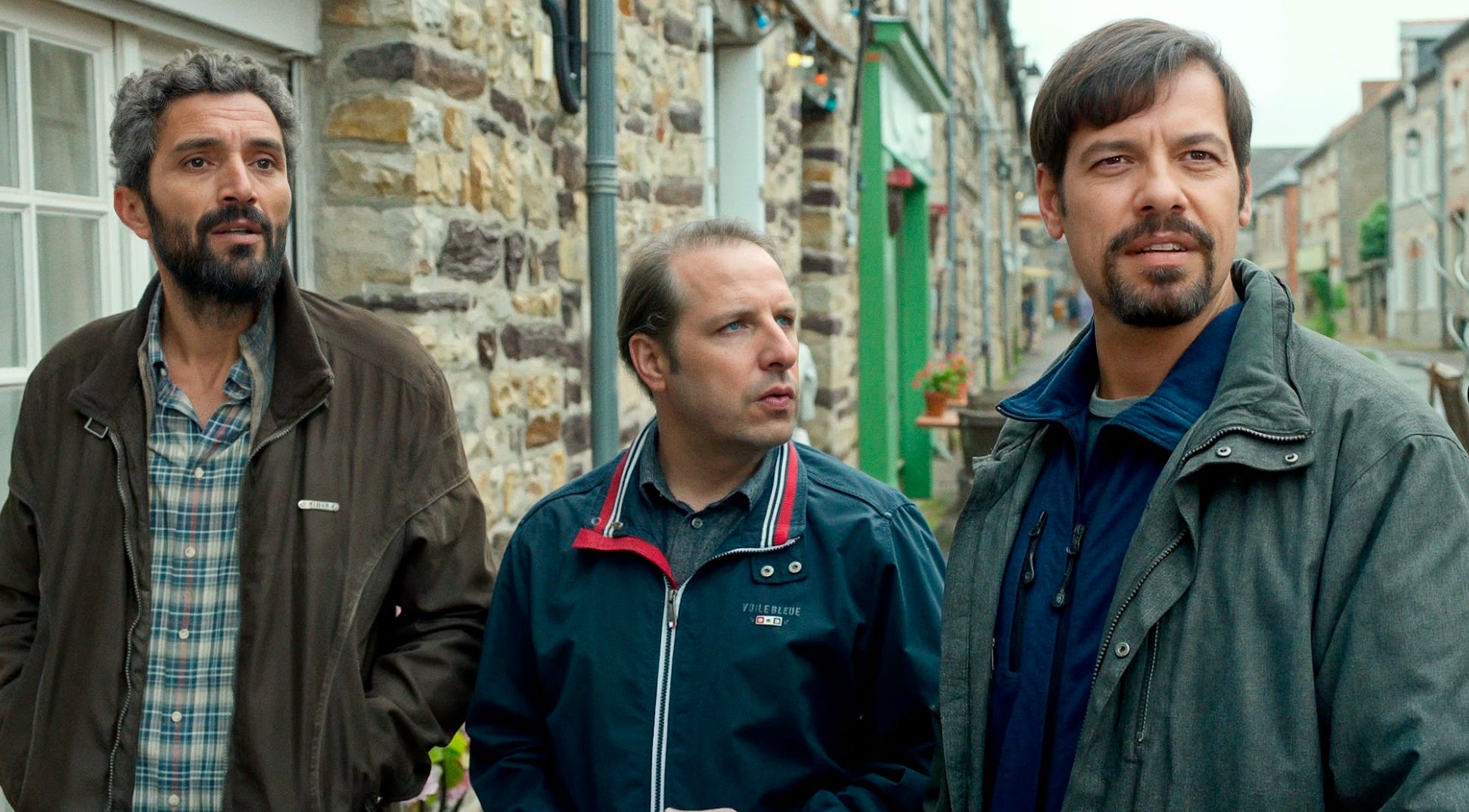
So I wanted to show all of this because it’s pretty absurd, and you can laugh with it. But at the same time, I wanted to make a film where, at the end, you’re moved by the story and by the hopefulness that there is still hope.
Vanessa: It’s a beautiful ending. It’s incredibly well directed. To land comedy may be the hardest genre. I don’t know if you feel that’s most challenging, but you seem fearless in taking on these challenges.
How did you, as a director, go about directing this movie?
Julie: Because it’s so difficult to do a film that’s emotional at times and sometimes funny, a lot of the work was done in stages: in the writing, on set with the actors, and then in the editing room. We were always walking a fine line.
For example, there’s a scene where they show what they’ve been through, where the sister with a missing leg explains what happened to her and her husband, the hospital being blown up. I realized very quickly that if we showed those images—images we’ve already seen too many times—our brains might be numb to them. And it becomes voyeuristic. So I decided not to show the images, just the sound.
I wanted to see the villagers watching: the children, the old, the young, the angry, the ones on the fence. If you’re a normal human being and you see people suffering, you will feel, right? Otherwise, humanity has failed. When you see a child dying and feel nothing and immediately say “but…,” you’ve failed humanity yourself—and maybe all of us, because we’re all linked. So it was important to show the faces of people reacting to suffering. You hear children cry—it’s heartbreaking.
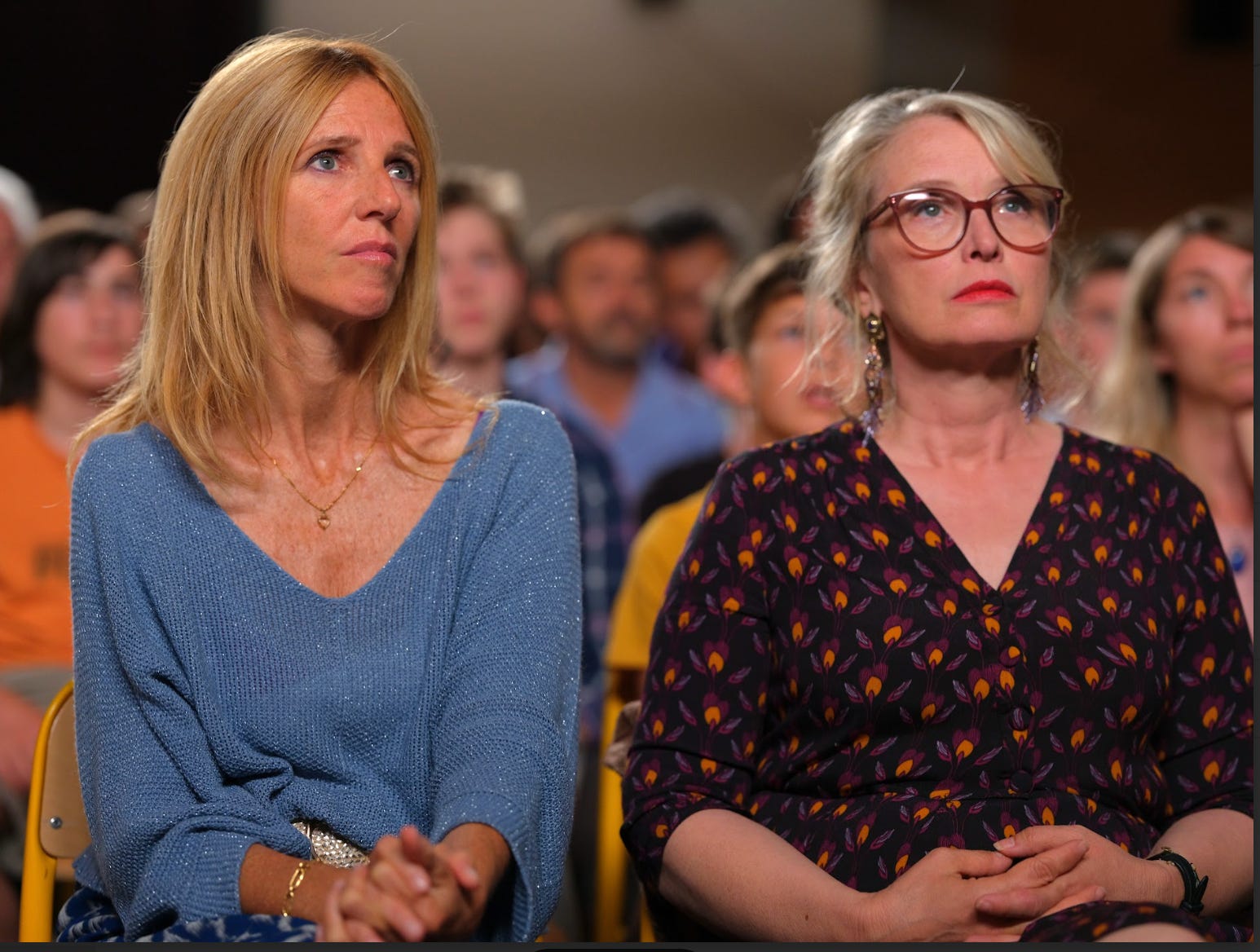
If you show everything, you risk melodrama. I wanted comedy, then emotion, but not full, heavy drama. You don’t show all of it, but you know it’s horrifying. That’s how we walked the line constantly with this film. It’s funny, but then you have a scene on a beach—I won’t say what happens. It’s very funny, but when it happens, I always cry watching it, even watching my own film. That beach scene with everyone always gets me.
What’s hard with comedy is that you don’t get rewarded, because people think, “Oh, it’s just a funny film.” I’ve decided not to take it personally—it’s just how it is. This film is a comedy, but it’s not just a comedy. Still, I think it’s very noble to make comedies and make people laugh. Some of my favorite directors have made me laugh.
Vanessa: Yes, I completely agree. And it’s probably our best tool against authoritarianism, because dictators do not have senses of humor.
Julie: They have no sense of humor. They’d rather be described as monsters—they don’t mind that. But if someone laughs at them, they really care. It really upsets them. The way some of the French far right reacted to my film made it very clear that this kind of comedy bothers them more than something more in your face. It’s actually more dangerous for them.
Vanessa: Yeah. The life of a refugee is something we really haven’t grappled with enough. It’s a world problem right now. We’re insane about it politically in this country and in most countries. It’s a universal struggle and it’s everywhere. So it’s such a critical story, and you deal with it so beautifully. The ending really is moving.
Julie: Yeah. We went to a refugee camp and shot there. That’s when I really realized what a refugee is. I didn’t fully understand it, even though we had interviewed a lot of people, until I went there, met refugees, and understood the blocked possibilities of the children’s futures.
They’re all dreaming of being doctors. I spoke to so many children. I tried to film them, but the Jordanian military stopped me because the camp was under military supervision.
Vanessa: So this is the Syrian refugee camp in Jordan?
Julie: The largest one—80,000 people. It’s absolutely gigantic. It built itself very quickly. The Syrian border is about 10 kilometers away. When we shot there, there were tanks from Assad’s forces near the border, so it was very militarized because they couldn’t risk Assad’s forces coming into the camp and killing people.
What broke my heart was seeing all those children with dreams but so little. At the beginning in a refugee camp you have a lot of people, the UN is there, there are services. Then things start to wear out. There are fewer hours of school, fewer people available, and you sort of forget about them. It was hard to see that they were going to school only a couple of hours a day, most of them.
A translator told me, when I asked what the kids were talking about, “They barely have words to express themselves. Their Arabic is very limited because they don’t have education.” This refugee camp is not like the family I describe in the film. The family in the film is based on people from Damascus—educated people. But if you take refugees from small villages, they already have very limited opportunities.
At the time, we didn’t know what would happen with Assad. We wondered, “How long will they be here?” They’ve been there for twelve years.
All those kids were born in the camp. They’re born there and they can’t get out. They can never get out. That’s a refugee camp—they can never get out. A few parents are allowed to go work in the nearby city, but it’s a very limited life.
They have built a whole society for themselves, with a main street full of shops and things. Life continues. Those kids are amazingly beautiful, every single one. But it’s not good to be a refugee. It’s not an easy life. It breaks you.
We met a few refugees from Damascus who were suffering from depression. I tried to show it in the father who refuses to work. He wants to do his job. He’s an architect. He doesn’t want to be picking things or being an Uber driver—not that it’s bad to be an Uber driver, but he’s an architect.
Vanessa: It’s a loss of identity—a loss of profession, of identity, of taking care of your family.
Julie: Exactly. And we noticed that for men it was really hard, because they had built whole careers and everything was gone. Women, even those who had careers, were more often okay with saying, “I’m going to go pick artichokes. I’ll do what I need to do.” Not always, but we saw a trend. That’s why we put it in the film: she’s more like, “I’ll do whatever it takes. I’ll work for that old, disgusting man”—I forget the name I gave him. My dad plays the farmer.
Vanessa: That’s exactly where I was going next. We have clearly drawn characters from Syria, but the French characters are fantastic too.
Your dad is terrific in it and has been in several of your projects. How did you cast them?
Julie: He’s an old farmer who’s sort of left‑wing and open. I think he’s open to them working as long as she’s pretty. I wanted a character who’s funny and endearing. He hates the racist guy, thinks he’s an idiot, and will do anything to get on his nerves. Hiring the Syrian woman is already obnoxious to that racist man, and he does worse—he gives the family a house. He does everything that drives the racists insane.
I had so much fun. My dad was so much fun to work with again. I hope to work with him again. I wrote something for him, but it’s really hard to put together, especially in France, because again, it’s political.
Vanessa: (His) sausage scene in Two Days in New York is too funny.
Julie: Yeah, yeah—there’s sausage everywhere. My dad was arrested at the border because he had Cuban cigars. It wasn’t sausage, but Cuban cigars. You’re not allowed to bring Cuban cigars into America, and in France that’s what everyone smokes.
So he was arrested and they took his cigars. He was furious. Thank God it wasn’t now—he’d probably be in detention.
So, back to Brittany: the town is called Paimpont, which is very funny in French. It’s a medieval town. It looks a lot like Ireland—Brittany does in general—black stone, lots of green. There’s a lake there that’s famous because people say it was one of the lakes of the Arthurian myth, the Round Table. The French say it happened in France; the British say it happened in England.
That lake is famous in France because it’s supposed to be a magical lake. The only problem we had shooting there in summer is that it’s a ‘pèlerinage’ (pilgrimage site) for druids. They go and pray to nature. You have people walking barefoot with sticks, dressed in capes and medieval stuff. It’s like Merlin. It’s a special place.
Vanessa: And so in this special place, as a director you’re creating an environment where everyone feels free to be spontaneous and funny and serious. It’s so well directed—it really is.
Julie: Thank you. I love to bring people to a place where they feel pure joy. I really like joy on set for the actors. This is my background—my parents were both actors—and I grew up with the idea that acting should be pleasurable. Some people like to torture actors, but I personally love actors to feel happy and free.
It’s very rare for me to have a difficult time with an actor; you really have to be a difficult person for it not to go well. On this film, people were having the time of their lives. We still talk about how much fun it was, how pleasant it was to be in that one‑street village. The hotel at the end of the street, everything there, nowhere to go.
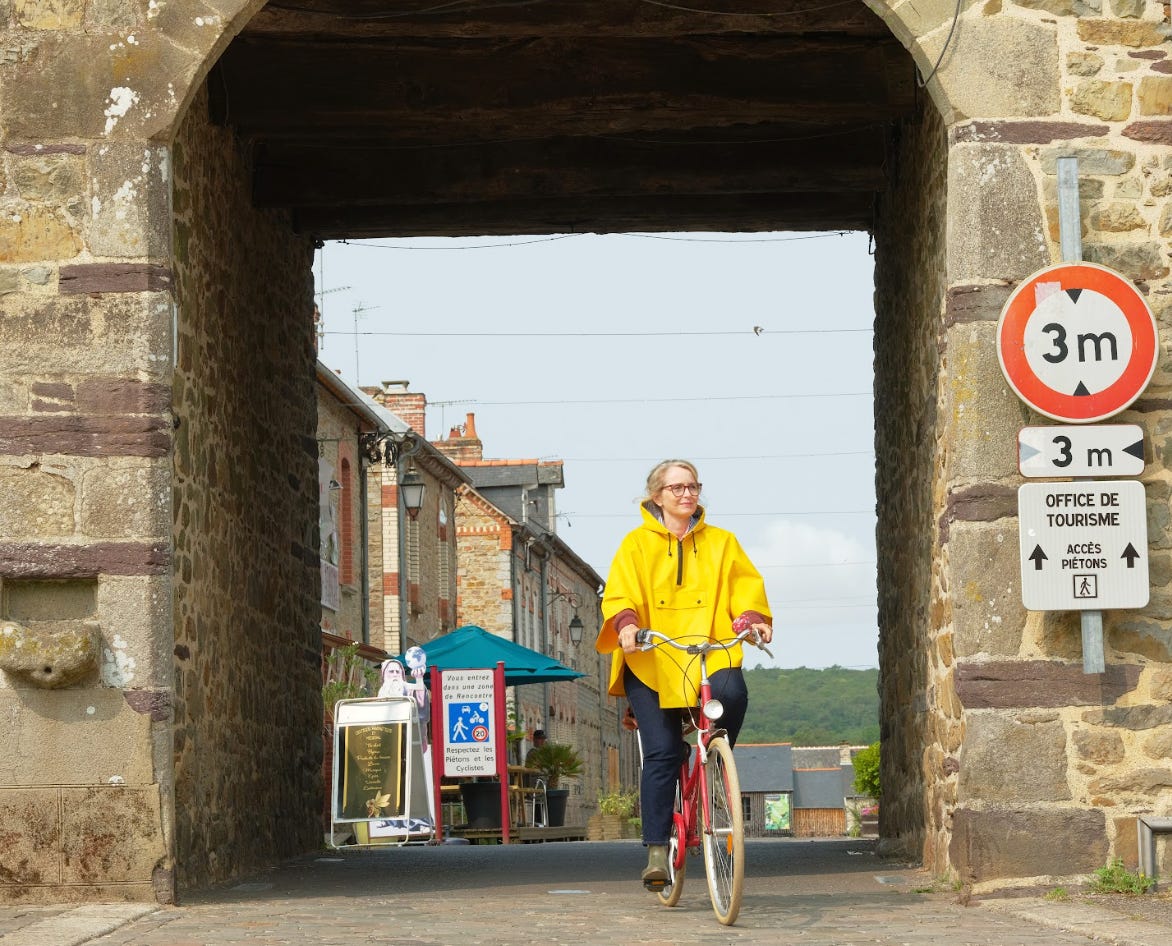
In the middle of summer, by the lake, people were really happy. It was a little like a holiday sometimes, even though we worked extremely long hours. The kids didn’t want to go home—we were constantly having to say, “Legally, you have to go.” “Oh, I want to stay.” It was really fun to be on set.
Vanessa: Amazing. Do you see this film as connected to your previous directing efforts? Do you see a through line? There’s comedy, very cerebral but down‑to‑earth dialogue, and love stories.
Julie: Yeah. I like very different kinds of films. My taste goes from Fanny and Alexander to Star Wars, with Godard in between, and comedies. I love French comedies from the ’30s and ’40s like La Règle du Jeu, The Rules of the Game, but also dumb comedies. I like very, very different cinema—from sci‑fi to very serious, intellectual films to comedy. I love Mel Brooks, many things.
Vanessa: You have directed films in France and here in the U.S. Do you feel there’s a difference? Has Hollywood or the independent environment here made it easier or harder?
As a woman director, do you feel there’s less support?
Julie: It’s much easier for me in France as a woman director. I didn’t have bad experiences here. The two things I shot here—Two Days in New York and my TV show—were fine, but Two Days in New York was a little expensive for what was on camera. I felt the weight of production in the U.S. is heavier.
In France you can make a film for very little and not have a huge apparatus. For Two Days in Paris we had half a million euros and shot in 17 days. For Two Days in New York there were so many rules: “No, you can’t have this, you can’t have that.” I wanted a scene on top of the Empire State Building and was told, “You can never shoot there.” So I went with a still camera, took pictures of the cast, and made a photo montage.
You can’t shoot here, you can’t film strangers or they’ll sue us. We sometimes had to go against the rules because there were so many. On my TV show On the Verge we had similar issues, but it was during COVID, which was a weird time. People forgot about us, and probably thought we were going to shut down anyway. We were the tiniest production ever.
Vanessa: I thought the difference with shooting in France was supposed to be that you get three months to shoot an independent film, not 17 days. That’s brutal—17 days.
Julie: Well, that was my first film. My other films I shot in 30 days, so it was more comfortable, but I don’t think I ever had much more than that. I’ve never been over‑financed—never.
And my films have always made money.
Vanessa: I wonder how difficult it is to direct yourself in your own film. You create this great environment, everyone’s enjoying being there and working with you, and then you also have to be on camera.
Julie: It’s difficult. I enjoy the days when I’m not acting much more. I cast myself—at least in French movies—because it helps with financing. When you’re a director and you have no one in your film, it helps to say, “I have one actress, she’s available, she’s also directing.” You don’t need another hotel room.
But it’s hard—really hard. The positive side is that my energy, especially for comedies, goes into everyone. I’m like a locomotive, the engine that drags everyone into this energy of chaos. I love chaos. I love filming chaos. I think it’s full of life and fun to watch: people fighting, people arguing, someone giving birth with a hundred people around—that’s life.
But it’s hard.
I would love my next film to not have me in it. It’s something I want: to move more and more into directing only. I can still act in other people’s films, but I’d love my films to be only directing.
When I directed the Syrian family scenes and I wasn’t in them, or the plumber and nurse in bed, it was so freeing not to be in the scene—to not have to worry about acting and being in front of the camera. That’s what I want to move toward.
I have many projects—one in particular I’m not going to talk about; it’s a bit of a secret. I write all the time. I write comedies, darker stuff, weird films. I have so many things I want to do—sci‑fi, horror, anything. I’m open to anything as long as it’s not a snappy, bad romantic story.
There’s nothing that annoys me more than selling people a fake idea of love—a cheap thing. To me, that’s really manipulating people. So every time I’ve written about love—on the Before series, on Two Days in Paris—I’ve tried to go in a direction that’s more truthful. People in love, but real.
Some romantic comedies or love stories are so simplistic.
Vanessa: They are. They’re selling women especially an idea of romance they think they should aspire to. It seriously impacts culture. It impacts gender relations.
Julie: It’s part of a capitalist system; it feeds the system in the worst way and makes people miserable.
I see people expecting something because of that narrative. I’m not even a big fan of Valentine’s Day. Why one day to celebrate? Let’s celebrate every day, when we’re actually together. Systems tell you, “This is a great moment; you’re supposed to be happy.” And if that day you’re not happy, you feel worse. “I didn’t get the flowers…” It’s too much.
I got married to my husband at the courthouse at LAX. The lady who married us had a tattoo on her neck. I thought, “This is it. This is great.” It lasted 30 seconds. My husband was almost arrested because he crossed a yellow line or did something wrong. It was hilarious.
I think the couple before us—the guy was in jail and out just for a couple of hours. The couple after us was this weird family with about 40 kids. I don’t know what was going on there. It was really great. My idea of romance is never the one being sold to us in films, and it bothers me.
Vanessa: That’s a good through line, actually: through the films you’ve been in and written and directed, you’re giving us a more authentic, genuine love story. I think that’s what draws everyone to this work. Meet the Barbarians is full of love—you have love for the characters, and they have all these different love stories happening in this bizarre situation with the Syrian refugees. It’s beautiful.
Also, your character falls in love—your character is so funny and so sweet, and I love how that happens. I don’t want to spoil it; I want everyone to see this movie. I want them to know how many different layers and tones you fit into this film. It’s fantastic. It’s of a piece with your body of work, because you have consistently delivered some of our best love stories on film.
Julie: I really value love—all forms of love: love for people you work with creatively; love for the person you share your life with; love for your mother, for people around you, for strangers too. It’s something special and simple at the same time. I don’t want to make it something cheap. It cheapens it. I try to go against that, truly.
Vanessa: Yes, exactly. That’s beautiful. Brilliant. Thank you so much for coming and talking about this. It’s so weird to say “thank you for joining me here”—where are we? We’re in the laptops. This was really great.
Julie: Thank you.
Vanessa: Huge honor. I really want everyone to go see your film. So, it’s February 19th (and 20th) in New York. We’re going to make sure there’s a retrospective of all of your films—the films you’ve directed. We’ll make sure this happens, that more people see your film, and that more screenings happen. I hope we make this a reality. Thank you, Julie.
Julie Delpy has made a name for herself as an accomplished actress, screenwriter, and director in both Europe and the U.S., having studied writing and directing at NYU. She wrote, directed, and starred in 2 Days in New York, opposite Chris Rock, a follow-up to her critically acclaimed film 2 Days in Paris; made independently in Paris, it received rave reviews in Berlin and went on to secure global distribution. As a writer, Delpy co-wrote Before Sunset and Before Midnight, earning two Oscar nominations and multiple best screenplay awards, while Before Midnight also brought her Golden Globe and Spirit Award nominations for best actress. Since the age of 14, she has worked with some of the world’s most esteemed directors, including Jean-Luc Godard (Detective), Agnieszka Holland (Europa Europa), Krzysztof Kieślowski (the Trois Couleurs trilogy), and Jim Jarmusch (Broken Flowers), reflecting a list of collaborators as versatile as her talents and films. In 2009, Delpy presented The Countess, which she wrote and directed, at the Berlinale; she went on to win the director’s prize at the San Sebastian Film Festival in 2011 for The Skylab, while her French comedy blockbuster Lolo and her feature My Zoe were both presented at TIFF, in 2016 and 2019 respectively. In 2021, she presented the series On The Verge on Canal+ and Netflix. Delpy’s most recent project is her new film Meet The Barbarians, released by Le Pacte in France and sold internationally by Charade.
“A roaring, funny, and surprisingly moving portrait of an absurd, yet deeply felt, communal experience.”
“The film’s greatest triumph is the way it finds real emotional truth in the midst of utter chaos.”
“A high-wire act of ensemble comedy, with every performer delivering a flawless performance.
Meet The Barbarians
Thu, Feb 19 at 07:00 PM EST at NYCFF at Asylum NYC
JULIE DELPY IN PERSON FOR Q&A
BUY TICKETS
NYCFF at Asylum NYC
123 E 24th St, Between Park & Lex


