
Left-Handed Girl: "remember why you wanted to make this movie at the very beginning."
A Hopeful (video) Conversation with Oscar-shortlisted Left-Handed Girl's writer/director/producer Shih-Ching Tsou. The film is Taiwan's entry for Best International Film!


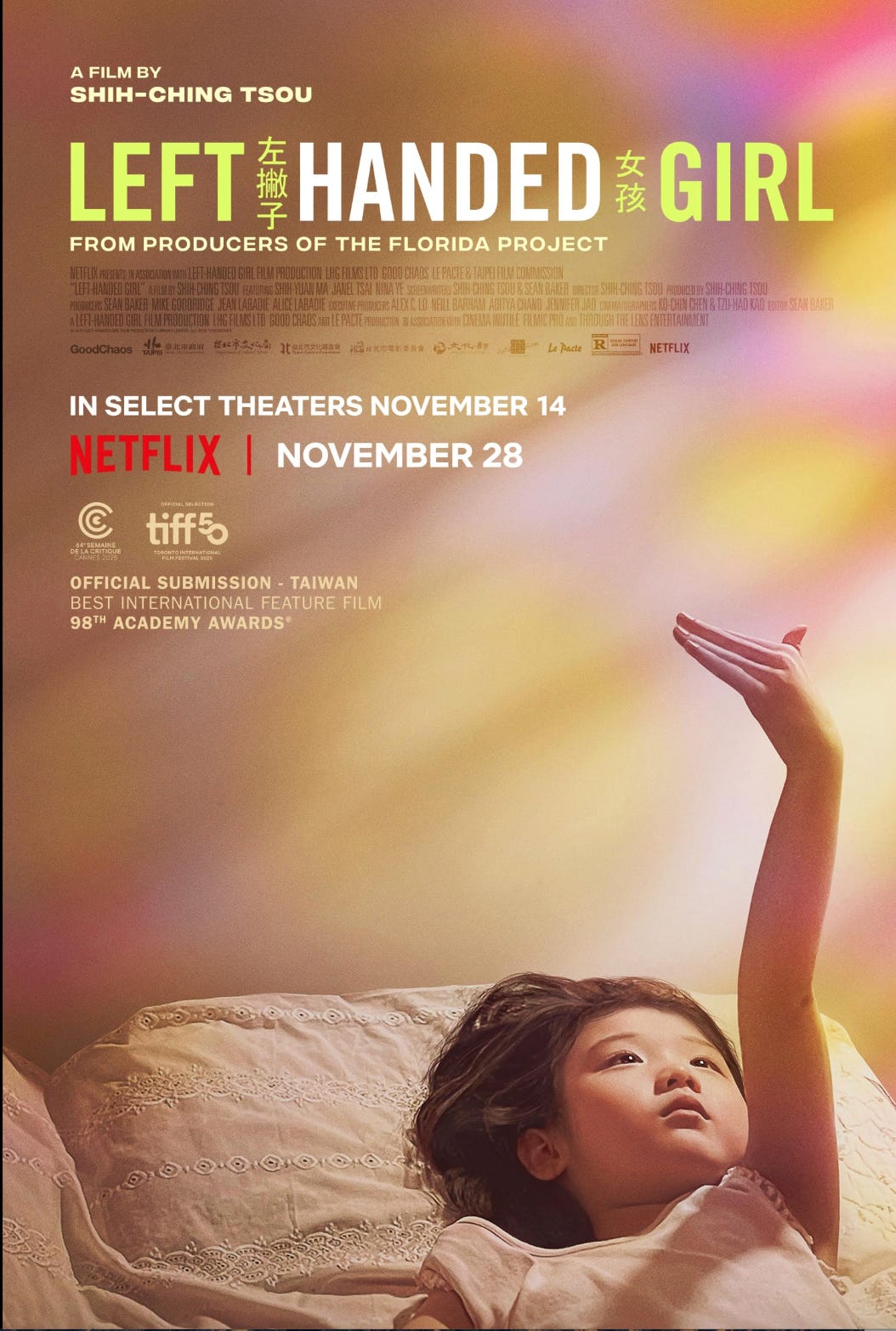
Vanessa and I got to see Left-Handed Girl in Cannes this year and were both deeply impressed on multiple levels. It’s a great story with great characters told in a very cinematic manner, both grounded and magical simultaneously. The authenticity of the world abounds. And it is one of those films that will reinstall your faith and enthusiasm for cinema (if you feel it slipping). It was no surprise to us when Taiwan selected it as their nomination for Best International Film this year. It is currently available for streaming on Netflix;
Synopsis:
A single mother and her two daughters return to Taipei after several years of living in the countryside to open a stand at a buzzing night market. Each in their way will have to adapt to this new environment to make ends meet and maintain the family unity. But when their traditional grandfather forbids his youngest left-handed granddaughter from using her “devil hand,” generations of family secrets begin to unravel.
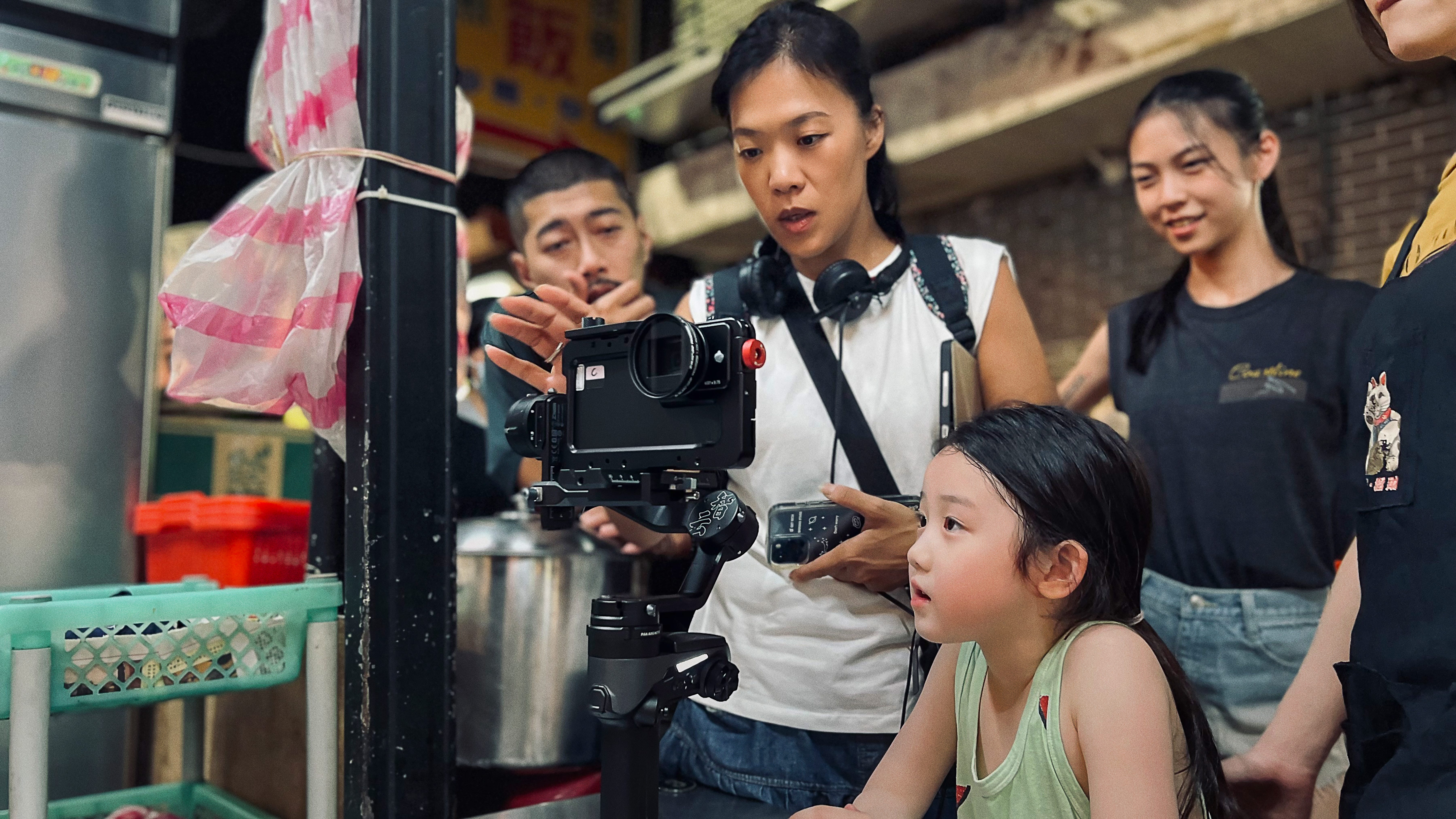
Shih-Ching Tsou wrote, directed, and produced this marvelous movie. She also recognized the only way to make this film work was to keep the crew tiny and shoot it on the smallest scale possible. If she hadn’t told us, we would not have known she shot it on iPhones.
We found it fitting when she visited LA this week to have her stop over for a quick video interview shot on iPhones. Welcome to our first V-hopeful Conversation (with the V being video :) ).
In this discussion, we’ll hear…
Shih-Ching Tsou explains Left-Handed Girl’s origins in her own childhood experience in Taiwan…
She describes her long collaboration with Sean Baker, and the inspiration they found in Dogme 95 films
Their shared method rooted in deep community engagement,
The persistence the project required
Shih-Ching’s tactics with actors to preserve spontaneity
Why the serious subject requires humor and resilience.
How specificity helps people connect with it
And what Tsou hopes to draw on for her future projects
A V Hopeful Conversation with Shih-Ching Tsou, writer/producer/director of Left-Handed Girl
(edited for brevity and clarity)
Vanessa Hope: I’m Vanessa Hope and I’m very excited to be on Hope for film Substack launching with Ted the very first video Hopeful Conversation with the writer, director, producer of Left-Handed Girl: Shih-Ching Tsou. It couldn’t be more appropriate to launch this way. Her film is absolutely incredible and she made it on iPhones!
So we wanna know all about your process, Shih-Ching . How did you come up with the story? And how did you make this film?
Shih-Ching Tsou: The idea of the story actually came from my own experience. When I was in high school, my grandfather saw me use a knife with my left hand and he scolded me and telling me left hand is devil’s hand, and he asked me not to use it. That’s how the original idea came from. And it took me 25 years to finally make it on a screen.
Vanessa: Now it’s on Netflix. I think people don’t know about your long and productive collaboration with Sean Baker. Can you tell us a little bit about how that developed, where that began and now has launched you in your first solo directorial debut?
Shih-Ching: Actually The Left Handed Girl is the very first idea I talked to Sean about when we met each other in editing class. When I first went to New York for my master degree in media studies, we started watching a lot of films together. We fell in love with the Dogma 95 films.
We watched all of them and we thought “we want to make film just like that”. We started to do the research in 2001. We went to Taiwan together, trying to find a story. But at the time, Asian Cinema wasn’t really on the global stage, so we couldn’t find a way of making it at the time. So we started making Takeout first together in New York.That was the very first film we co-directed and c0-produced together.
And through working on that film, we developed this very special research process: how to get into the community, how to bond with them, how to put their story into our script. And also working on the real location, doing street street casting and location scouting and everything, and also wearing every hat on a film because we only have $3,000 at that time (for Take Out’s entire budget). Throughout working on Take Out, we continued collaborating on Starlet, Tangerine, and Red Rocket.
So finally with the Red Rocket in Cannes, we finally got funding and able to make Left Handed Girl.
Vanessa: It is truly impressive, this level of persistence, perseverance, resilience that you have in staying true and authentic to yourself and your story. And then to find when it comes out — when you’re making it and then it comes out — it feels like the best possible timing.
There is thoughtfulness and a process that you went through for all of that. So how did you hold on? How did you overcome, how did you make it through what so many filmmakers get defeated by? They just, they get too many notes. They think “the odds are against them'“, “It’s gonna be too expensive.” They won’t “have the right set, they won’t have this or that”. And then they give up.
How did you persevere and hold on (over the years it took from the initial idea)?
Shih-Ching: You just have to remember why you wanted to make this movie at the very beginning. Like from very beginning (the reason) I wanted to make this film is that is the story (about) how I grew up in Taiwan.
Everything about Taiwan’s community — how all the little elements in Taiwan, like the night market, the beetle nut stand, and all, everything that happened when I was inTaiwan — I just put them back into the script slowly (during) the time I wasn’t able to make the film.
I still remember how I wanted to tell this story truthfully — hat kind of kept me going. Also working on all Sean Baker’s films,I learned so much on the different films. We are using pretty much the same method: we really connect with the community that we want to film with first. I used all the different skills that I learned from all Sean’s films and applied them to Left-Handed Girl.
Vanessa: It’s extremely brave and takes extreme creativity and skill. But you pulled it off.
I met Sean through Ted who helped produce Starlet, and then after you guys made Tangerine, I went to his house and he showed me the iPhone rig and he was like, “here, take this to Taipei”. So I did. For the first shoot in 2016 on the documentary Invisible Nation, we were trying the iPhone method.
One of the things I found interesting is the development of the iPhone technology between when Tangerine happened and you made this film. How did you manage it? Did you think to yourself, even with this most personal of stories, I’m willing to try to figure it out on the iPhone? Did it have something to do with what point of view you wanted to get across in the story? You told me in Taipei when you met big deal producers who were talking to you like, “Oh, we’ll have to build. On a set and a stage”. And you said “No.”
Shih-Ching: I wanted to capture the real night market vibe, and that’s the only way you can show in the real night market. Just like you have to hire your crew member, you have to hire your camera. So it’s almost like you have to go in there as a documentary crew. That’s how I had it in mind and I knew how to shoot on iPhone, based on the experience and especially after 10 years —the initial dream was 10 years ago. So over this 10 years, all the technology just advanced. It’s unbelievable. We shot on iPhone, but it was on 4 now —- it’s like any other professional cameras.
The key point is the camera is just a tool. And the more important thing is the story, and that’s the focus of any movie. And we always have to remember that.
Vanessa: The story is so well told — you have so much energy in the camera, and in the storytelling— and you have amazing performances from these first-time actors who you discovered and pair with an established actress who guides them with you. Your directing of your actors is incredible. How did you do all of that?
Shih-Ching: I’m very laid back on set. I usually tell them “just do your homework and when you come on set they will interact the first time”. We didn’t really rehearse them. I intentionally don’t want them to over-rehearse. I want them to just come to set and everybody will speak their lines for the first time. And that organic, spontaneous feeling, I think that you can only capture that the first time they interact together.
Vanessa: Your actress who plays the mother is a well-known actress in Taiwan. Janel, yes. And she really does feel like there’s a dark cloud over her. I was listening to some of the interviews with the actress who plays the older sister and the younger sister. The older sister won an award at the Golden Horse; that’s amazing. And the younger sister Nina Ye is up for a Critics Choice award also with your film, which is fantastic. Congratulations.
They both spoke about like it was —from their perspective — it was you who created this environment where they felt safe, and then it was Janelle who was so in character. Then they were immediately like, “Oh. I have to get into character.“ Is that something you were conscious of building for them?
Shih-Ching: It’s so important to create that environment, because that’s really special when you like go into a night market — immediately they feel like, “Oh, this is, this is our stand”, and they feel so real. They don’t have to act. Yeah. And it’s just immediately they can get into the scene. And also, all the apartments, we tried to use the real location whenever we can. So the Betel Nut Stand, that was a real location. The grandparents’ apartment, also the hospital, the motel, everything. They are all real locations.
I think that just give the actors the perfect environment to be in. And immediately they feel like they are the character in the film.
Vanessa: And the name of the actor who won the Golden Horse Award is Shih-Yuan Ma and she was phenomenal. She said, she actually hadn’t experienced what her character experienced in real life, but you guided her. She learned from you, and then she could do it. I would say, because hers is the hardest journey in the story that you’re authentic to, is that all of these intergenerational stories of different kinds of trauma that we all experience, whatever country we’ve grown up in all over the world, and so many movies tackle this subject, especially this year actually there are a lot. Yours is uniquely hopeful. Was this something you were conscious of too? Is this your approach to storytelling? And, did that help Shih-Yuan Ma get into her role too, in some way?
Shih-Ching: Yeah. I think it’s so important, like how we want to tell the story. It’s not just about how sad their life is.
We want also want to show the happy part of their life because we believe, especially the people who is going through hard time they’re actually trying to stay positive. They want to focus on those positive moment, so any funny moment, anything that’s maybe extra difficult for other people, they want to laugh at it, they want to just stay light on everything so they can go through the difficult time.
Vanessa: Yeah. You’ve spoken about Dogma 95. Do you have other film influences, other filmmakers you respect or admire?
Shih-Ching: Definitely like Mike Leigh. Like the ending of our film is really inspired by Mike Leigh’s Secrets & Lies and also, all the Dogma 95 films.
And we particularly like this film called Oasis. It’s by Lee Chang-dong, he’s a Korean director.
We — Sean and me — we both love that film so much. With all the inference, we really want to make something just like those films.
Vanessa: Ted and I talk a lot about the difference between the dreams we have for our film and the reality of the way the film comes out once you execute it; it takes on a whole new meaning and layers when it’s a personal story. How do you feel about your story now that you’ve realized it in this way and you’re sharing it with the world, and experiencing audience reactions everywhere?How is that for you? What are you feeling about that?
Shih-Ching: I think it’s such a relief. I didn’t know how people are gonna react to it, because it’s so specific and it’s so Taiwanese. So in, the beginning I was afraid that people from other countries wouldn’t be able to relate with it.
But thank God, there are so many different details that really touch audiences throughout the world. The family part, the mother, daughter dimension. And also like left-handedness is such a big thing. We didn’t even expect that people all over the different countries and different cultures, they all connected with the left-handed taboo.
Vanessa: I love how you’ve had this long collaboration with Sean and now you are launched as a solo director. Is this the direction you’re gonna keep going in? What are you hoping for your next film?
Shih-Ching: Definitely I want to tell more stories on my own as a director, and I have so many ideas. Throughout this the film festival circuit so far, I collected so many ideas, not just a Taiwanese story, but I went to different countries. I heard different conversation from different people and I found it fascinating. So I hopefully one day I’ll be able to travel the world and make films and tell stories from different countries, different cultures.
Vanessa: My God, that is so exciting to think about your body of work to come. And it could come from so many different countries in the world because you’re smart. You’re fast when you actually make the film, you’re very fast. It’s just that process of timing and being patient to wait for the right circumstances and the right financiers to come through for you. So we truly wish you all the best, all the support, the resources, the actors you want and dream of for your next project. Thank you.
Shih-Ching Tsou is a Taipei-born, New York–based writer, director, and producer whose work bridges cultures and challenges cinematic conventions. A multiple Independent Spirit Award and Gotham Independent Film Award nominee, Tsou is known for her keen humanism, emotional precision, and commitment to portraying underrepresented communities with honesty and empathy.
Tsou first drew international acclaim as the co-writer, co-director, and co-producer (with Sean Baker) of Take Out (2004), an award-winning debut that earned a rare 100% rating on Rotten Tomatoes and established the pair as vital voices in American independent film. She went on to produce Baker’s Starlet (2012), Tangerine (2015), The Florida Project (2017), and Red Rocket (2021) — all of which premiered at major festivals including SXSW, Sundance, Cannes, and Toronto, and earned numerous accolades including multiple Academy Award nominations.
Her latest feature, Left-Handed Girl (2025), marks her solo feature directorial debut, earning acclaim for its bold and intimate portrayal of identity, resilience, and creative awakening. Left-Handed Girl world-premiered in Competition at Cannes Critics’ Week and has since traveled to top-tier festivals including Toronto, Busan, BFI London, Zurich, Chicago, and Vancouver, with additional screenings across Melbourne, Warsaw, Film Fest Ghent, AFI Fest, Montclair, Savannah, Hawaii, Mill Valley, Middleburg, and Virginia. The film was selected as Taiwan’s official submission for the 2026 Academy Awards®.
Continuing its success, Left-Handed Girl won Best Film in the Progressive Cinema Competition at the Rome Film Festival and earned Tsou Breakthrough Director honors from both the Montclair Film Festival and the Critics Choice Association’s Celebration of AAPI Cinema & Television. The film has also received nine Golden Horse Award nominations, including Best Film, Best New Director, and Best Original Screenplay.
In recognition of her distinctive voice and contributions to cross-cultural storytelling, Tsou was named a finalist for the prestigious Vilcek Prize for Creative Promise. Now more than two decades into her filmmaking career, she continues to champion diverse, ambitious, and boundary-pushing cinema, with projects spanning both U.S. and international markets.
For more on Left-Handed Girl:
REVIEWS
https://www.theguardian.com/film/2025/nov/13/left-handed-girl-review-sean-baker-shih-ching-tsou
https://www.washingtonpost.com/entertainment/movies/2025/11/28/left-handed-girl-movie-review/
INTERVIEWS/FEATURES
(Special thanks to Fred Koschmann and Stephen Follows for support with this post)
It looks wonderful. Love the hopeful opening of the trailer, the cast looks great, the direction awesome. Y’all’s conversation made me want to go watch Dogme 95 films; I’ve always appreciated that school of filmmakers’ credo, but I haven’t seen many of the films. Vanessa, I love your obvious joy in other filmmakers’ success.
I love the poster for Shih-Ching’s film and am so excited to hear about the making of the film! Cannot wait to dive into this.